


Brinova Bluetooth Audio Sunglasses
-
Virtual 3D surround
-
Wireless Bluetooth
-
Up to 5 hours
-
Built-in microphone for hands-free calling
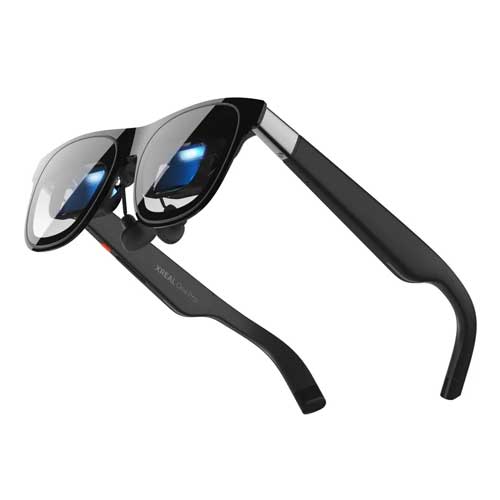
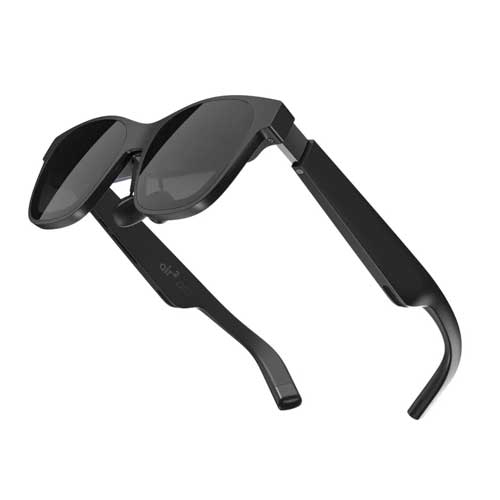
XREAL Air 2 Pro AR Smart Glasses
-
Up to 120Hz
-
Sony Semiconductor Micro-OLED x 2
-
147 inches at 4 meters
-
Second-Generation Directional Audio System
Meta AI RW4012 601ST3 Ray-Ban Smart Glasses
-
Shiny Black
-
G-15 Green
-
12MP Ultra-Wide
-
1080p at 30fps
Meta AI RW4012 6840MF Ray-Ban Smart Glasses
-
High-quality Acetate
-
Clear to Graphite (Transitions) / Prescription Ready
-
12MP Ultra-Wide (Vertical capture optimized)
-
1080p at 30fps
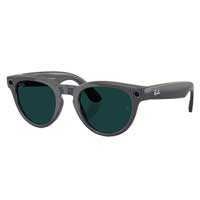
Meta RW4013 6702CE Headliner GEN 2 Ray-Ban Smart Glasses
-
Smart Eyewear
-
Headliner (Round/Lifestyle)
-
12MP Ultra-Wide
-
1080p at 30fps
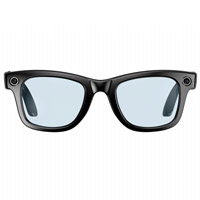
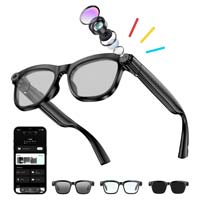
Alvora 10 AI Smart Glasses
-
20MP Ultra-HD
-
1080P Full HD
-
4GB (High-Speed Flash)
-
TR90 (Swiss Thermoplastic)
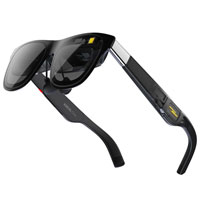
XREAL One AR Glasses
-
50° Wide Field of View
-
147" Virtual Full HD Display
-
Native 3DoF Head Tracking
-
USB-C Display Connectivity
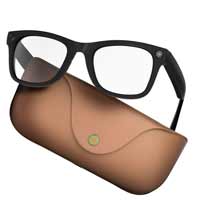
Alvora Ultra 05 AI Smart Glasses
-
1080P Full HD
-
2GB High-Speed Flash
-
TR90 (Grilamid) Swiss Thermoplastic
-
2000mAh with Premium Leather Finish

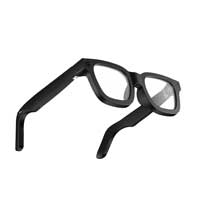
Alvora 610 Smart Glasses
-
8MP (4K Still Image Resolution)
-
1080P Full HD
-
4GB High-Speed Flash
-
Intelligent Photochromic (Clear to Tinted)
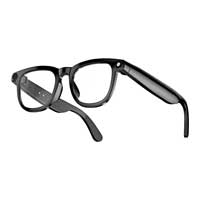
Alvora C02 Smart Glasses
-
8MP (Optimized for POV)
-
1200P High-Definition
-
4GB High-Speed Flash
-
TR90 (Swiss Thermoplastic)
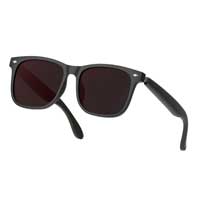
Alvora 0101 AI Smart Glasses
-
8MP
-
1080P Full HD
-
Dual Open-Ear Speakers
-
Dual Mic with Noise Cancellation
Alvora 08 AI Audio Smart Glasses
-
AI Recording & Summary
-
Air Conduction (Open-Ear)
-
Bluetooth 5.2 / 5.3 (System Dependent)
-
Wearing Detection (Auto-pause/play)
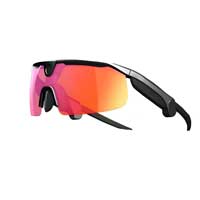
Alvora A0 AI Sport Glasses
-
16MP High-Definition
-
4K / 1920P Full HD
-
HiFi Open-Ear Speakers
-
Dual Mic with AI Noise Cancellation
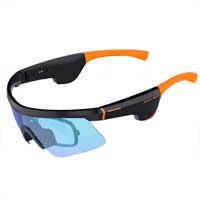
Alvora 20 AI Sport Glasses with HiFi Music Ultra Comfort UV400 Photochromic
-
Dual AI Mic with ENC
-
TR90 Swiss-grade Thermoplastic
-
Ultra-Comfort Ergonomic Design
-
Supports Google Assistant & Siri
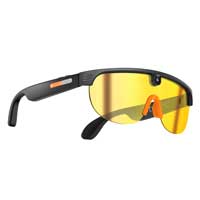
Alvora G5 AI Sport Glasses
-
8MP Still Photos
-
1200P HD @ 30fps
-
UV400 (Blocks UVA/UVB), Anti-Glare
-
Dual AI Mic with ENC Noise Cancellation
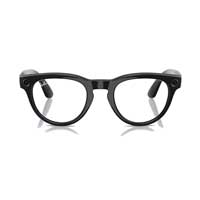
Meta Headliner RW4013 601/1M Shiny Black Ray-Ban Ai Glasses
-
1080p at 30fps
-
Qualcomm Snapdragon AR1 Gen 1
-
32GB (Flash)
-
5-Microphone Array (Spatial Audio)
Meta RW4013 601/71 Headliner Ray-Ban Ai Smart Glasses
-
G-15 Green (High Contrast)
-
12MP Ultra-Wide
-
1080p at 30fps
-
2x Custom Open-Ear Speakers
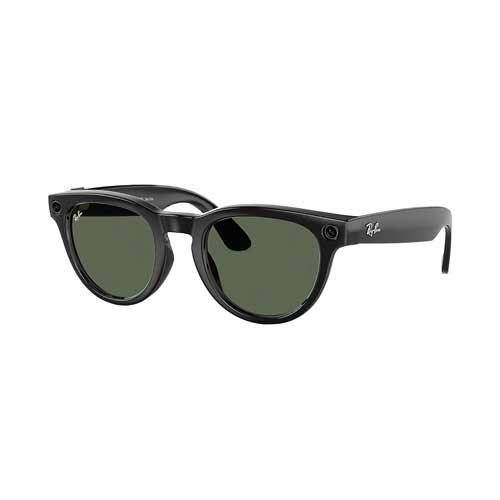
Meta RW4013 601/MF Headliner Ray-Ban Ai Smart Glasses
-
12MP Ultra-Wide
-
1080p at 30fps
-
32GB Internal (Flash)
-
2x Custom Open-Ear Directional Speakers
Meta RW4013 601ST3 Ray-Ban Matte Black Smart Glasses
-
32GB Internal (Flash)
-
2x Custom Open-Ear Directional Speakers
-
5-Microphone Array (Spatial Audio)
-
Meta AI (Voice & Multimodal)
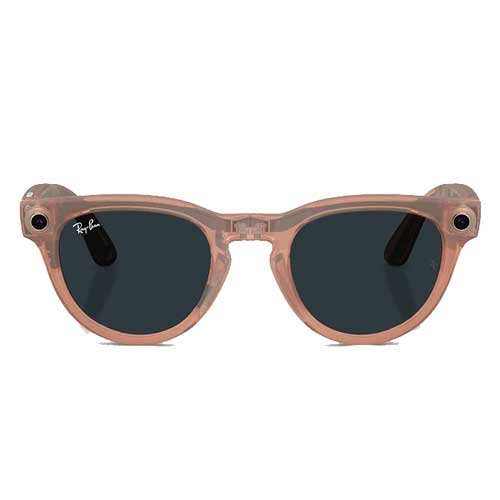
Meta RW4013 68901Z Ray-Ban Smart Glasses
-
Version 5.3
-
Qualcomm Snapdragon AR1 Gen 1
-
32GB Internal (Flash)
-
5-Microphone Array (Spatial Audio)
Meta RW4012 601S1Z Ray Ban Smart Glasses
-
1080p at 30fps
-
Qualcomm Snapdragon AR1 Gen 1
-
32GB Internal (Flash)
-
2x Custom Open-Ear Directional Speakers
Meta RW4012 601SSB Ray Ban Ai Smart Glasses
-
12MP Ultra-Wide
-
1080p at 30fps
-
Qualcomm Snapdragon AR1 Gen 1
-
32GB Internal (Flash)
Meta Headliner RW4014 601/1M Ray-Ban Ai Glasses
-
12MP Ultra-Wide
-
1080p at 30fps
-
32GB (Internal Flash)
-
5-Microphone Array (Spatial Audio Support)
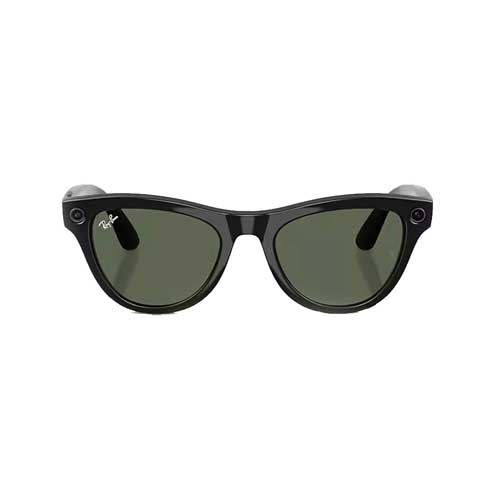
Meta RW4014 601/71 Ray-Ban Ai Smart Glasses
-
12MP Ultra-Wide
-
1080p at 30fps
-
32GB (Flash)
-
2x Custom Open-Ear Speakers
Meta RW4014 601/CH Ray-Ban Skyler Smart Glasses
-
12MP Ultra-Wide
-
1080p at 30fps
-
Qualcomm Snapdragon AR1 Gen 1
-
32GB (Internal Flash)
Meta RW4014 601/T3 Skyler Shiny Black Smart Glasses
-
1080p at 30fps
-
2x Custom Open-Ear Speakers
-
5-Microphone Array (Spatial Audio)
-
Meta AI (Voice & Multimodal Support)
Showing Products 1 - 28 of 57 Results
Smart Glasses – AI Wearable Technology Price in Bangladesh
Smart Glasses are advanced wearable computing devices designed in the form of eyeglasses that integrate digital technologies with traditional eyewear to provide users with hands-free access to information, communication, entertainment, and intelligent assistance. Unlike conventional glasses that are used only for vision correction or eye protection, smart glasses combine hardware and software technologies such as artificial intelligence (AI), augmented reality (AR), virtual displays, high-resolution cameras, microphones, speakers, wireless connectivity, sensors, and powerful processors into a lightweight wearable device.
Smart glasses enable users to interact with digital content naturally through voice commands, touch controls, gesture recognition, or eye tracking, eliminating the need to constantly use a smartphone or computer. Depending on the model, they can capture photos and videos, make and receive phone calls, play music, display notifications, provide real-time navigation, translate languages instantly, identify objects, recognize text, and answer questions using AI-powered virtual assistants. Advanced models equipped with augmented reality displays can overlay digital information directly onto the user's field of vision, creating an immersive experience for navigation, remote assistance, education, industrial applications, healthcare, and enterprise productivity.
Modern smart glasses typically connect to smartphones, tablets, laptops, or cloud-based platforms through Bluetooth, Wi-Fi, or cellular networks, while some premium models function as standalone computing devices with built-in operating systems and internet connectivity. Their integrated sensors, including GPS, accelerometers, gyroscopes, ambient light sensors, and proximity sensors, allow them to understand user movement, orientation, and surroundings, delivering context-aware and personalized experiences.
The rapid advancement of artificial intelligence has significantly expanded the capabilities of smart glasses. AI-powered smart glasses can now understand spoken language, summarize conversations, recognize people and landmarks, translate foreign languages in real time, describe objects for visually impaired users, provide contextual recommendations, and perform complex tasks using multimodal AI models that combine vision, speech, and language processing.
Smart glasses are used across a wide range of industries and everyday applications, including personal communication, business collaboration, education, healthcare, manufacturing, logistics, retail, public safety, tourism, entertainment, sports, and field service operations. They improve productivity by providing hands-free access to digital information, enabling workers to complete tasks more efficiently while keeping both hands available for their primary work. In consumer markets, they offer a convenient way to stay connected, capture life moments, access AI assistance, and enjoy immersive multimedia experiences without constantly looking at a mobile device.
As wearable technology, artificial intelligence, and augmented reality continue to evolve, smart glasses are expected to become an increasingly important part of the future digital ecosystem. They represent the convergence of computing, communication, and human-centered design, offering a seamless interface between the physical and digital worlds. Many technology experts consider smart glasses to be one of the next major computing platforms, capable of transforming how people work, learn, communicate, and interact with information in their daily lives.
Smart Glasses are advanced wearable devices that combine traditional eyewear with intelligent computing technology. Built into their frames are electronic components such as processors, cameras, microphones, speakers, wireless connectivity, sensors, and, in some models, transparent displays. These technologies enable users to capture photos and videos, communicate hands-free, access AI-powered assistance, receive notifications, navigate with digital directions, and interact with digital information without constantly using a smartphone.
Unlike conventional eyeglasses, smart glasses serve as a personal computing platform that seamlessly blends digital experiences with the physical world. Depending on the model, users can ask questions using voice commands, listen to AI-generated responses through open-ear speakers, translate languages in real time, identify objects and landmarks, read notifications, or view digital content directly within their field of vision.
How Smart Glasses Work
The way smart glasses operate depends on their category and level of technology. AI Smart Glasses are primarily voice-driven. Users simply speak a command or ask a question, and the built-in microphones capture the request. The device processes the information locally or through cloud-based artificial intelligence before delivering responses through integrated open-ear speakers. Cameras provide visual context, allowing AI to recognize objects, describe scenes, translate text, and answer questions about the surrounding environment.
More advanced AR (Augmented Reality) Display Glasses and XR (Extended Reality) Glasses introduce additional interaction methods, including touch-sensitive controls, gesture recognition, eye tracking, hand tracking, and wearable input devices. Some premium models even use electromyography (EMG) technology to detect tiny muscle movements in the user's fingers, enabling intuitive control without visible hand gestures.
Types of Smart Glasses
AI Smart Glasses
AI Smart Glasses are designed to resemble ordinary eyeglasses or sunglasses while integrating artificial intelligence into a lightweight wearable device. These models typically do not include a built-in display. Instead, users interact naturally through voice commands, while onboard cameras and AI systems provide features such as object recognition, scene understanding, live translation, photo and video capture, navigation assistance, and intelligent voice responses. Their familiar appearance, ease of use, and AI capabilities have made them the fastest-growing segment of the smart glasses market.
AR Display Glasses
AR Display Glasses incorporate transparent or waveguide displays that project digital information directly into the user's field of view while maintaining visibility of the real world. These glasses can display notifications, navigation instructions, text, images, and interactive graphics as digital overlays, creating an immersive Augmented Reality experience. Most AR glasses connect to smartphones, tablets, or computers and are designed for both professional productivity and everyday consumer use.
XR Display Glasses
XR Display Glasses represent the most advanced category of wearable eyewear. They combine high-quality displays with spatial computing technologies, including advanced sensors, inside-out tracking, hand tracking, eye tracking, and environmental awareness. XR glasses enable users to interact with virtual applications, immersive entertainment, gaming, remote collaboration, engineering visualization, and enterprise productivity tools within a three-dimensional digital environment. While offering the richest experience, they are generally larger and more powerful than AI or AR smart glasses.
The Future of Smart Glasses
Rapid advancements in artificial intelligence, augmented reality, semiconductor technology, wireless connectivity, and battery efficiency are transforming smart glasses into one of the next major computing platforms. As AI becomes more capable and displays become lighter, smarter, and more energy-efficient, smart glasses are expected to become increasingly popular for communication, education, healthcare, business, entertainment, navigation, and everyday productivity. Their ability to combine hands-free operation, intelligent assistance, and immersive digital experiences positions smart glasses at the forefront of the future of wearable technology.
Smart Glasses are AI-powered wearable glasses that let you see, hear, record, communicate, and access information using voice commands or touch controls, all while keeping your hands free.
Key Features:
- Artificial Intelligence (AI) Assistant
- Augmented Reality (AR) Display (on supported models)
- HD Camera for Photos & Video Recording
- Voice Commands and Voice Recognition
- Bluetooth and Wi-Fi Connectivity
- Open-Ear Speakers and Microphones
- Real-Time Language Translation
- GPS Navigation Assistance
- Notifications and Calls
- Music Playback
- Health and Motion Sensors
- Cloud Connectivity
Applications:
- Personal Use
- Business & Productivity
- Education
- Healthcare
- Manufacturing & Field Service
- Logistics & Warehousing
- Security & Law Enforcement
- Travel & Navigation
- Sports & Fitness
- Remote Collaboration

