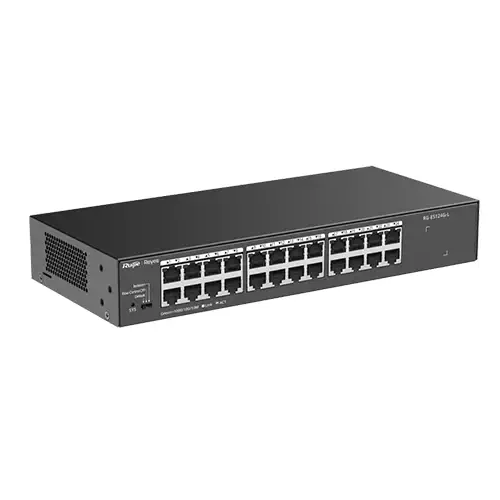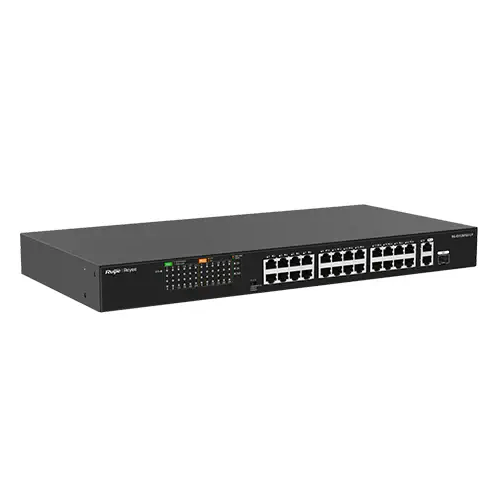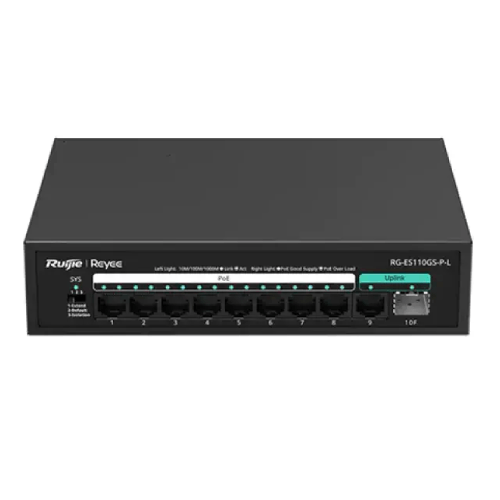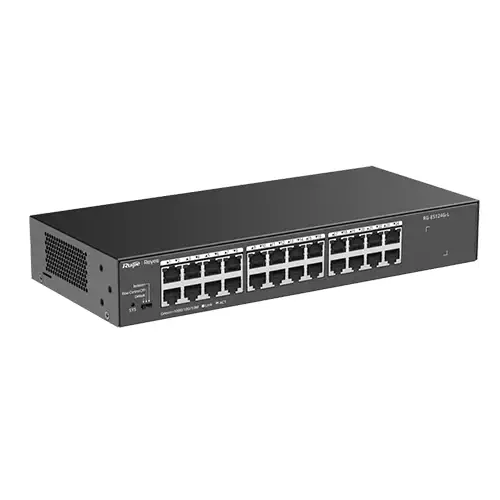
Ruijie RG-ES124G-L 24-Port 10/100/1000 Mbps Unmanaged Non-PoE Switch
Regular Price:৳0.00Availability: SKU: 6.54.312.9594
Quick Overview
-
Support
Saturday – Thursday: 09 AM - 06 PM. -
Payment
Cash on Delivery | Card | Online Payment -
Shipping Cost
Inside Dhaka 100tk | Outside Dhaka 150tk -
Warranty Policy
Read More
Description
Ruijie RG-ES124G-L 24-Port 10/100/1000 Mbps Unmanaged Non-PoE Switch in Bangladesh
As a home, office, shop, or learning centre adds more network-connected equipment, the ports on a typical router can quickly become insufficient. Computers, printers, recorders, access points, and other Ethernet devices may all need a reliable wired connection. The Ruijie RG-ES124G-L provides 24 Ethernet ports with 10/100/1000 Mbps speeds, giving a suitable network more room to connect its devices in one place.
This is an unmanaged, non-PoE switch. In simple terms, it expands wired network connectivity without adding advanced configuration features or supplying power to devices over Ethernet. That makes it worth considering for installations where endpoints have their own power sources and the priority is adding Gigabit network ports. It is not a router, Wi-Fi access point, or internet service; it works alongside those parts of a network.
24 ports for a more organised connection point
Twenty-four ports can be useful when one room or site has many wired endpoints. Instead of repeatedly adding small switches as the network grows, an organisation can consider bringing more of its connections to a central switching point. This can help make port planning easier, especially in a small office, classroom, retail space, or home with several network-connected devices.
The 10/100/1000 Mbps port speed range allows a compatible device to establish a link at the speed supported by both ends of the connection. A Gigabit-capable computer connected with suitable cabling can use a Gigabit Ethernet link; a device with a slower network interface will connect at the speed it supports. The switch does not make every device operate at the same speed, nor does it increase the speed of an internet subscription.
A central switch can also make it easier to understand where wired devices connect. For example, a business may connect computers, a printer, and a network recorder to the switch, then connect the switch to the existing router or wider network. The exact layout depends on the site, but a clear connection plan makes future troubleshooting simpler.
Unmanaged operation keeps the setup straightforward
The RG-ES124G-L is an unmanaged switch, so it is intended for basic Ethernet expansion rather than detailed per-port network configuration. This can suit users who need to connect devices on an existing network and do not require advanced controls from the switch itself. The router or other network equipment remains responsible for functions such as internet access and network addressing.
For many straightforward installations, the setup begins by placing the switch in a suitable location, connecting it to the existing network, and attaching the wired devices that need access. The connected devices still need to be configured appropriately for the network, and a router or other upstream equipment is generally needed for internet access. The switch provides connections between network devices; it does not replace the equipment that routes traffic beyond the local network.
The unmanaged format also helps buyers identify what this model is not intended to do. If a project depends on features such as VLAN configuration, detailed traffic rules, or remote management, check the required feature set before choosing a switch. A managed model may be more appropriate for a network that needs those controls. Selecting according to the actual network plan is more useful than choosing by port count alone.
Non-PoE means endpoint power needs separate planning
The Ruijie RG-ES124G-L is a non-PoE switch. It can provide Ethernet network connectivity, but it does not supply power to an endpoint through the network cable. Any connected camera, access point, IP phone, or other device must therefore receive power through its own power adapter, a suitable power source, or an appropriate separate power solution.
This distinction matters when planning installations. A camera mounted far from a convenient socket, for example, may need a separate power arrangement even though its network connection runs to the switch. A PoE-capable access point also will not receive power from this non-PoE model simply because it is connected by Ethernet. Check the power requirements of every device before installation.
For some setups, a compatible PoE injector may be considered for an individual device. That requires checking the injector and endpoint specifications and arranging the connection correctly. If several endpoints need PoE, compare the cost and practicality of separate power arrangements with a PoE switch designed for the required number of devices and total power load.
Gigabit connectivity in everyday use
A switch’s port speed is one part of overall network performance. The speed a device achieves also depends on the network interface in that device, the quality and installation of the Ethernet cable, the connected equipment at the other end, and the wider network. The RG-ES124G-L offers 10/100/1000 Mbps ports, but a slower router, computer, or other component can limit a particular link.
It is also useful to separate local network speed from internet speed. A computer accessing a local network resource communicates across the site’s network, while an online service depends on the internet subscription and the equipment between the device and the service. Adding a Gigabit switch can provide suitable ports for compatible wired equipment, but it cannot raise the speed promised by an internet provider or resolve congestion elsewhere in the network.
For businesses, a wired connection can be a practical choice for stationary equipment that benefits from a consistent network link. A desktop computer, shared printer, or network recorder may be easier to connect over Ethernet than to rely on a Wi-Fi link, depending on the layout and needs of the site. The switch provides the ports; good cabling and a sensible network design remain important.
Useful for offices, shops, and service locations
A growing office may have computers at several desks, a shared printer, and network-connected equipment in a meeting room or reception area. A 24-port switch can provide a central place to connect those devices, provided the overall network design and cable routes are suitable. As a result, the office can plan wired connections more clearly instead of relying only on the limited Ethernet ports of a router.
In a retail shop or showroom, wired equipment may include a point-of-sale computer, back-office desktop, printer, and network recorder. The Ruijie RG-ES124G-L can provide network ports for compatible Ethernet devices, while each device continues to use its own suitable power source. The switch does not provide point-of-sale software, internet access, or video recording; those functions belong to the relevant devices and services.
A clinic, training centre, or small business may also use several computers and shared network resources. In these settings, stable cable routes and sensible device labelling can make routine support easier. When the network grows, documenting which device connects to each port helps administrators identify connections without guessing.
A consideration for CCTV and access-point installations
The switch can connect Ethernet-based CCTV equipment, such as a network video recorder and cameras, when the devices and network are configured appropriately. However, the non-PoE design means cameras do not receive power from the switch. Each camera needs its own power arrangement unless a separate compatible solution is used. The recorder or another suitable system is still responsible for receiving and storing footage.
Wireless access points can also connect to the switch through Ethernet. In that arrangement, the access point provides Wi-Fi coverage while the switch provides a wired connection to the wider network. Since this is a non-PoE model, the access point needs its own compatible power source. The switch itself does not create a Wi-Fi signal, and the number of switch ports does not determine the wireless coverage area.
Before using the RG-ES124G-L for CCTV or Wi-Fi equipment, list the devices and confirm their Ethernet and power requirements. Check where the recorder, router, cameras, and access points will be located. This helps reveal whether cable routes, separate power outlets, or additional network equipment will be needed.
Suitable network planning for Bangladesh
In Dhaka and other cities, offices and shops may need to connect equipment across several rooms, floors, or work areas. A 24-port switch can be considered where the network requires many wired connections in one location. Before purchase, confirm that the intended placement allows Ethernet cables to reach the endpoints without unsafe routing, excessive bends, or obstacles that could damage the cable.
Power interruptions are also a consideration for network planning in Bangladesh. This switch does not guarantee that a network will remain available during load shedding. If continued connectivity is important, plan an appropriate backup power arrangement for the switch and the essential equipment connected to it, such as the router, modem, recorder, or access points. Runtime depends on the backup system and the combined load of the devices it supports.
Choose a dry, accessible location for networking equipment and keep cables arranged so they can be identified and checked. Exact product dimensions, mounting options, and power input details should be confirmed from the current product documentation before finalising a cabinet or installation plan. This is particularly useful when space is limited or the switch must be placed with other network equipment.
Compatibility and room to grow
The RG-ES124G-L can be a useful option when a network needs more Ethernet connections and does not require PoE from the switch. Before choosing it, count the devices that need a wired connection and compare that number with the available ports. Leave space for likely additions such as another computer, printer, recorder, or access point if the network is expected to grow.
Check how the switch will connect to the existing router or network. A suitable port can connect the switch to the upstream network, while the remaining ports serve endpoint devices, following the product documentation and network plan. Do not assume a particular port has a dedicated uplink role unless the specifications confirm it.
Also consider whether the network needs only basic connectivity or more control. An unmanaged switch suits simpler network expansion, while more complex environments may require managed features. It is better to identify this requirement before installation than to discover later that a specific control is essential.
Care and day-to-day use
Keep the switch in a dry, ventilated place and avoid exposing it to moisture, excessive heat, or heavy dust. Arrange cables so they are not pulled, crushed, or sharply bent. Leave enough space to reach the ports and check cable connections when needed. Follow the product documentation for any model-specific installation and care instructions.
If the network has a problem, check the basics in a logical order: confirm that the connected devices have power, inspect the Ethernet cable connections, and verify that the router or wider network is operating. Because this is an unmanaged switch, detailed troubleshooting controls may not be available through a management interface. For a larger installation, keep a simple record of port connections and cable destinations.
✅ Key Features
- 24 Gigabit Ethernet Ports: Connect up to 24 wired network devices using 10/100/1000 Mbps ports.
- 10/100/1000 Mbps Connectivity: Support suitable Ethernet links when connected devices and cabling also support the required speed.
- Unmanaged Operation: Expand a straightforward wired network without relying on advanced switch configuration.
- Non-PoE Design: Connect Ethernet devices that have their own power source or a suitable separate power solution.
- Centralised Connections: Bring multiple wired endpoints together at one network switching point.
- Office Network Expansion: Add Ethernet connections for compatible computers, printers, and other business devices.
- CCTV Network Use: Connect compatible network cameras and recorders while arranging camera power separately.
- Access-Point Connectivity: Link Ethernet-based access points to a network, with separate power for the access points.
- Home and Business Flexibility: Consider it for suitable home, retail, education, and office network layouts.
- Gigabit-Capable Links: Provide ports for devices that support Gigabit Ethernet, subject to the full network setup.
✅ Usage / Applications
- Expanding wired Ethernet connections in an office.
- Connecting desktop computers and shared printers on a local network.
- Linking a network video recorder and compatible IP cameras.
- Connecting Wi-Fi access points that use separate power.
- Adding wired network ports in a shop, showroom, or small business.
- Supporting computer connections in a classroom or training centre.
- Connecting network devices in a clinic or service office.
- Bringing multiple wired endpoints together near an existing router or network connection.
✅ Benefits of This Product?
- More Wired Connections: Make room for a larger number of Ethernet devices in a suitable network.
- Clearer Network Layout: Use a central point to organise connections and plan cable routes.
- Gigabit Port Options: Connect compatible devices using ports that support up to 1000 Mbps link speeds.
- Simple Network Expansion: Add ports without choosing a managed switch when advanced controls are not required.
- Power Planning Clarity: The non-PoE design makes it clear that connected endpoints need their own power arrangements.
- Useful Across Small Sites: Apply the same basic switching role in homes, offices, shops, and learning spaces.
- Easier Port Documentation: Keep track of multiple wired connections from one central device.
- Flexible Device Mix: Connect suitable Ethernet equipment with different supported link speeds.
✅ Ideal For
The Ruijie RG-ES124G-L is a suitable option for Bangladesh-based users who need a higher number of wired network connections without PoE power delivery. It may suit office administrators, small-business owners, IT support teams, schools, training centres, shops, and clinics that want to connect multiple Ethernet devices in one location. Home users with several wired devices may also consider it when their router does not provide enough network ports.
It is most appropriate when the connected endpoints already have their own power sources and the network does not require advanced switch management. For example, a business can connect computers, printers, and a network recorder, while using separate power for cameras or access points. Buyers should count their current and expected devices, plan the upstream connection, and confirm that the unmanaged design meets their needs. If PoE is required, or the network depends on VLAN configuration or other managed features, compare the requirements with another suitable switch before ordering.
✅ Why Choose the Ruijie RG-ES124G-L?
The Ruijie RG-ES124G-L brings 24 ports and 10/100/1000 Mbps connectivity together for networks that need to connect many wired devices. Compared with a smaller switch, it offers more ports in one switching device, which can make planning easier when a room, office, or shop has several Ethernet endpoints. Its unmanaged design can also suit users who want basic network expansion rather than a switch that requires detailed configuration.
The non-PoE design is an important part of the choice. If your network devices already use separate power supplies and you do not need Ethernet-based power delivery, a non-PoE switch may match the job more directly than a PoE model. On the other hand, if cameras or access points need PoE, factor in separate power arrangements or choose a switch designed for those requirements.
The model’s Gigabit ports can be useful as compatible network equipment is added, but a switch should not be treated as a guarantee of future performance. Check the requirements of your router, endpoint devices, cabling, and any services that will use the network. If the project needs more than basic switching, such as managed controls or a speed above Gigabit Ethernet, verify those requirements before selecting this model. Choosing it for the right network role is what makes its 24-port layout valuable.
✅ Why Buy This Product from BME?
When selecting a network switch, the port count is only one part of the decision. Business Machine & Equipment (BME) serves customers in Bangladesh looking for business machines and technology products. Buyers considering the Ruijie RG-ES124G-L can contact BME to discuss the intended network use, the number of connected devices, and whether a non-PoE unmanaged model fits their requirements.
Before placing an order, confirm the exact model, current availability, price, included items, applicable warranty terms, and delivery arrangements with BME. These details can vary by product listing and order, so checking them for the specific unit helps avoid assumptions. If your organisation needs a quotation or procurement documentation, share those requirements with BME when making an enquiry.
For installation questions, provide a clear description of the network layout and connected equipment. BME can help you discuss what to verify, while any installation or configuration service should be confirmed separately before purchase. This gives home users, business buyers, and IT procurement teams a more practical basis for deciding whether this switch is suitable for their planned network.
✅ Buying Guide
1. Count the devices: List every computer, printer, recorder, access point, and other Ethernet device that needs a wired connection. Compare the total with the 24 available ports and allow room for expected additions.
2. Check which devices need PoE: This model is non-PoE, so it does not power endpoints through Ethernet. If cameras, access points, or phones need PoE, plan separate power or compare a compatible PoE switch.
3. Confirm port speed requirements: The switch has 10/100/1000 Mbps ports. Check that the connected devices and cabling support the speed you need. A Gigabit switch cannot make a slower network interface operate at Gigabit speed.
4. Decide whether unmanaged is suitable: Choose an unmanaged switch for basic network expansion when advanced configuration is not required. If the network needs VLANs, detailed traffic rules, or remote management, check the specific requirements and consider a managed model.
5. Plan the network connection: Decide where the switch will sit in relation to the router and other network equipment. Confirm how it will connect to the existing network, and follow the product documentation rather than assuming a particular port is a dedicated uplink.
6. Review power arrangements: Check the switch’s current product documentation for its electrical input requirements. Separately confirm how cameras, access points, and other connected devices will receive power. If service continuity during load shedding matters, plan backup power for all essential equipment, not just the switch.
7. Check the installation location: Measure the available shelf or cabinet space and confirm product dimensions and mounting details from the current listing or documentation. Choose a dry, accessible location where cables can be routed without being crushed or sharply bent.
8. Avoid common selection mistakes: Do not buy based only on port count. Check PoE needs, management requirements, cable routes, port speeds, device power, and the number of connections likely to be needed later.
9. Confirm order details: Before purchasing from BME, verify the exact model, current availability, price, supplied accessories, warranty conditions, and delivery arrangements for your area.
✅ Customers Ask About / Frequently Asked Questions
Q: What is the Ruijie RG-ES124G-L used for?
A: It expands the number of wired Ethernet connections available in a suitable network and provides 24 ports with 10/100/1000 Mbps speeds.
Q: Is this switch PoE or non-PoE?
A: It is a non-PoE switch. Connected devices need their own power source or an appropriate separate power solution.
Q: Can I connect IP cameras to it?
A: Yes, compatible Ethernet cameras can connect to it for network data, but this switch does not supply camera power. Confirm the camera’s power and network requirements.
Q: Can it connect wireless access points?
A: Yes, if the access points use compatible Ethernet networking. As this is a non-PoE model, each access point needs a separate power arrangement.
Q: Will it make my internet faster?
A: Not by itself. Internet performance depends on your service plan, router, connected devices, cabling, and other parts of the network.
Q: Is it suitable for Bangladesh’s electrical supply?
A: The product title does not specify its electrical input range. Check the unit label or current product documentation before connecting it to the local power supply.
Q: How do I set it up?
A: Place it in a suitable location, connect it to power according to its documentation, link it to the existing network, and attach compatible Ethernet devices. The router remains responsible for internet access.
Q: Can it keep working during load shedding?
A: Only if it and the other essential network equipment receive suitable backup power. A backup plan should account for the combined load and required runtime.
Q: How is an unmanaged switch different from a managed switch?
A: An unmanaged switch is intended for basic network expansion without detailed switch configuration. A managed switch may offer controls needed for more complex network designs; verify the feature requirements before choosing.
Q: What are the warranty and delivery terms?
A: Warranty and delivery arrangements depend on the current listing and order. Confirm the terms for the Ruijie RG-ES124G-L with BME before purchase.
Q: What should I check before buying?
A: Count the devices, confirm their link speeds and power needs, decide whether unmanaged operation is suitable, and check the location and network layout.
✅ Why Buy This Product
When your network needs more wired connections, the Ruijie RG-ES124G-L offers 24 ports with 10/100/1000 Mbps connectivity in an unmanaged, non-PoE design. It can be a practical choice for a suitable office, shop, classroom, or home network where devices have their own power sources and basic Ethernet expansion is the priority.
Before ordering, make sure the switch matches your device count, network speed requirements, and need for management features. If any connected device requires PoE, plan a separate compatible power solution or compare this model with a PoE switch. A quick review of the network layout can help prevent buying a switch that has enough ports but does not meet the installation’s power or control requirements.
Order the Ruijie RG-ES124G-L from Business Machine & Equipment (BME) after confirming the current product details and purchase terms. For a network that needs straightforward Gigabit port expansion, it can provide a central connection point for compatible wired devices.
What is the price of Ruijie RG-ES124G-L 24-Port 10/100/1000 Mbps Unmanaged Non-PoE Switch in Bangladesh?
Write a review
Question Answer
Have question about this product? Get specific details about this product from expert.