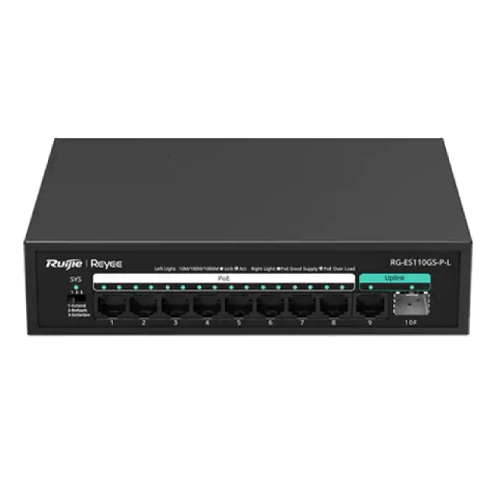
Ruijie RG-ES110GS-P-L 10-Port 10/100/1000 Mbps Unmanaged PoE Switch
Regular Price:৳0.00Availability: SKU: 6.54.312.9593
Quick Overview
-
Support
Saturday – Thursday: 09 AM - 06 PM. -
Payment
Cash on Delivery | Card | Online Payment -
Shipping Cost
Inside Dhaka 100tk | Outside Dhaka 150tk -
Warranty Policy
Read More
Description
Ruijie RG-ES110GS-P-L 10-Port 10/100/1000 Mbps Unmanaged PoE Switch in Bangladesh
A dependable network often comes down to a practical question: how can you connect several devices without adding a separate power adapter for every one? The Ruijie RG-ES110GS-P-L brings Ethernet connectivity and Power over Ethernet together in a 10-port switch. It is designed for wired networks that need Gigabit connections and compatible PoE-powered endpoints, such as IP cameras, wireless access points, and IP phones.
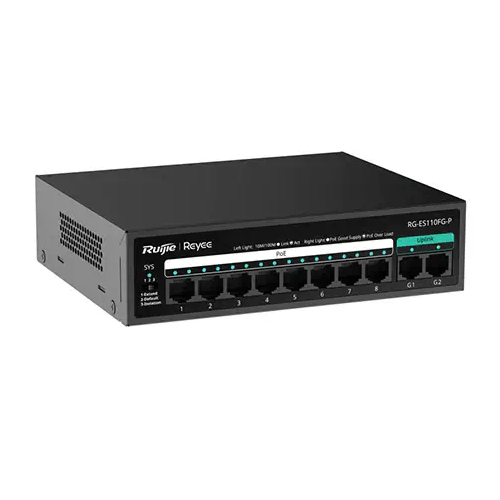
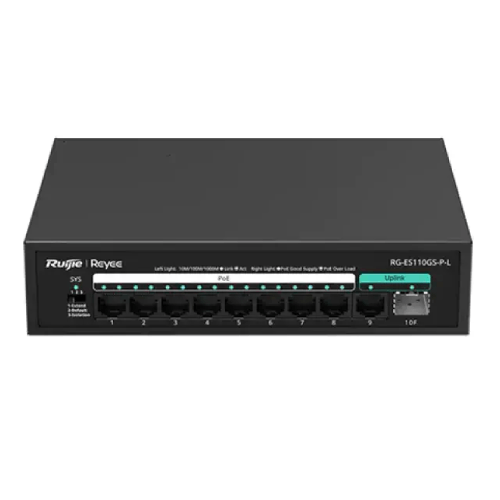
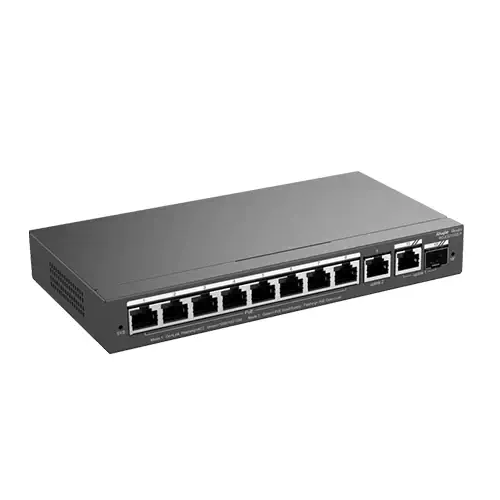
The switch provides 10/100/1000 Mbps Ethernet ports. Its configuration includes eight PoE+ ports and two Gigabit uplink ports, with a stated total PoE power budget of 120W. That combination gives a small network a central connection point while helping keep cabling more organised. Instead of placing power supplies beside each compatible device, you can use an Ethernet cable for both network data and power.
The RG-ES110GS-P-L is listed as an unmanaged switch. That makes it a practical choice when your goal is straightforward wired connectivity rather than detailed network configuration. Connect it into a suitable network, attach compatible devices, and let the switch handle local Ethernet traffic. It does not replace a router, an internet connection, or a Wi-Fi access point; it brings wired devices together within the network.
PoE for a tidier installation
Power over Ethernet can make a visible difference in installations where devices are placed away from wall sockets. A compatible camera mounted above a shop entrance, for example, can receive power and send data through the same Ethernet run. An access point mounted in a hallway or office area can also be easier to position when a nearby power outlet is not required for the device.
The eight PoE+ ports on this Ruijie switch support IEEE 802.3af/at-compatible equipment. Before connecting devices, check each one’s PoE standard and power requirement, then compare the combined demand with the switch’s 120W total PoE budget. The total budget applies across the PoE ports; it is not a separate 120W allowance for each port. Planning the connected load helps avoid choosing a switch that is too small for the installation.
PoE is useful, but it does not make every device compatible. A camera or access point must support a suitable PoE standard to receive power from a PoE port. Devices that use a different power method may need their own power supply. If you are combining products from different brands, check their specifications before purchase rather than assuming that an Ethernet connection also means PoE compatibility.
Ten Gigabit Ethernet ports for a growing edge network
With 10/100/1000 Mbps ports, the RG-ES110GS-P-L can connect compatible equipment at Gigabit Ethernet speeds. The actual negotiated link speed depends on the connected device, its network interface, and the cable installation. A Gigabit switch does not automatically make a slower router, computer, camera, or internet plan operate at Gigabit speed; it provides a suitable connection point for devices that support it.
The port layout is intended to serve both endpoints and the wider network. Eight PoE+ ports can be used for compatible powered devices, while two Gigabit uplink ports provide connections to an upstream router or switch. This arrangement is useful when cameras or access points connect at the edge of a network and traffic needs a route back to a router, network recorder, or core switch.
An uplink is not a second internet subscription. It is a connection to the rest of the local network. If your installation uses both uplinks, plan their roles in advance. Avoid connecting cables in a way that creates a network loop, and do not assume that the ports support link aggregation, failover, or a particular advanced feature unless the product documentation confirms it.
Straightforward switching without unnecessary complexity
A network switch handles traffic between connected devices on a local wired network. In a basic installation, the router remains responsible for functions such as internet access and assigning network addresses. The switch expands the number of available wired connections and forwards traffic between the devices connected to it.
Because the RG-ES110GS-P-L is listed as unmanaged, it suits users who prefer a simple setup rather than configuring individual switch settings. This can be helpful in a small office, shop, or CCTV installation where the network design is clear and does not require advanced controls. You can focus on port planning, compatible devices, cabling, and power requirements instead of spending time on detailed switch configuration.
This simplicity is also a useful boundary to understand. If a project specifically needs VLAN configuration, detailed traffic policies, central monitoring, or other managed-switch functions, confirm the exact capabilities of the model before ordering. A basic unmanaged switch and a managed switch serve different needs; choosing between them should depend on the network plan, not just the number of ports.
Performance for connected cameras, access points, and office devices
For a small CCTV network, the RG-ES110GS-P-L can provide wired links to compatible PoE cameras while reducing the need for individual camera power adapters. Network video still needs a destination: a recorder, server, or other suitable system must receive and store the footage. The switch supplies connectivity; it is not itself a video recorder or storage device. Planning the connection between cameras, recording equipment, and the router helps keep the complete system working as intended.
The same idea applies to wireless access points. An access point can provide Wi-Fi coverage, while the switch supplies a wired network connection and, when the device supports compatible PoE, power over Ethernet. The switch does not create a wireless signal on its own. For a multi-room office or shop, the access points and their placement determine Wi-Fi coverage; the switch provides the wired connection behind them.
IP phones are another possible endpoint when they support a matching PoE standard. In a small business, this can help simplify desk-side cabling. A user still needs a compatible phone system or calling service, and the switch does not provide those services by itself. In every case, check device requirements, network design, and the available PoE budget before connecting equipment.
Useful in everyday Bangladesh settings
In a Dhaka office, a training centre, or a retail shop, network equipment may need to serve several functions at once. One area might need wired computers, another may need wireless access points, and the entrance or storage area may need IP cameras. The Ruijie RG-ES110GS-P-L can serve as a local connection point for a compact installation where Gigabit Ethernet and PoE are useful.
It can also suit a home network that has grown beyond the ports available on a router. A family may want wired connections for a desktop computer, network storage, a smart TV, or a home access point, while also using PoE devices such as cameras. The switch adds connectivity, but check that each endpoint uses the correct port and that the overall network layout gives it a path to the router.
Load shedding deserves attention during network planning. This switch does not guarantee that a network will stay online during a power interruption. To maintain service, use a suitable backup power arrangement for the switch and the other essential equipment, such as the router, modem, recorder, or access points. Size the backup for the combined load and expected runtime, and check that its output matches the electrical requirements of the equipment.
Bangladesh’s hot, dusty, or humid conditions can also influence where networking equipment is placed. Choose a dry, ventilated location away from water, excessive heat, and direct exposure to dust. A crowded cabinet can make cable management difficult and restrict airflow, so allow room to access the ports and keep cables from being sharply bent or pulled.
Placement, cabling, and sensible expectations
The 10-port format makes the RG-ES110GS-P-L suitable for a network edge: the point where cameras, phones, computers, or access points connect to a wider network. Before installation, confirm that the switch fits the intended shelf, counter, or network cabinet and that there is enough space to route cables neatly. Check the product documentation for physical dimensions and mounting details if the unit must fit a specific enclosure.
Use Ethernet cabling suited to the network speed and installation environment. A Gigabit link depends on more than the switch: cable quality, termination, cable condition, and the capabilities of both connected devices all matter. For an installed cable run, use appropriate cabling practices and observe the distance limits relevant to the cable and network standard. Avoid assuming that the switch can overcome a poorly terminated or unsuitable cable.
It is also important to distinguish local network speed from internet speed. If a computer and storage device communicate across a Gigabit wired link, that connection may operate independently of the speed of your internet subscription. Internet performance still depends on the service plan, modem, router, upstream connection, and any congestion elsewhere in the network.
Compatibility and room to plan ahead
Before buying the Ruijie RG-ES110GS-P-L, list the devices you want to connect and identify which ones require PoE. This gives you a clearer picture of how many PoE ports you need, how many standard Ethernet connections are required, and whether the 120W total power budget is suitable. Leave practical room for future devices rather than planning around an uncertain maximum.
Check how the switch will connect to the router or wider network. A simple arrangement may use one uplink for the router or upstream switch, with connected endpoints on the available network ports. Larger or more complex networks may need a different topology. If you are unsure how the two uplinks should be used, ask a network professional to review the design before connecting multiple paths.
Finally, confirm the role of every device. A router provides routing and internet access; a switch provides wired network connections; an access point provides Wi-Fi; and a recorder or server stores camera footage. The Ruijie RG-ES110GS-P-L can contribute to a well-planned system, but it does not replace these other components.
✅ Key Features
- 10 Gigabit Ethernet Ports: Connect compatible wired devices at 10/100/1000 Mbps link speeds.
- Eight PoE+ Ports: Supply data and compatible PoE power to supported cameras, access points, and IP phones.
- Two Gigabit Uplink Ports: Connect the switch to an upstream router or network switch as required by the network plan.
- 120W Total PoE Budget: Plan power for multiple PoE devices within the switch’s stated combined budget.
- IEEE 802.3af/at Support: Use compatible PoE equipment after checking each device’s power requirements.
- Unmanaged Operation: Keep basic network expansion straightforward without relying on detailed switch configuration.
- Reduced Cable Clutter: Carry network data and compatible device power through one Ethernet run.
- Small-Network Expansion: Add wired capacity to suitable home, office, retail, or CCTV networks.
- Gigabit Network Links: Support faster wired connections when connected devices and cabling are also Gigabit-capable.
- Practical Edge Deployment: Bring cameras, access points, and other network endpoints together at a local connection point.
✅ Usage / Applications
- Connecting compatible PoE IP cameras in a shop, office, or small CCTV installation.
- Providing wired connections for PoE-enabled wireless access points.
- Connecting compatible PoE IP phones in a small business.
- Expanding the wired network capacity available from a router.
- Building a small office network for computers and other Ethernet devices.
- Linking network endpoints to an upstream router or switch through the uplink ports.
- Connecting devices in a coaching centre, clinic, or retail space where wired networking is required.
- Supporting a home network with wired computers, media devices, and compatible PoE equipment.
✅ Benefits of This Product?
- Simpler PoE Wiring: Reduce the need for separate power connections at compatible endpoint locations.
- More Wired Capacity: Add 10 Gigabit Ethernet ports to a suitable network layout.
- Clearer Network Planning: Separate PoE endpoint connections from upstream network links.
- Convenient Device Placement: Install compatible PoE devices where network cabling is practical, even when a nearby socket is not.
- Straightforward Deployment: Unmanaged operation suits basic networks that do not need advanced switch configuration.
- Flexible Small-Site Use: Support common wired networking needs across offices, shops, and home installations.
- Better Power Awareness: A defined 120W PoE budget helps you check device requirements before installation.
- Less Adapter Clutter: Use PoE for compatible devices instead of placing a separate power adapter beside each one.
✅ Ideal For
The Ruijie RG-ES110GS-P-L is suited to Bangladesh-based users who need a practical Gigabit switch for a small or medium-sized network edge. It can be a good fit for shop owners, office administrators, CCTV installers, and IT teams connecting compatible cameras, access points, or IP phones. A home user can also consider it when the router does not provide enough wired ports and the network includes PoE-capable devices.
It may suit a coaching centre, clinic, showroom, or small office where wired equipment needs to connect back to a router or an existing network. The unmanaged design is most appropriate when the network does not require extensive switch configuration. Before selecting it, count the devices, confirm how many need PoE, and compare their combined power needs with the 120W budget. If your installation depends on VLANs, remote switch controls, or advanced traffic management, check the exact feature set or consider a managed model instead.
✅ Why Choose the Ruijie RG-ES110GS-P-L?
The value of the RG-ES110GS-P-L is its combination of Gigabit Ethernet, PoE+, and a straightforward unmanaged design. For a network with several compatible cameras or access points, eight PoE+ ports can help reduce the need for separate power arrangements at each endpoint. Two Gigabit uplink ports provide options for connecting the switch to an upstream router or switch, while the 10/100/1000 Mbps ports suit compatible Gigabit devices.
Its 120W total PoE budget also gives buyers a figure to use when planning an installation. Rather than guessing whether a group of devices will fit, add up their power requirements and compare the result with the switch’s total budget. That step is especially useful for CCTV projects, where the number of cameras may grow over time.
The unmanaged format can be an advantage when ease of deployment matters more than detailed network control. It fits a basic wired layout where the router handles internet access and the switch expands the available Ethernet connections. At the same time, a simple design is not the right choice for every project. If the network needs VLANs, advanced traffic policies, or remote management, verify those requirements before choosing this model.
Ruijie is a recognised networking brand, and this model combines several commonly needed features in a single network switch. It is not a substitute for a higher-capacity core switch or a managed network system, but it can be a considered option for a suitable small-site installation. Matching its ports, PoE budget, and operating style to your actual network is the best way to get long-term value from the purchase.
✅ Why Buy This Product from BME?
Choosing a switch is easier when the model, port layout, and intended use are clear. Business Machine & Equipment (BME) serves buyers in Bangladesh looking for networking products and can help you discuss whether the Ruijie RG-ES110GS-P-L fits a planned installation. When contacting BME, share the number of devices, how many need PoE, and the type of router or network already in use. That context makes it easier to ask useful compatibility questions before placing an order.
For a confident purchase, confirm the exact model, current availability, included items, applicable warranty terms, and delivery arrangements with BME. Product terms can vary, so check the details shown for the specific unit rather than relying on assumptions about a different Ruijie model. If authenticity or sourcing documentation is important to your purchase, ask BME what information is available for the unit being supplied.
Business and institutional buyers can contact BME to discuss a quotation and the procurement documentation their organisation requires. If your project needs installation or configuration, confirm whether that service is available and what it includes before ordering. This practical approach helps you align the product with your site requirements without assuming that a particular warranty, installation package, or delivery service is included.
✅ Buying Guide
1. Count your network devices: List every camera, access point, IP phone, computer, recorder, and other Ethernet device. Note which devices need PoE and which only need a data connection. The switch has 10 ports, including eight PoE+ ports and two uplink ports, so check that the layout suits the way you intend to connect the network.
2. Calculate the PoE requirement: Check each powered device’s standard and power draw. Add the requirements together and compare them with the switch’s 120W total PoE budget. Do not treat the total budget as a per-port allowance, and leave reasonable capacity for the real operating requirements of your devices.
3. Confirm device compatibility: Look for IEEE 802.3af/at support on the camera, access point, or phone documentation. If a device uses a different power standard or a separate power supply, confirm how it should be connected before plugging it into a PoE port. Compatibility is especially important when combining equipment from different brands.
4. Check your network speed needs: The RG-ES110GS-P-L has 10/100/1000 Mbps ports. To benefit from a Gigabit link, the connected device, its network adapter, and the cabling must also support Gigabit Ethernet. Remember that the switch cannot increase the speed of your internet subscription or compensate for a slower router.
5. Plan the uplink and network layout: Decide where the switch will sit in relation to the router, recorder, and other switches. Use the uplink ports according to the topology you intend to build. Do not connect cables in a way that creates a network loop, and do not assume that two uplinks provide automatic failover or link aggregation.
6. Decide whether unmanaged is enough: This model is listed as unmanaged, which is suitable for straightforward network expansion. If you need VLANs, detailed traffic controls, remote monitoring, or other managed features, check the current product documentation or compare it with a managed switch before buying.
7. Check power and backup arrangements: Confirm the electrical requirements on the product label or current documentation before connecting it to your site’s power supply. If your network must continue during load shedding, plan backup power for the switch and essential connected equipment, including the router and recorder where applicable.
8. Choose a suitable location: Make sure the intended shelf or cabinet has enough room for the switch, cables, and ventilation. Keep networking equipment in a dry, protected area and avoid tight cable bends. Check the product documentation for the unit’s dimensions and mounting options if space is limited.
9. Verify purchase details: Before ordering, confirm the exact model, current price and availability, supplied accessories, warranty terms, and delivery arrangements with BME. A common mistake is to select a switch based only on port count while overlooking PoE standards, total power needs, management requirements, or the role of the uplink ports.
✅ Customers Ask About / Frequently Asked Questions
Q: What is the Ruijie RG-ES110GS-P-L used for?
A: It is a 10-port Gigabit unmanaged PoE switch for connecting wired network devices and supplying PoE power to compatible endpoints.
Q: How many ports does this switch have?
A: It has 10/100/1000 Mbps Ethernet ports, configured with eight PoE+ ports and two Gigabit uplink ports.
Q: What is its total PoE power budget?
A: The stated total PoE budget is 120W. Check the power requirements of connected devices and keep their combined demand within that budget.
Q: Can I connect IP cameras or wireless access points?
A: Yes, if the devices support a compatible PoE standard and their power requirements suit the available budget. A switch does not record camera footage or create Wi-Fi by itself.
Q: Will it make my internet connection faster?
A: Not by itself. It provides wired network connections; internet speed also depends on your service plan, router, connected devices, and cabling.
Q: Is the RG-ES110GS-P-L managed or unmanaged?
A: It is listed as an unmanaged switch. If you need VLANs, remote controls, or other managed features, verify the exact model’s feature set before purchase.
Q: Is it suitable for Bangladesh’s electrical supply?
A: Check the product’s rating label or current manufacturer documentation for its input requirements. Do not assume a voltage range from the model name alone.
Q: How do I set it up?
A: Connect it to the appropriate power source, link it to the router or upstream network, then connect compatible Ethernet devices. The router or other network equipment remains responsible for functions such as internet access and network addressing.
Q: Will the network keep running during load shedding?
A: Only if the switch and essential network equipment receive suitable backup power. A backup plan should account for the combined load of the switch, router, modem, recorder, and other devices that must stay online.
Q: How is it different from a managed switch or a smaller model?
A: This model offers 10 Gigabit ports and PoE capability, but it is listed as unmanaged. A smaller model may have fewer connections, while a managed model may provide configuration options; compare the exact specifications and network needs.
Q: What are the warranty, delivery, and after-sales arrangements?
A: These details may depend on the current product listing and order terms. Confirm the applicable warranty, delivery availability, and support options with BME before purchasing.
Q: How should I maintain it?
A: Keep the switch in a dry, ventilated location, protect it from dust and moisture, and avoid pulling or sharply bending connected cables. Follow the product documentation for any model-specific care instructions.
✅ Why Buy This Product
If your network needs more Gigabit Ethernet connections and PoE for compatible devices, the Ruijie RG-ES110GS-P-L brings those requirements together in one 10-port switch. Its eight PoE+ ports, two Gigabit uplink ports, and 120W total PoE budget make it worth considering for suitable CCTV, office, retail, and access-point installations in Bangladesh.
Before ordering, check the device count, PoE standards, combined power requirement, and network layout. Those details help you decide whether an unmanaged switch matches your project or whether you need a model with more advanced controls. For questions about the exact variant, availability, or purchase terms, contact Business Machine & Equipment (BME) for guidance.
Order the Ruijie RG-ES110GS-P-L from BME when its port arrangement and PoE capabilities align with your requirements. A well-planned switch can help organise wired connections, simplify compatible device power, and provide a clearer foundation for your local network.
What is the price of Ruijie RG-ES110GS-P-L 10-Port 10/100/1000 Mbps Unmanaged PoE Switch in Bangladesh?
Write a review
Question Answer
Have question about this product? Get specific details about this product from expert.