Audac SP20 20W Broadband Sound Projector
Regular Price:৳0.00Availability: SKU: 6.87.617.9641
Quick Overview
-
Support
Saturday – Thursday: 09 AM - 06 PM. -
Payment
Cash on Delivery | Card | Online Payment -
Shipping Cost
Inside Dhaka 100tk | Outside Dhaka 150tk -
Warranty Policy
Read More
Description
Audac SP20 20W Broadband Sound Projector in Bangladesh
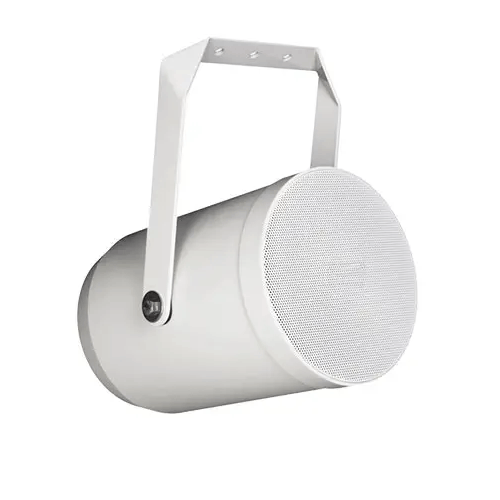
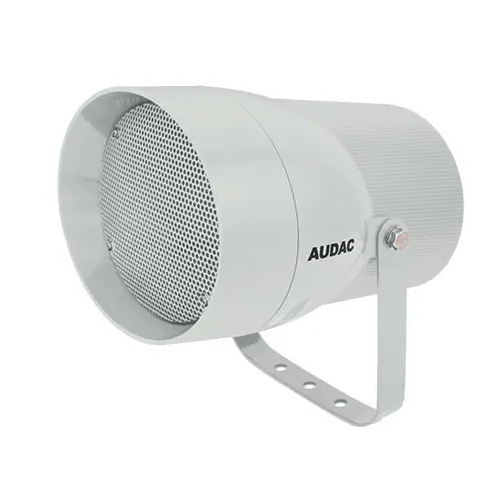
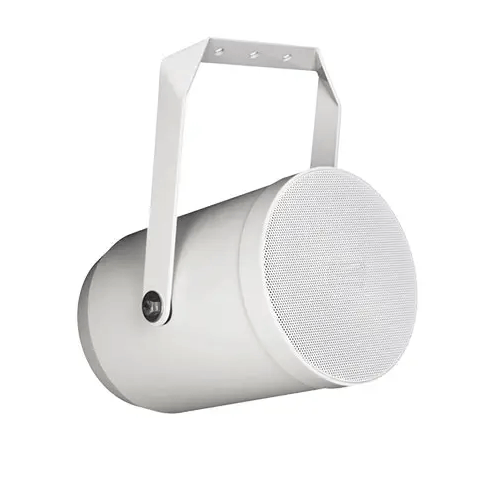
The Audac SP20 is a broadband sound projector with a 5-inch driver and a stated RMS/AES power handling of 20 W. It is specified with an 8 Ω impedance, transformer tap settings, a frequency response of 130 Hz–15 kHz within ±3 dB and 180° dispersion. The white enclosure, stainless-steel U-bracket and aluminium front grille are also listed. These details make it a product to assess for a fixed sound installation, provided its connection method, coverage and site requirements suit the project.
Passive speaker design. The SP20 is listed with both RMS/AES and program power handling, and the specifications also give a peak power rating. The supplied information does not identify it as a powered speaker, so plan to use a suitable amplifier and follow the product’s connection instructions. The 8 Ω impedance and transformer tap information should be checked against the amplifier and intended system. Do not assume that every connection option can be used at the same time or that an amplifier will be compatible without checking its specifications.
Driver and frequency response. A 5-inch driver is specified. The listed response is 130 Hz to 15 kHz at ±3 dB. This range is a useful comparison point when considering the types of audio content and coverage a project requires. It does not by itself determine sound quality or guarantee a particular result in a room. Amplifier choice, placement, the listening area and the room’s surfaces also influence what listeners hear. If a project has specific frequency requirements, compare them with the speaker’s stated response before selecting it.
Power ratings. Three power-handling figures are supplied: 20 W RMS/AES, 40 W program and 80 W peak. These are different rating categories, not interchangeable ways of stating one continuous operating figure. In particular, the peak rating should not be used as the speaker’s continuous-power rating or as the sole basis for choosing an amplifier. Check the speaker documentation and the amplifier manufacturer’s guidance when matching equipment. The supplied details do not state a recommended amplifier power range, so confirm the appropriate system design before installation.
Transformer taps. Four transformer tap settings are listed, with power and impedance values:
- Tap 1: 20 W / 500 Ω
- Tap 2: 10 W / 1,000 Ω
- Tap 3: 5 W / 2,000 Ω
- Tap 4: 2.5 W / 4,000 Ω
The supplied information does not specify which line voltage these taps are intended for. Confirm the required voltage, wiring method and tap selection against the product documentation and amplifier before connecting the speaker. Do not assume a particular 70 V or 100 V arrangement based on tap information alone.
Impedance and system matching. The speaker is also listed with an impedance of 8 Ω. This is an important detail when checking compatibility with an amplifier’s low-impedance output. The transformer tap values and 8 Ω specification describe connection information that needs to be interpreted for the installation; the supplied details do not explain the terminal layout or selection procedure. Read the connection labels and instructions for the exact unit, and have the system checked if there is any uncertainty about which connection mode to use.
Sensitivity and sound pressure. Sensitivity is specified as 92 dB at 1 W/1 m. A maximum sound-pressure figure of 104 dB is also provided. The supplied field labels the latter “Max. W/1m,” but does not explain the measurement conditions or notation. Treat 104 dB as the listed figure and confirm its measurement basis before using it in calculations or comparing it directly with another speaker’s sound-pressure specification. Actual sound levels also depend on the amplifier, position, room and listening distance.
Dispersion and directivity. The stated dispersion is 180°, and the directivity Q factor is listed as 2.60. These figures can help with initial placement and coverage planning, but they do not guarantee even sound throughout a space. Room dimensions, surface reflections, mounting position and listener locations all affect coverage. If a project needs a particular listening area covered, use the supplied figures as part of the design rather than assuming that one speaker will suit every room. For complex spaces, assess the full system and placement plan.
Ingress protection. The SP20 has a listed IP56 rating. This is a specification to consider when reviewing where the speaker may be installed, but it should not be treated as a blanket guarantee for every exposed, wet or dusty location. Confirm the manufacturer’s installation guidance and whether the complete installation—including mounting, cable routing and connections—is suitable for the intended site. The supplied details do not describe specific environmental use cases, so check the conditions of your project before relying on the rating.
Potential applications. A broadband sound projector may be considered for fixed sound systems where the speaker’s frequency response, dispersion and installation options match the project. Possible settings to assess include public or shared spaces, corridors, commercial premises and other locations where speech or general audio needs to be distributed. These are examples for evaluation, not confirmed applications for every installation. The number of speakers and the appropriate mounting positions depend on the size and acoustics of the area, amplifier setup and required listening coverage.
Connection cable. A 75 cm connection cable is listed. This gives a reference for the cable length supplied with the speaker, but the product details do not specify its connector type, termination or whether it can be extended. Check how the cable connects to the amplifier or system and whether its reach suits the planned installation. If your setup needs a longer cable, different termination or additional wiring, confirm the requirements before buying. Do not assume other cables or connectors are included.
Mounting bracket. A stainless-steel U-bracket is listed for mounting, and a mounting bracket is specified as an included accessory. Check the product documentation for the approved mounting arrangement and installation method. The supplied details do not state which wall or ceiling fixings are included, or which surfaces and orientations are supported. Confirm that the mounting point and any required hardware are appropriate for the installation. Plan access to the connection cable and make sure the selected position allows the speaker to be aimed as intended.
Size and weight. The speaker’s dimensions are listed as 138 mm in diameter and 204 mm in depth. Its stated weight is 1.9 kg. Use these measurements to check the proposed location and access route, and allow room for the bracket and cable as well as the speaker body. Confirm that the mounting surface and attachment method are suitable. The dimensions and weight are useful planning data, but they do not specify the clearances or structural requirements for a particular installation.
Construction and finish. The enclosure is specified as ABS, with an aluminium grille at the front. The listed colour is white. These physical details may matter when coordinating the speaker with the installation environment or other equipment. The supplied specifications do not provide a colour code or name any alternative finish for this model. If a particular shade or finish is important, confirm the exact product appearance with BME before ordering rather than assuming that the listed white finish matches other equipment exactly.
Operating temperature. The specified operating-temperature range is -20 °C to 60 °C. Compare this range with the temperature conditions at the planned location, and consider it alongside the IP56 rating and the manufacturer’s installation instructions. Temperature information alone does not establish suitability for every exposed environment. If a site has unusual heat, cold, moisture or other environmental conditions, verify that the complete speaker installation is appropriate before purchase.
System planning. Before installation, identify whether the system will use the 8 Ω specification or one of the transformer taps. Check the amplifier output, voltage requirements and total speaker load, especially if the project uses multiple speakers. The product information supplies tap values but does not describe the supported line voltage, terminal layout or a recommended amplifier range. Confirm those items using the product documentation and the amplifier’s specifications rather than inferring them from the model name or power ratings.
Avoiding setup assumptions. A frequent source of mismatch is treating the 80 W peak figure as though it were the continuous rating, or assuming that the transformer taps correspond to a specific line voltage when none is stated in the supplied details. Other details to verify include the cable termination, the mounting hardware required and the sound-pressure measurement basis. Checking these points before installation can help the speaker, amplifier and mounting plan work together as intended.
Purchase checks. The supplied specifications do not state a warranty period, country of manufacture, package contents beyond the mounting bracket, or whether installation services are available. Ask BME to confirm any of these details that matter to your purchase. If delivery or another service is important, ask whether it is available for your location and what terms apply. Do not assume a particular warranty, installation or other service is included unless it is confirmed.
Choosing the SP20. The Audac SP20 is best evaluated as a 20 W RMS/AES broadband sound projector with a 5-inch driver, 8 Ω impedance, transformer taps and a stated 180° dispersion. Its frequency response, IP56 rating, 75 cm connection cable and stainless-steel bracket provide further points for assessing an installation. Confirm the amplifier connection, supported voltage, placement and site suitability before ordering. This helps ensure that the speaker’s stated specifications align with the actual system and environment.
✅ Key Features
- Broadband sound projector: Designed as a fixed-installation speaker for evaluation within a suitable audio system.
- 5-inch driver: The listed driver size is 5 inches.
- 20 W RMS/AES handling: Also lists 40 W program and 80 W peak power handling.
- 8 Ω impedance: Check amplifier compatibility and connection requirements before use.
- Transformer taps: Lists 20 W, 10 W, 5 W and 2.5 W settings with corresponding impedance values.
- Wide listed dispersion: Specifies 180° dispersion and a directivity Q factor of 2.60.
- Ingress protection rating: IP56 is listed; confirm suitability for the specific installation environment.
- Included mounting bracket: A stainless-steel U-bracket is specified.
- Cable and enclosure details: A 75 cm connection cable, ABS construction and aluminium grille are listed.
- White finish: The supplied product details identify the colour as white.
✅ Usage / Applications
- Fixed audio systems: Consider it for a permanent installation when its specifications suit the project.
- Public or shared spaces: Evaluate it for speech or general audio where the coverage plan is appropriate.
- Corridors and passageways: Assess the 180° dispersion against the space and listening positions.
- Commercial premises: Consider it as part of a system designed for the site’s audio requirements.
- Distributed sound setups: Check the transformer taps, amplifier and line-voltage requirements before connection.
- 8 Ω audio systems: Confirm the amplifier supports the intended speaker load.
- Environment-sensitive installations: Review the IP56 rating and operating-temperature range against the site.
- Bracket-mounted placement: Plan the installation using the included stainless-steel U-bracket and required fixings.
✅ Benefits of This Product?
- Multiple system details to evaluate: The 8 Ω impedance and transformer tap values give installers useful connection information to verify.
- Clear power-rating categories: RMS/AES, program and peak ratings are listed separately.
- Wide stated dispersion: The 180° figure can inform initial placement planning.
- Mounting information included: The stainless-steel U-bracket is listed as an included accessory.
- Practical site-planning data: Dimensions, weight and operating-temperature range help assess installation requirements.
- Environmental rating provided: IP56 is available as a specification to check against the site.
- Cable length stated: The included connection cable is listed as 75 cm, which can be compared with the planned setup.
- More informed system selection: Confirming voltage, amplifier and connection details can help avoid installation mismatches.
✅ Ideal For
The Audac SP20 may suit buyers planning a fixed audio installation that needs a broadband sound projector with a 5-inch driver. Its 20 W RMS/AES rating, 8 Ω impedance, transformer tap settings and 180° dispersion are useful specifications to compare with an amplifier and coverage plan. It may be evaluated for shared or commercial spaces where a projector-style speaker fits the audio design.
It is most appropriate for buyers who can verify the connection and installation requirements before purchase. The supplied tap information does not identify a line voltage, so confirm the required voltage and wiring with the product documentation and amplifier. Also check the IP56 rating against the actual site, along with the mounting surface, cable reach and operating-temperature range. Do not assume that an IP rating alone makes a speaker suitable for every outdoor or exposed location.
✅ Why Choose the Audac SP20 20W Broadband Sound Projector?
The Audac SP20 is worth considering when a project calls for a broadband sound projector and needs clearly stated connection, power and mounting details. It has a listed 5-inch driver, 20 W RMS/AES power handling and separate program and peak ratings of 40 W and 80 W. Its 8 Ω impedance and four transformer tap settings provide specifications to check against the amplifier and system design.
The 180° dispersion and directivity Q factor of 2.60 are useful starting points when considering placement and coverage. The stated frequency response is 130 Hz–15 kHz within ±3 dB, while sensitivity is listed as 92 dB at 1 W/1 m. The maximum sound-pressure figure is 104 dB, but its supplied notation is unclear; confirm the measurement basis if it matters to your design.
The IP56 rating, operating-temperature range and stainless-steel U-bracket also provide practical details for site planning. The supplied information lists a 75 cm connection cable, ABS construction, an aluminium grille and a white finish. However, it does not specify the transformer line voltage, cable termination, recommended amplifier range or warranty terms.
The SP20 is most suitable when these details match the actual installation. Confirm the amplifier connection, tap selection, mounting requirements and environmental conditions before ordering. This helps you assess the speaker on its documented characteristics instead of assuming that the product title alone establishes system compatibility.
✅ Why Buy This Product from BME?
When enquiring with BME about the Audac SP20, share how you plan to connect and install the speaker. Ask for the current quotation and confirm that the offered model matches the white SP20 with the specifications you need. If you are using an amplifier or distributed audio system, check the required impedance, transformer setting and line voltage before placing an order.
The supplied product details do not state which line voltage applies to the transformer taps, the cable termination, a recommended amplifier range or the measurement basis for the 104 dB sound-pressure figure. Ask BME to clarify any of these points that affect your project. You can also confirm the package contents and applicable written warranty terms; the mounting bracket is listed as included, but other terms are not specified here.
If delivery, installation or another service matters to your purchase, ask whether it is available for your location and what conditions apply. Do not assume that a particular service or warranty is included unless BME confirms it. Checking the model, connections and purchase terms first gives you a clearer basis for deciding whether the SP20 suits your installation.
✅ Buying Guide
- Define the installation: Identify the space, listening area and required type of audio coverage.
- Check the amplifier: Confirm support for the speaker’s listed 8 Ω impedance or the intended transformer connection.
- Verify transformer voltage: The tap table does not state a line voltage; confirm it from product documentation before connection.
- Select the correct tap: Match the required power setting and impedance value to the system design.
- Understand the ratings: Treat 20 W RMS/AES, 40 W program and 80 W peak as separate figures.
- Plan speaker placement: Compare the 180° dispersion with the room layout and listener positions.
- Check cable reach: The connection cable is listed as 75 cm; confirm its termination and whether its length suits your setup.
- Review mounting needs: The stainless-steel U-bracket is listed as included; confirm required fixings and mounting suitability.
- Assess site conditions: Compare the IP56 rating and -20 °C to 60 °C operating range with the intended location.
- Clarify the sound-pressure figure: Ask about the measurement basis for the listed 104 dB before using it in calculations.
- Avoid common mistakes: Do not infer a 70 V or 100 V rating, treat peak power as continuous, or assume outdoor suitability from IP56 alone.
- Confirm purchase details: Ask BME about the exact model, package contents, warranty and any service you need.
✅ Customers Ask About / Frequently Asked Questions
-
Q: What is the Audac SP20 price in Bangladesh?
A: Contact BME for the current quotation. -
Q: Is the Audac SP20 an active or passive speaker?
A: It is listed with an 8 Ω impedance and transformer taps; check the product documentation for the connection method. A built-in amplifier is not specified. -
Q: What are its power ratings?
A: The listed ratings are 20 W RMS/AES, 40 W program and 80 W peak. -
Q: What transformer taps are specified?
A: The listed settings are 20 W/500 Ω, 10 W/1,000 Ω, 5 W/2,000 Ω and 2.5 W/4,000 Ω. -
Q: Does the tap information confirm 70 V or 100 V operation?
A: No line voltage is stated in the supplied details. Confirm it with the product documentation before connecting the speaker. -
Q: What driver and frequency response are listed?
A: It has a listed 5-inch driver and a response of 130 Hz–15 kHz at ±3 dB. -
Q: What is the dispersion?
A: The specified dispersion is 180°, with a directivity Q factor of 2.60. -
Q: Is the SP20 suitable for every outdoor location?
A: It is listed as IP56, but site suitability depends on the installation conditions and manufacturer’s guidance. Confirm before choosing an exposed location. -
Q: What mounting and cable details are provided?
A: A stainless-steel U-bracket is listed, along with a 75 cm connection cable. Confirm fixings and cable termination. -
Q: What colour is the Audac SP20?
A: The supplied product details list it in white.
✅ Why Buy This Product
The Audac SP20 is a model to consider when a project needs a broadband sound projector with a 5-inch driver, 20 W RMS/AES handling and 180° listed dispersion. Its separate program and peak ratings, 8 Ω impedance and transformer tap values provide useful points for planning a suitable amplifier connection. The stainless-steel U-bracket, 75 cm cable and IP56 rating also give buyers details to check against the installation.
Before choosing it, confirm the line voltage and wiring required for the transformer taps; these are not stated in the supplied specifications. Review the operating-temperature range and IP56 rating against the actual site, and do not assume the rating guarantees suitability for every exposed environment. Check cable reach, mounting requirements and the unclear measurement basis for the listed 104 dB figure if it matters to your design.
If the SP20’s confirmed specifications match your system, contact BME to verify the exact model and purchase details, then proceed with your order.
What is the price of Audac SP20 20W Broadband Sound Projector in Bangladesh?
Write a review
Question Answer
Have question about this product? Get specific details about this product from expert.