Televic Wired Conference Central Control Unit With Hybrid Meeting Ready
Regular Price:৳0.00Availability: SKU: 6.57.619.9653
Quick Overview
-
Support
Saturday – Thursday: 09 AM - 06 PM. -
Payment
Cash on Delivery | Card | Online Payment -
Shipping Cost
Inside Dhaka 100tk | Outside Dhaka 150tk -
Warranty Policy
Read More
Description
Televic Wired Conference Central Control Unit With Hybrid Meeting Ready in Bangladesh
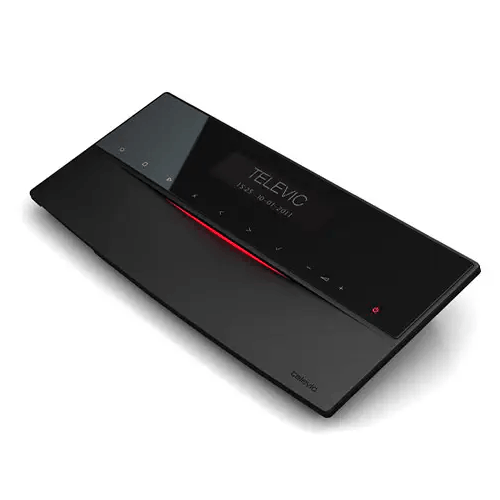
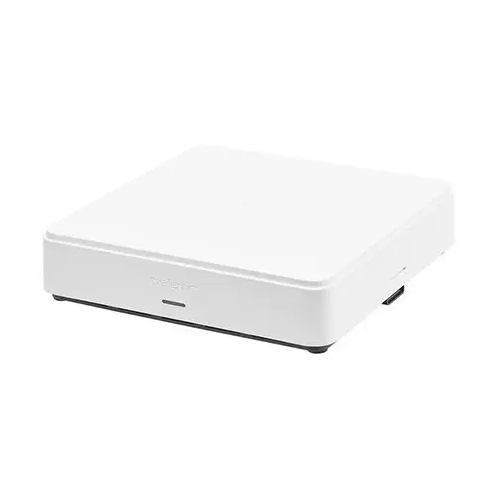
The Televic D-CERNO CUR is a wired conference central control unit described for small- to mid-sized discussion systems. The supplied information lists touch-sensor controls, an integrated web server, integrated meeting recording, digital acoustic feedback reduction and controller/peripheral operation for system expansion. It is intended to be assessed as the central component of a compatible conference setup—not as a standalone microphone, loudspeaker or general-purpose computer.
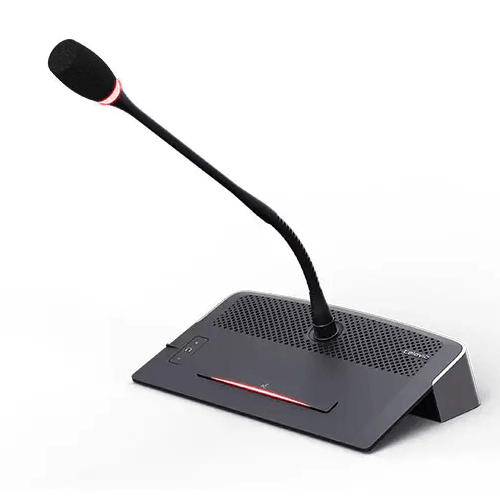
Role in a wired conference system: A central unit coordinates connected conference equipment and supplies the system’s control and audio functions. The product description says delegate units connect to the D-CERNO CUR through four bus connections in a daisy-chain arrangement. Exact supported delegate and chairman unit models, cable types, maximum cable lengths and wiring diagrams were not included in the supplied information. Check these details against the equipment already in the room before selecting the unit.
The description characterises the D-CERNO CUR as suitable for entry-level discussion systems and says it can be used for small- to mid-sized meetings. The unit’s actual suitability depends on the number and type of connected devices, the meeting workflow and any requirements for external audio or hybrid conferencing. Confirm the complete system design rather than relying on the central unit’s model name alone.
Capacity and expansion: The supplied key features state that the system is for up to 50 units. The longer description says that the central unit can control up to 50 delegate units and that a system can expand to 150 units using multiple central units in a controller/peripheral configuration. These are different capacity claims: the first describes a 50-unit scope, while the second describes expansion using multiple units. Confirm the maximum for your exact configuration, what counts as a unit and how the central units must be connected. Do not assume that one D-CERNO CUR supports 150 delegate units by itself.
The listed controller/peripheral function gives system designers a basis for asking about expansion. However, the supplied material does not specify how many central units can be connected, how they should be assigned, or whether every feature is available in an expanded arrangement. If you are planning a larger installation, ask for a system diagram and a confirmed capacity for the proposed combination of central units and conference units.
Wired connections and redundancy: The supplied description identifies four bus connections and a daisy-chain layout for delegate units. It also describes a redundancy mechanism intended to help the system continue operating if a cable breaks. This may be relevant in installations where continued operation is important, but the available information does not explain the wiring topology, what remains operational after a cable fault or how the system indicates a fault. Confirm the redundancy arrangement and recovery behaviour before relying on it in a critical meeting environment.
A wired system can make cable planning central to the installation. Before placing equipment, work out where the central unit will sit, where the connected conference units will be positioned and how the bus cables will run. The supplied information does not state maximum cable lengths or termination requirements, so verify those details for the selected system components. Avoid assuming that a cable meeting a generic connector or category specification will meet Televic’s requirements for this specific bus.
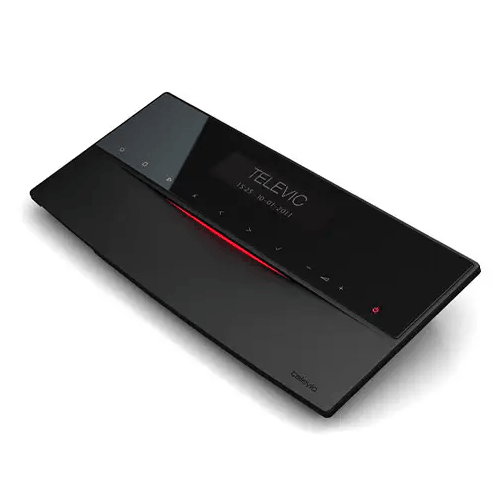
Touch controls and menu operation: Touch-sensor button technology is listed as a key feature. The product description also mentions a large LCD menu for local control and configuration. The screen size, resolution, interface layout and available menu languages were not supplied. The touch controls and display provide a stated way to operate the unit at the central position, but they do not establish every function available to an operator. Review the user interface and operating instructions if the day-to-day control process is important to your team.
The description lists several conference modes: Direct Access, Request, Push to Talk, FIFO and VOX Control. These names indicate options for managing access to speak, but the supplied details do not define the precise behaviour or configuration of each mode. Confirm which modes are available in the intended system and how they affect chairperson or delegate operation. In particular, check how VOX activation is configured and whether it is appropriate for the room’s noise level and meeting style.
Integrated web server: The D-CERNO CUR is described as having an integrated web server for system control and configuration. The description also refers to browser-based configuration. This may offer an alternative to making all adjustments at the unit itself, but browser requirements, supported devices, network configuration, access controls and remote-access behaviour were not provided. Confirm how the web server connects to a network and whether it fits the organisation’s IT and security policies. Its presence alone does not establish cloud management or internet access.
If the web server will be used by several staff members, decide who is responsible for configuration and how access should be managed. The supplied specifications do not describe user accounts, authentication methods or permission levels. Ask for the relevant documentation before connecting the central unit to a managed network, especially where the organisation controls network access to meeting-room equipment.
Integrated recording: The product description states that the unit can record meetings directly to USB devices using two front USB connections. It also says recording can switch to a second device if the first becomes full. This offers a stated way to manage recording across USB storage devices, but the specifications supplied do not identify supported file formats, maximum drive capacity, file system, recording quality, time limits or file-management controls. Confirm these details if recordings are part of a formal meeting workflow.
The automatic switch to a second device is described as a response to the first becoming full. Do not assume this means the two devices record simultaneously, that recordings are duplicated for backup or that a recording continues through every possible USB fault. The supplied information does not describe those behaviours. For important meetings, test the recording process with the actual storage devices and confirm how recordings are stopped, stored and retrieved.
Also consider the organisation’s own rules for recording, consent, access and retention. The product information explains a recording function, but it does not establish how a venue should handle recordings or whether any particular privacy or records-management requirement is met. Plan those procedures separately and confirm the technical recording details with the supplier.
Digital audio and feedback reduction: The stated audio quality is 16-bit digital. The product information also lists default digital acoustic feedback reduction and selectable VOX activation. Feedback reduction is a system feature intended to help manage acoustic feedback; it should not be understood as a guarantee that feedback cannot occur. Room acoustics, loudspeaker placement, microphone use and system levels remain relevant. Set up and test the complete audio system in the intended room.
The supplied description also mentions system volume control. The listed volume range is 0 dB to −46 dB plus “OFF.” This provides a technical reference for checking the central unit’s stated control range, but the information does not specify the exact point in the signal chain that the control affects. Confirm its operation if you need to coordinate system volume with external equipment or room controls.
Auxiliary audio connections: The D-CERNO CUR specifications list an AUX 1 balanced XLR input and an unbalanced RCA AUX input. The XLR input impedance is given as ≥7 kΩ with the note “asymm.”, while the RCA input is listed as ≥20 kΩ (asymm.). The description labels the XLR input as balanced but includes “asymm.” in its impedance entry. That wording should be verified before technical design or connection; it is not silently interpreted here as a corrected balanced-input specification.
Input gain adjustment is listed from +24 dB to −51 dB, with “OFF.” The supplied details do not explain the adjustment steps, whether the same range applies to both inputs or the operating procedure. Check the manual for level-setting guidance. When connecting an external audio source, confirm its output level and connection type rather than assuming that a familiar connector guarantees the right signal level.
Two unbalanced RCA outputs are listed as AUX OUT 1 and AUX OUT 2. Their maximum output level is given as 0 dBV = −10 dBFS, and output impedance is listed as ≤600 Ω. Output gain adjustment is specified from +24 dB to −51 dB, with “OFF.” Match the outputs to the receiving equipment and confirm the intended routing, output behaviour and cable requirements. No routing diagram or output assignment details were supplied.
Headphone connection: The headphone specification lists a load impedance range of 16–150 Ω and maximum output power of 70 mW at 32 Ω. A headphone volume control is specified from 0 dB to −72 dB, plus “OFF.” These figures can help with headphone selection and system planning. The supplied information does not describe headphone socket type, number of outputs or any independent listening channels, so confirm those points if they matter to the installation.
Power and energy planning: The central unit is specified with an external power-supply input of 100–240 VAC, 50–60 Hz and 2.5 A. Power supplied to conference units is listed as 48 V DC, 3.35 A, with maximum power stated as 180 W. Active power consumption is listed as 4 W and standby consumption as 0.7 W. Keep the external mains input distinct from the DC output to connected units when planning the installation. Confirm the supported load, connected-unit limits and power distribution method for the complete system.
The longer product description identifies a D-Cerno PS and cable in the packed-weight note. That note is not a complete itemised package list, so confirm whether the power supply and required cable are included in the specific product being offered. Also check the correct power connection for the intended location. Do not infer that the central unit powers every planned combination of conference devices merely from the stated output figure; the allowable configuration and load should be verified.
Hybrid-meeting positioning: The product title supplied for this listing describes the central unit as “Hybrid Meeting Ready.” The technical information does not specify a conferencing-platform connection, USB audio interface, supported software, computer connection or other hybrid-meeting method. Therefore, the label should not be taken as confirmation of compatibility with a specific online meeting platform. If the installation must connect in-room discussion to remote participants, ask BME to confirm the required interfaces, accessories and system configuration.
The supplied description also mentions camera-control integration, but it does not identify supported camera models, control protocols or required additional equipment. Treat this as a feature to verify for the intended installation. Confirm how the camera control is connected and whether it is part of the central unit’s standard configuration or requires separate components.
Physical installation and operating environment: The central unit is specified as black PC/ABS, measuring 300 × 135 × 50 mm (W × H × D). Packed dimensions are listed as 345 × 250 × 155 mm. The unit weight is given as “1300” without a unit in the supplied specifications, so clarify whether that means grams or another measure. Packed weight is listed as 2600, with the note that it includes the D-Cerno PS and cable; the unit for the packed weight should also be confirmed.
The stated operating temperature range is 5–45°C. No storage temperature, humidity range, IP rating or environmental protection claim was supplied. Plan installation in an environment within the stated operating range, and do not assume that the unit is rated for dusty, wet or outdoor conditions. The product description calls the design fanless and intended for silent operation. If acoustic noise is important, remember that other equipment in the same room or rack may have fans even if this central unit does not.
The supplied product information lists a three-year brand warranty. Confirm the warranty issuer, coverage, eligibility and applicable terms in Bangladesh with BME. Taken together, the product details give useful information about system control, recording, audio connections and power, but questions remain about capacity expansion, the hybrid connection, camera integration and some package details. Resolving these before purchase can help ensure the D-CERNO CUR fits the actual meeting-room design.
✅ Key Features
- Touch-Sensor Controls: The supplied description identifies touch-sensor button technology for operating the central unit.
- Integrated Web Server: Provides a listed browser-based route for system control and configuration; network requirements should be confirmed.
- Integrated USB Recording: The description specifies two front USB connections and automatic switching to a second device when the first is full.
- Stated 50-Unit Scope: The key features list systems up to 50 units; the larger expansion claim requires configuration confirmation.
- Controller/Peripheral Expansion: The supplied description says multiple central units can expand the system, with a stated total of up to 150 units.
- Conference-Mode Options: Direct Access, Request, Push to Talk, FIFO and VOX Control are listed in the supplied description.
- Digital Feedback Reduction: Default digital acoustic feedback reduction is listed; it does not replace room and level management.
- Four Bus Connections: The description identifies a daisy-chain connection arrangement with four bus connections.
- Auxiliary Audio I/O: Balanced XLR and unbalanced RCA inputs, plus two unbalanced RCA outputs, are specified.
- Fanless Design: The supplied description identifies a fanless design for silent operation.
- Three-Year Brand Warranty Listed: The product information lists a three-year brand warranty; confirm its local terms.
✅ Usage / Applications
- Small and Mid-Sized Meetings: Consider for a wired discussion system after checking the planned unit count and components.
- Boardrooms: Use as a central control component in a compatible wired conference installation.
- Training Rooms: Assess for organised sessions where selectable speaking modes suit the meeting workflow.
- Conference Recording: Consider for direct USB recording after checking supported storage formats and capacity.
- Wired Delegate Systems: Plan connections using the stated bus arrangement and confirm cable requirements.
- Expanded Conference Installations: Investigate controller/peripheral expansion when one central unit does not meet the proposed capacity.
- Auxiliary Audio Integration: Check compatibility when connecting external audio sources or destinations through the listed XLR and RCA connections.
- Hybrid Meeting Workflows: Consider only after confirming the specific interface and platform compatibility needed.
- Camera-Control Projects: Verify camera models, control protocols and additional equipment before relying on the described integration.
✅ Benefits of This Product?
- Centralised System Control: Provides a single specified control point for a compatible wired conference system.
- Flexible Speaking Modes: The listed modes give organisers options to investigate for different discussion formats.
- Practical Recording Workflow: The described dual-USB arrangement may help manage storage changes during longer meetings.
- Web-Based Configuration Option: The integrated web server provides a listed alternative to local menu operation.
- System Expansion Path: Controller/peripheral operation is described for larger configurations, subject to confirmation.
- Audio Connection Choices: XLR and RCA inputs and RCA outputs provide interfaces to assess for external equipment.
- Feedback-Management Feature: Digital acoustic feedback reduction is listed as part of the system feature set.
- Power Planning Details: Specified input, output and consumption figures help with preliminary installation planning.
✅ Ideal For
The Televic D-CERNO CUR is ideal for organisations planning a compatible wired discussion system for meetings, boardrooms or training spaces. Its listed control modes, touch-sensor operation, web server and USB recording features may suit a venue that wants centralised management of a structured conference setup. The auxiliary XLR and RCA connections also give AV planners specific interfaces to check when integrating external audio equipment.
It is best suited to buyers who can verify the connected unit models, bus cabling, power budget and total system capacity before ordering. The supplied information gives a 50-unit scope and also describes expansion to 150 units through multiple central units; the configuration should be confirmed rather than assumed. The “Hybrid Meeting Ready” wording and camera-control mention also need a practical compatibility check, as no platforms, protocols or connection methods are listed. Confirm package contents and local warranty terms with BME.
✅ Why Choose the Televic D-CERNO CUR Wired Conference Central Control Unit?
The D-CERNO CUR brings several useful planning points together for a wired conference system: touch-sensor controls, an LCD menu, an integrated web server, digital acoustic feedback reduction and a listed set of conference modes. For organisations arranging structured discussion, the named modes—Direct Access, Request, Push to Talk, FIFO and VOX Control—provide a starting point for checking whether the system’s operation matches the way meetings are run.
Recording and system expansion are also part of the supplied description. The unit is said to record directly to USB devices through two front connections, with recording switching to a second device when the first is full. The controller/peripheral function is described as a way to expand beyond the 50-unit scope, with the longer description stating up to 150 units using multiple central units. Both recording behaviour and expansion limits should be verified against the exact system design.
The technical specifications add practical details for integration: 16-bit digital audio, headphone output figures, XLR and RCA auxiliary connections, 48 V DC output to conference units, and specified active and standby power consumption. The key decision is compatibility. The supplied material does not define a hybrid-platform connection, the camera-control protocol or the detailed expansion wiring. If those requirements are confirmed and the unit fits your wired system, the D-CERNO CUR is a considered option for central conference control.
✅ Why Buy This Product from BME?
For buyers in Bangladesh, BME is a place to enquire about the Televic D-CERNO CUR and confirm the details of the product being offered. No current price or availability is confirmed in this page, so ask BME for a current quote and order terms. Confirm any delivery or collection arrangements directly rather than assuming they apply.
Use your enquiry to verify the exact model and system fit. In particular, clarify whether the installation is designed for up to 50 units or an expanded controller/peripheral configuration, and what the stated 150-unit arrangement requires. You can also ask about supported delegate units, bus cabling, power distribution, the hybrid-meeting connection and camera-control compatibility. These checks are important because several of those details are not included in the supplied specifications.
The product information lists a three-year brand warranty. Confirm the warranty issuer, coverage, eligibility and applicable Bangladesh terms with BME before ordering. It is also sensible to check whether the D-Cerno PS, cable and any other required accessories are included; the packed-weight note mentions the power supply and cable but is not a complete package list. This helps you compare the exact product and terms with your system plan.
✅ Buying Guide
- Confirm the Exact Model: The key features identify D-CERNO CUR; verify that this is the model being offered.
- Resolve the Unit-Capacity Difference: The supplied information lists up to 50 units and also describes expansion to 150 using multiple central units.
- Check Compatible Conference Units: Confirm supported delegate and chairman equipment, connection method and any system-specific requirements.
- Plan the Bus Cabling: Ask for the correct cable type, topology, length limits and redundancy wiring guidance.
- Verify Power Requirements: Check the external mains supply and the 48 V DC output limits against the planned system load.
- Confirm Recording Details: Ask about supported USB formats, capacities, recording files and the stated switch to a second USB device.
- Check Hybrid Compatibility: Confirm the required connection, equipment and online-meeting platform; “Hybrid Meeting Ready” alone does not specify these.
- Clarify Audio Connections: Verify the XLR input specification, RCA input and output levels, gain controls and routing.
- Confirm Package Contents: Ask whether the D-Cerno PS, cable and required accessories are included.
- Check Warranty Terms: Verify the listed three-year brand warranty and its applicability to your purchase in Bangladesh.
✅ Customers Ask About / Frequently Asked Questions
Q: What is the Televic D-CERNO CUR price in Bangladesh?
A: Contact BME for the current quote and purchase terms.
Q: What is the D-CERNO CUR?
A: It is described as a wired conference central control unit for compatible discussion-system components.
Q: How many units can it support?
A: The key features state up to 50 units. The longer description says expansion to 150 is possible using multiple central units; confirm the exact configuration and count.
Q: Does it support system expansion?
A: Controller/peripheral operation is listed for expansion. The number of central units and detailed wiring arrangement were not supplied.
Q: Can it record meetings?
A: The product description lists integrated recording through two front USB connections, with a switch to a second device if the first is full. File format and storage limits were not supplied.
Q: Is it ready for hybrid meetings?
A: The supplied product title uses “Hybrid Meeting Ready,” but no platform, interface or connection method is specified. Confirm the required hybrid setup before purchase.
Q: Which conference modes are listed?
A: Direct Access, Request, Push to Talk, FIFO and VOX Control are named in the supplied description.
Q: Does it provide feedback reduction?
A: Default digital acoustic feedback reduction is listed. It does not guarantee that feedback cannot occur in every room or system.
Q: What audio connections does it have?
A: The supplied specifications list a balanced XLR AUX input, an unbalanced RCA AUX input and two unbalanced RCA AUX outputs. Confirm levels and routing for your equipment.
Q: Does it connect to cameras?
A: Camera-control integration is mentioned in the supplied description, but no compatible camera models or protocols are identified. Ask for details.
Q: What warranty is listed?
A: The supplied information lists a three-year brand warranty. Confirm its issuer, coverage and local terms with BME.
Q: What is included with the unit?
A: The packed-weight note mentions the D-Cerno PS and cable, but the complete package contents are not specified. Confirm them with BME.
✅ Why Buy This Product
The Televic D-CERNO CUR is worth considering if you need a central control unit for a compatible wired conference system, with listed features for meeting modes, web-based configuration, USB recording and auxiliary audio connections. Its controller/peripheral function may provide an expansion path, while the stated 50-unit scope and 150-unit multi-central-unit claim offer capacity points to clarify with the system designer.
Before proceeding, confirm the conference-unit compatibility, cabling and power budget. Ask how recording works with your chosen USB storage, what equipment is needed for the hybrid-meeting setup and whether camera-control integration supports your devices. Also check the package contents and applicable warranty terms. Contact BME with your system requirements to discuss whether the D-CERNO CUR is suitable for your conference installation.
What is the price of Televic Wired Conference Central Control Unit With Hybrid Meeting Ready in Bangladesh?
Write a review
Question Answer
Have question about this product? Get specific details about this product from expert.