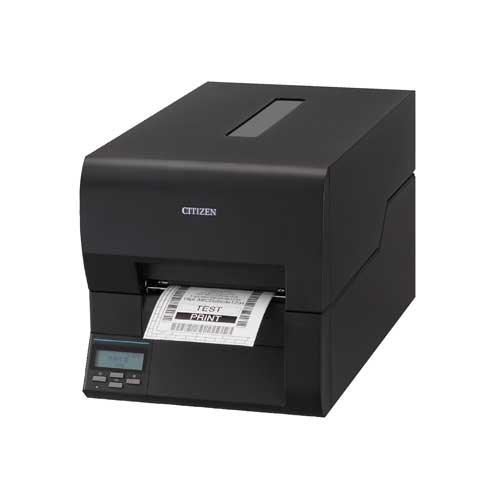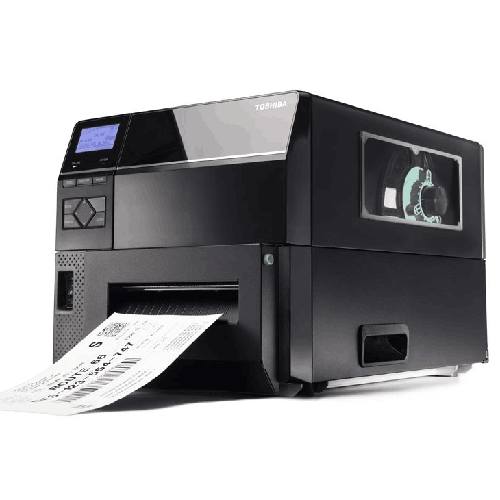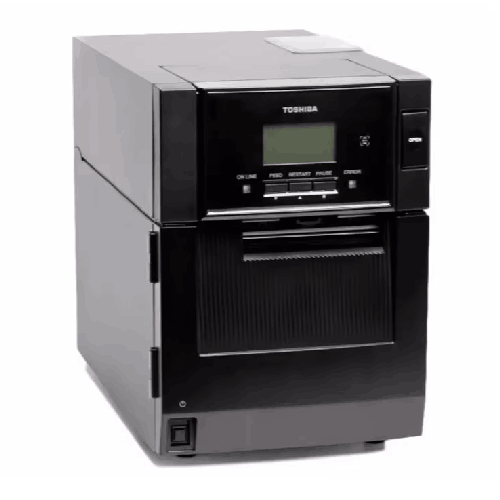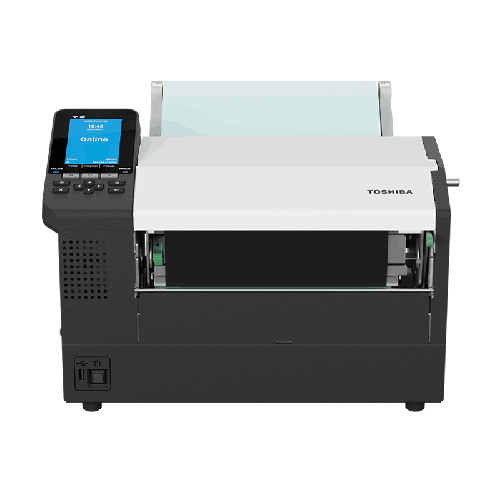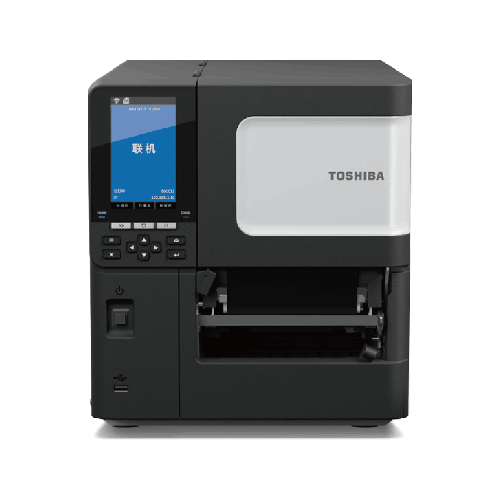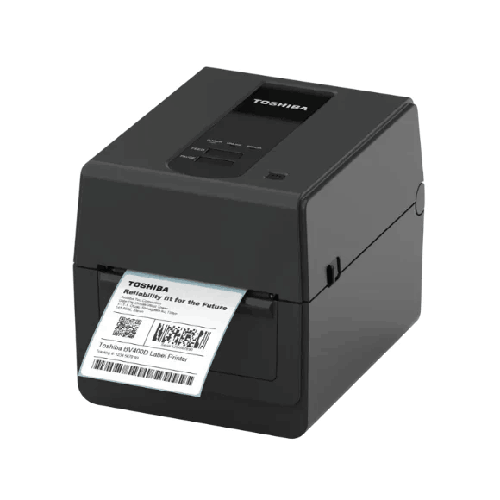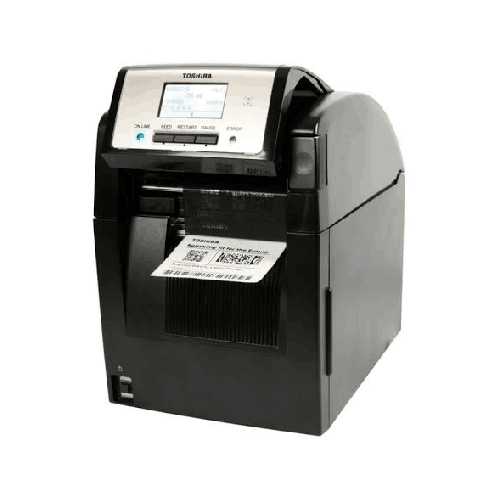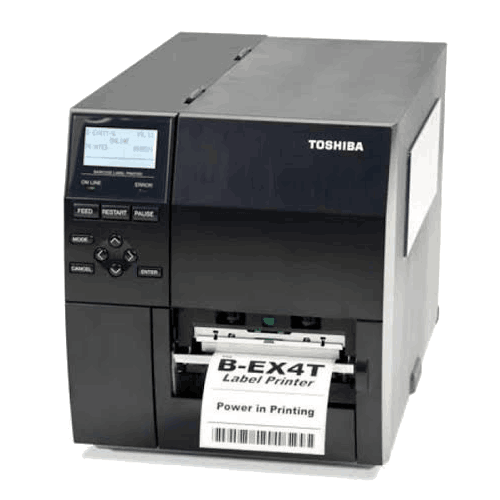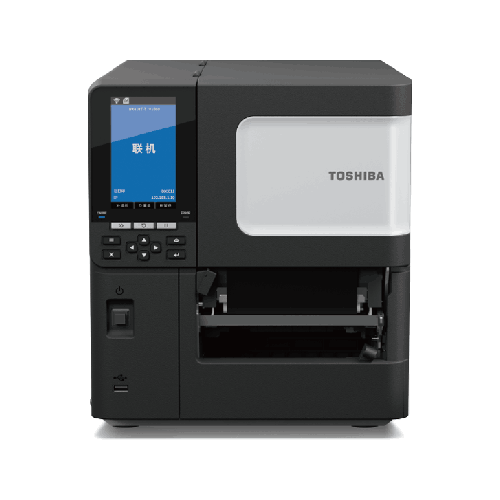
Toshiba BX420T 203 DPI Flat Head Barcode Printer
Regular Price:৳0.00Availability: SKU: 1.6.2.9239
Quick Overview
-
Support
Saturday – Thursday: 09 AM - 06 PM. -
Payment
Cash on Delivery | Card | Online Payment -
Shipping Cost
Inside Dhaka 100tk | Outside Dhaka 150tk -
Warranty Policy
Read More
Description
Toshiba BX420T 203 DPI Flat Head Barcode Printer Price in Bangladesh
The Toshiba BX420T 203 DPI Flat Head Barcode Printer is a production-grade industrial label printer designed for Bangladesh businesses that need reliable barcode printing, stable networking, and strong compatibility with mixed printer languages in real warehouse and factory environments. Whether you are labeling cartons for distribution, printing barcode stickers for inventory, or standardizing printers across multiple sites, the BX420T stands out for its industrial build, generous memory, and modern fleet-readiness features like cloud connectivity and direct PDF printing.
In Bangladesh, companies in logistics, manufacturing, retail distribution, pharmaceuticals, and export-linked supply chains often face the same challenge: label printing must be consistent and fast, and printer downtime creates immediate operational disruption. The BX420T addresses that by combining proven industrial mechanics (flat head printing), practical connectivity (USB + Gigabit LAN), and automation features that reduce setup time, minimize consumable surprises, and simplify replacement of older printers.
At BME (Business Machine & Equipment), we help Bangladeshi organizations choose barcode printers based on workflow reality: label size requirements, print method needs, interface requirements, and future expansion. If you want the latest Toshiba BX420T 203 DPI Flat Head Barcode Printer price in Bangladesh, stock availability, and an official quotation for your business or project, contact BME.
Industrial barcode printing is not just about producing a label—it is about keeping a supply chain moving. In Bangladesh, where manufacturing output, export packaging, and distribution networks are expanding rapidly, barcode printers have become core infrastructure. They sit at receiving docks, packing stations, quality check points, and dispatch counters. When they perform well, everything downstream runs smoother: items are identified correctly, cartons are routed properly, inventory stays accurate, and shipments go out on time. When they fail or require constant manual tweaking, operations slow down immediately.
The Toshiba BX420T 203 DPI Flat Head Barcode Printer is designed for these real-world operational demands. It’s a flat head barcode printer built for consistent industrial performance while adding features that simplify integration, reduce management overhead, and improve readiness for modern enterprise environments.
203 DPI flat head printing: practical clarity for logistics and inventory
A 203 DPI printer is widely used in Bangladesh for general-purpose barcode label printing where the goal is reliable scanning and readable text at normal sizes. It is typically suitable for carton labels, rack labels, shipping labels, and inventory stickers. With a flat head printing mechanism, the BX420T is positioned for stable printing operations and consistent output over long runs—important in warehouse and factory environments that print labels all day.
Because the BX420T supports both thermal transfer and direct thermal printing widths (as confirmed in the specs you provided), it can fit different label durability needs:
- Thermal transfer is commonly used when labels must be more durable—resistant to smudging, handling, or longer storage periods—because it uses ribbon.
- Direct thermal is often used for shorter-life labels such as temporary shipping labels or internal short-cycle labels—because it prints without ribbon.
You confirmed the maximum print width as:
- Max 104 mm (thermal transfer)
- Max 111 mm (direct thermal)
This matters for Bangladesh buyers because label size is often standardized in warehouses and distribution networks. A printer that can cover your required width ensures your label templates won’t need redesigning or compromise, especially when you include barcodes, item names, destinations, and handling instructions on the same label.
Memory for heavy templates, fonts, and complex workflows
You confirmed the BX420T includes 1 GB RAM and 8 GB ROM. This is a meaningful benefit for organizations that:
- store multiple label templates on the printer
- use multiple fonts or multilingual layouts
- print variable data labels (SKU, batch, date, location, etc.)
- run multiple departments with different label formats
In Bangladesh operations, label printing often evolves over time. Today you might print basic SKU labels; later you may add carton labels, pallet labels, return labels, and compliance labels. Having a strong memory base supports growth and template variety without constant reconfiguration.
Ribbon capacity that supports longer production runs
For thermal transfer printing, ribbon length affects how often operators must stop to change consumables. You confirmed that the BX420T supports standard 450m and 600m ribbon lengths. Longer ribbon support is practical for production and warehouse sites because it reduces interruption frequency. Fewer ribbon changes can mean:
- less downtime at packing stations
- fewer mid-batch pauses
- more consistent daily throughput
- less chance of misalignment during frequent consumable changes
For high-volume label printing environments in Dhaka industrial zones, Gazipur factories, Narayanganj production clusters, and Chattogram logistics facilities, this is a valuable operational advantage.
Connectivity that fits modern IT environments (USB + Gigabit LAN)
A major purchase criterion in Bangladesh is interface compatibility—especially when printers are shared across teams or placed on a network. The BX420T includes confirmed standard interfaces:
- USB 2.0 HS
- Gigabit Ethernet (LAN)
This combination is practical. USB supports workstation-based printing at a single station, while Gigabit Ethernet supports network printing, shared use, and centralized management. Many Bangladesh businesses prefer LAN printing for warehouses because multiple PCs can send print jobs without moving cables or relocating printers.
You also confirmed several optional interfaces:
- Serial (RS-232C)
- Wireless LAN
- Bluetooth
- Expansion I/O
Optional connectivity matters for projects with special requirements—legacy systems that still use serial, areas where LAN cabling is difficult, or workflows that rely on mobile devices and wireless printing. Expansion I/O can also be relevant when integrating printers into automated lines or specialized production systems (depending on your workflow).
Advanced features that reduce integration headaches
One of the biggest operational problems in Bangladesh label printing projects is driver and language mismatch. Different printers speak different command languages, and migrating from one brand/model to another can require costly software changes. The BX420T addresses this with a strong, confirmed feature:
Auto-Emulation that automatically detects printer languages including TPCL, ZPL II, DPL, SBPL, IPL, and PDF.
This is highly valuable for companies replacing legacy printers across multiple sites. It helps reduce the cost and complexity of changing label generation systems. For example, if your system was designed around ZPL II or DPL, a printer that can automatically detect and emulate those languages can make migration smoother.
Direct PDF printing: easier output for ERP and document-based workflows
You confirmed Direct PDF Printing, meaning the BX420T can print PDF files without extra middleware, with automatic scaling and rotation. This is a practical advantage for organizations that:
- generate labels as PDFs from ERP systems
- receive label PDFs from partners or marketplaces
- use standardized PDF-based templates for compliance or shipping
In many Bangladesh businesses, IT teams aim to simplify the print pipeline. Direct PDF printing can reduce dependency on special conversion tools and can make printing more predictable across different workstations.
Cloud connectivity for fleet management
You confirmed cloud readiness for remote fleet management via:
- e-BRIDGE CloudConnect
- SOTI Connect
For Bangladesh businesses managing multiple sites—multiple warehouses, multiple retail distribution hubs, or multiple production plants—fleet visibility is increasingly important. Remote monitoring helps reduce downtime by enabling proactive maintenance scheduling, tracking device status, and standardizing configurations across multiple printers.
Smart detection: fewer surprises, easier replacement
You also confirmed Smart Detection features:
- automatic ribbon/label near-end sensors
- media width detection
These are operationally important because they prevent unexpected job stoppages and reduce setup time when changing consumables. Media width detection also helps when switching between label sizes or when replacing older printers—supporting easier transition with fewer manual adjustments.
Physical build for industrial placement
You confirmed the physical dimensions and weight:
- Approx. 16.4 kg
- 310 mm (H) × 278 mm (W) × 460 mm (D)
In an industrial setting, this helps planning: table space, printer stand sizing, and placement on packing benches. Weight also indicates an industrial build class compared to lightweight desktop printers.
Bangladesh-specific deployment notes (practical, not speculative)
For Bangladesh users, the BX420T is typically considered in scenarios such as:
- centralized printing in a warehouse zone with networked LAN printing
- multiple printing stations in a factory (QC, packing, dispatch)
- replacement of mixed legacy printers where auto-emulation simplifies integration
- operations where label files come as PDFs from ERP or partners
Because you did not provide warranty terms, print speed, resolution options beyond “203 DPI,” or supported media thickness/roll diameter, this page avoids stating those unconfirmed details. If you later share those specs, the page can be expanded further.
✅ Key Features
- 203 DPI flat head barcode printer: Practical resolution for general barcode labels with consistent industrial output.
- Large memory capacity: 1 GB RAM and 8 GB ROM support templates, fonts, and complex workflows.
- Wide print width support: Max 104 mm (thermal transfer) / 111 mm (direct thermal) for flexible label design.
- Long ribbon support: Supports standard 450m and 600m ribbon lengths for fewer consumable change interruptions.
- Standard interfaces included: USB 2.0 HS and Gigabit Ethernet (LAN) for workstation and network printing.
- Optional connectivity expansion: Serial (RS-232C), Wireless LAN, Bluetooth, and Expansion I/O (as optional interfaces).
- Auto-Emulation language detection: Supports TPCL, ZPL II, DPL, SBPL, IPL, and PDF for smoother migration.
- Direct PDF printing: Prints PDF instantly without middleware, with automatic scaling and rotation.
- Cloud connectivity readiness: Supports remote fleet management via e-BRIDGE CloudConnect and SOTI Connect.
- Smart detection sensors: Automatic ribbon/label near-end sensors and media width detection for smoother operations.
✅ Usage / Applications
- Warehouse carton labeling for inbound/outbound logistics
- Inventory barcode label printing for stock control
- Manufacturing packaging label printing at packing stations
- Distribution center routing and shipment identification labels
- Retail distribution and wholesale labeling workflows
- ERP-driven label printing where templates and fonts vary
- Legacy printer replacement projects needing multi-language emulation
- PDF-based label printing workflows from partners or systems
- Multi-site printer fleet monitoring and standardized management
✅ Benefits of This Product?
- Reduces integration friction when replacing older printers due to auto-emulation support
- Supports both thermal transfer and direct thermal label width needs for different label types
- Minimizes downtime with ribbon/label near-end sensors and long ribbon support
- Simplifies network deployment with built-in Gigabit Ethernet
- Enables workstation printing via USB 2.0 HS
- Supports modern management approaches with cloud connectivity readiness
- Makes PDF label printing easier without conversion middleware
- Helps maintain consistent print quality and alignment with media width detection
- Suitable for high-usage environments due to industrial build and weight class
✅ Ideal For
- Warehouses and distribution centers requiring consistent carton and inventory labels
- Manufacturing and packaging operations printing labels throughout the day
- Logistics companies needing reliable barcode labeling for shipment movement
- Retail and wholesale distribution hubs standardizing barcode printers across stations
- Organizations replacing legacy printers that want auto-emulation to avoid software changes
- Enterprises managing multiple printers seeking cloud-ready fleet monitoring capability
✅ Why Choose the Toshiba BX420T 203 DPI Flat Head Barcode Printer?
Choose the Toshiba BX420T 203 DPI Flat Head Barcode Printer when you need an industrial printer that is easier to integrate, easier to manage at scale, and reliable for everyday barcode label production in Bangladesh. Its combination of 1 GB RAM + 8 GB ROM, USB + Gigabit Ethernet, 450m/600m ribbon support, and standout features like Auto-Emulation and Direct PDF printing make it especially suitable for environments where label templates vary, systems are mixed, and uptime matters. Smart detection sensors further reduce interruptions and help operators maintain continuity during long print runs.
✅ Why Buy This Product from BME?
- Bangladesh deployment guidance: We help match the BX420T to your label size, print method, and workstation/network workflow.
- Quotation support for organizations: BME can provide formal quotations for warehouses, factories, and corporate procurement.
- Project-based assistance: Help planning multi-printer rollout across stations or sites.
- Correct model and spec confirmation: Ensuring you receive the correct BX420T variant and required interface options.
- Procurement-friendly documentation: Support for official purchasing processes in Bangladesh.
✅ Buying Guide
- Confirm your print method needs: Use thermal transfer for durability-focused labels; use direct thermal for short-life labels (based on your workflow).
- Match label width to printer capability: Ensure your label design fits within 104 mm (TT) or 111 mm (DT) max print width.
- Decide on network vs workstation printing: Use Gigabit LAN for shared/network printing; use USB for single-station setups.
- Plan consumables for volume: If you print continuously, ribbon lengths 450m/600m can reduce change frequency.
- Consider migration from old printers: If you’re replacing mixed models, auto-emulation can reduce software change cost.
- Use PDF workflow advantage where relevant: If your system outputs PDF labels, direct PDF printing can simplify printing.
- Assess optional interface requirements: If you need RS-232C, Wi‑Fi, Bluetooth, or Expansion I/O, specify those at purchase time.
- Confirm warranty and support plan: Warranty was not provided; finalize warranty terms during quotation and procurement.
✅ Customers Ask About / Frequently Asked Questions
-
Q1: What is the resolution of the Toshiba BX420T?
A: It is confirmed as a 203 DPI barcode printer. -
Q2: What memory does the BX420T have?
A: 1 GB RAM and 8 GB ROM (confirmed). -
Q3: What is the maximum print width?
A: Max 104 mm (thermal transfer) / 111 mm (direct thermal) (confirmed). -
Q4: What ribbon lengths does it support?
A: It supports standard 450m and 600m ribbon lengths (confirmed). -
Q5: What interfaces are included as standard?
A: USB 2.0 HS and Gigabit Ethernet (LAN) (confirmed). -
Q6: What optional interfaces are available?
A: Optional interfaces include Serial (RS-232C), Wireless LAN, Bluetooth, and Expansion I/O (confirmed as optional). -
Q7: What printer languages does Auto-Emulation support?
A: It automatically detects TPCL, ZPL II, DPL, SBPL, IPL, and PDF (confirmed). -
Q8: Can it print PDF labels directly?
A: Yes. It supports Direct PDF Printing with automatic scaling and rotation (confirmed). -
Q9: Does it support cloud-based printer management?
A: Yes. It is ready for remote fleet management via e-BRIDGE CloudConnect and SOTI Connect (confirmed). -
Q10: What “smart detection” features are included?
A: It includes automatic ribbon/label near-end sensors and media width detection (confirmed).
✅ Why Buy This Product
If your Bangladesh operation needs an industrial barcode printer that is easier to integrate with existing systems, supports flexible interfaces, and offers productivity-focused features like auto-emulation and direct PDF printing, the Toshiba BX420T 203 DPI Flat Head Barcode Printer is a strong option. Contact BME to check availability and request a formal quotation for your warehouse, factory, or multi-site rollout.
What is the price of Toshiba BX420T 203 DPI Flat Head Barcode Printer in Bangladesh?
Write a review
Question Answer
Have question about this product? Get specific details about this product from expert.

Bixolon XT3-40 Industrial Label Printer