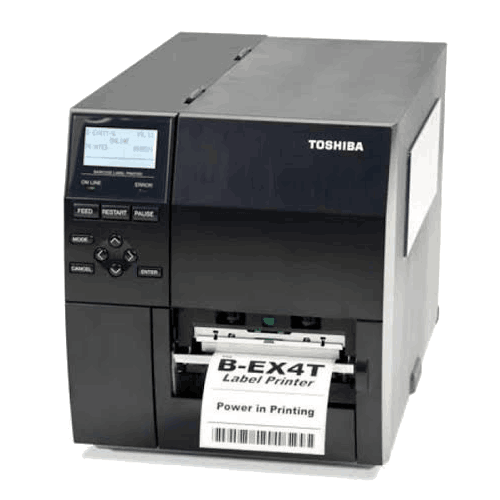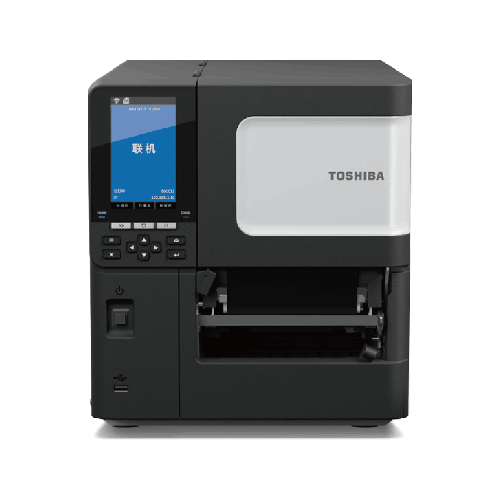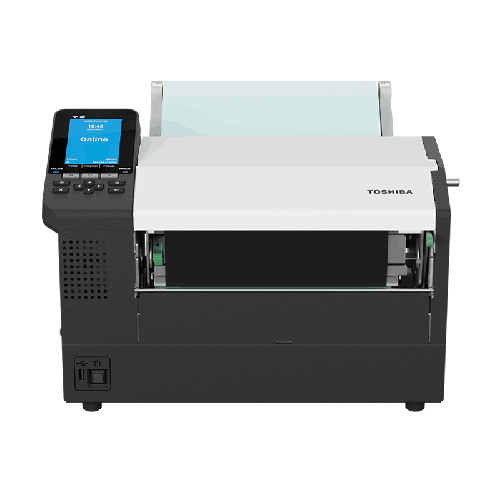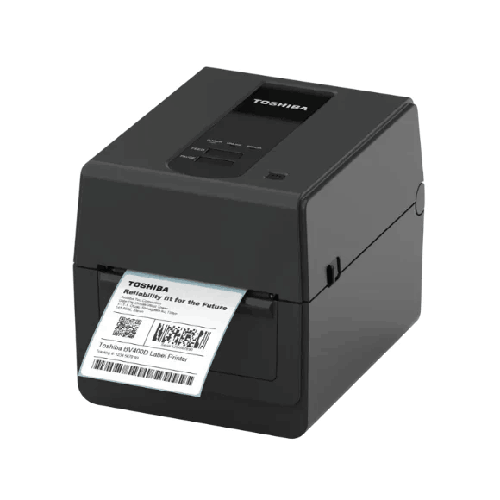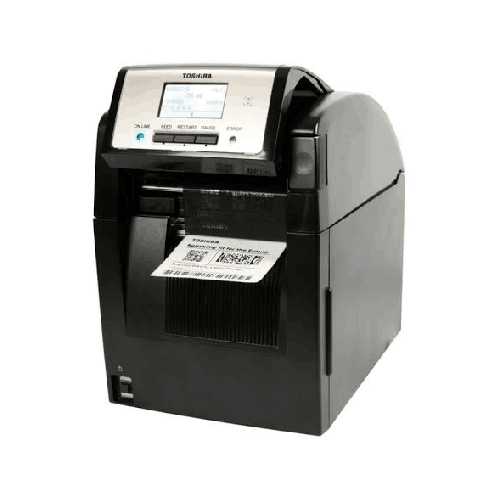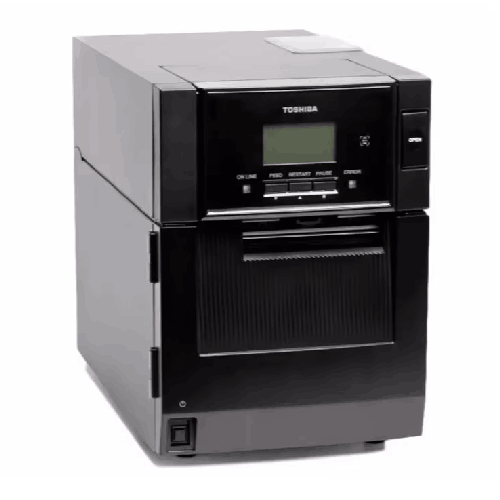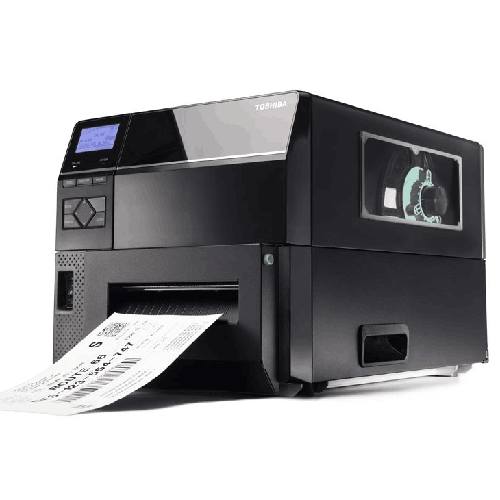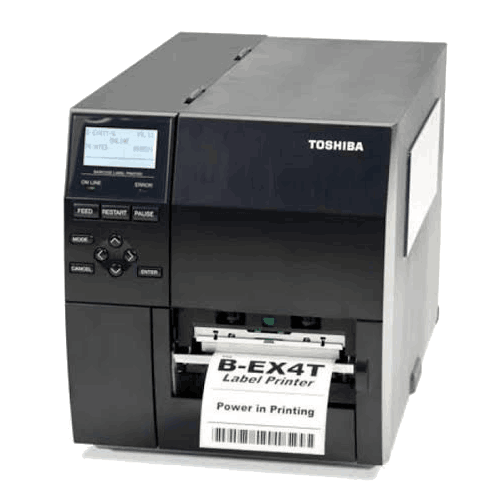
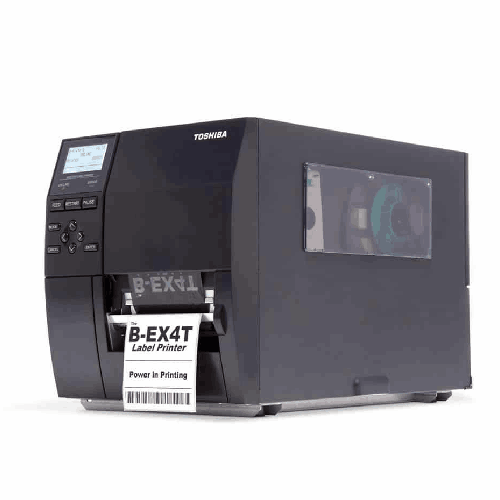
Toshiba B-EX4T1 Industrial Barcode Printer
Regular Price:৳0.00Availability: SKU: 1.6.2.9191
Quick Overview
-
Support
Saturday – Thursday: 09 AM - 06 PM. -
Payment
Cash on Delivery | Card | Online Payment -
Shipping Cost
Inside Dhaka 100tk | Outside Dhaka 150tk -
Warranty Policy
Read More
Description
Toshiba B-EX4T1 Industrial Barcode Printer in Bangladesh
The Toshiba B-EX4T1 Industrial Barcode Printer is built for exactly that reality. This is not a light-duty desktop printer meant for occasional tags. It’s an industrial barcode printer designed to keep printing when the workday gets long, the order queue gets heavy, and consistency matters more than anything. It supports both Thermal transfer and Direct thermal printing, giving Bangladeshi businesses the flexibility to produce durable labels for long-term use, or fast, cost-effective labels for short lifecycle applications.
At the core of this printer is a Near Edge thermal print head—a technology that’s widely valued in high-speed industrial labeling because it can produce crisp output efficiently, especially in continuous operations where clarity, bar width accuracy, and scan-read performance are non-negotiable. In real terms, this means your cartons, shelves, pallets, polybags, and finished goods can carry labels that scanners read quickly—reducing reprints, manual corrections, and the small delays that add up to big operational losses.
Built for industrial rhythm in Bangladesh
Many local operations run on tight schedules: shipments to ports, deliveries to distributors, factory lines synchronized with packaging stations, and inventory movement across multiple floors or locations. In these environments, label printing has to be steady and predictable. The Toshiba B-EX4T1 is designed with a duty cycle of up to 30,000 labels/day, which indicates it is intended for serious daily workloads rather than occasional use.
If you’ve ever dealt with a printer that overheats, slows down unexpectedly, or becomes inconsistent after heavy runs, you already understand the value of industrial-grade stability. With the B-EX4T1, the goal is simple: keep your line moving and keep your labels consistent.
Thermal transfer and direct thermal—choose the right label strategy
A major advantage of the Toshiba B-EX4T1 is its dual-mode support:
Thermal transfer printing is typically used when you need labels that last—labels that face abrasion, handling, sunlight exposure, or storage over longer periods. This is a common requirement in sectors like manufacturing, garments, pharmaceuticals, electronics distribution, and export packaging where labels may be handled multiple times or stored for months.
Direct thermal printing is usually preferred for short-life labels—shipping labels, temporary tags, or internal tracking where speed and simplicity matter and the label does not need to survive long-term conditions.
Instead of being forced into one approach, you can adopt the method that matches your operation. Many Bangladeshi businesses use both label types depending on department: shipping may use direct thermal, while product identification uses thermal transfer for better longevity.
Near Edge print head—why it matters for real operations
Not all thermal print heads behave the same. A Near Edge print head is designed to print efficiently and is often chosen for industrial settings where high productivity and stable output quality are priorities. In practical terms, this can support clean barcodes and readable text that scanners can pick up quickly, helping reduce scan failures at dispatch gates, warehouse checkpoints, and retail receiving areas.
For businesses that use barcode standards (for example, common 1D and 2D symbologies used in inventory systems), print consistency is essential. When barcodes are faint, smudged, or uneven, the cost shows up as repeated scans, manual typing, and sometimes rejected deliveries. The B-EX4T1 is designed to support the discipline of consistent labeling.
Connectivity built for office networks and factory floors
In Bangladesh, many warehouses and production floors rely on a mix of network printing and direct PC connections. The Toshiba B-EX4T1 provides two widely used interfaces:
- Ethernet 10/100 BaseT for LAN connectivity
- USB 2.0 for direct connection to a PC
This matters because different work environments need different setups. In a multi-user warehouse, Ethernet connectivity lets you position the printer where the work happens—near packaging tables, dispatch areas, or labeling stations—while operators send print jobs through the network. In smaller facilities or dedicated lines, USB can be ideal for a stable, direct setup.
The result is flexibility: you can integrate the Toshiba B-EX4T1 into your existing workflow rather than redesigning your workflow around the printer.
Memory that supports operational stability
This model includes 16 MB (Flash ROM) and 32 MB (SD-RAM). For industrial printing, memory contributes to smoother job processing and stable device operation—especially when handling repeated label formats, templates, and continuous batch printing. In day-to-day terms, this can help reduce interruptions and keep output predictable when printing routine labels across shifts.
User experience that supports real operators
A barcode printer is only as productive as its ease of operation. In many Bangladeshi facilities, operators may rotate, and multiple team members may use the same machine. That’s why clear, practical controls matter.
The Toshiba B-EX4T1 includes:
- LCD screen (Graphic 128 x 64 dots) for readable status and menu navigation
- Status indicator for quick visual confirmation
- Operator keys including Feed, Restart, Pause, and Menu navigation
These controls help operators manage everyday tasks such as feeding media, pausing a job, resuming after a label roll change, or navigating settings without guesswork. In a busy line, small usability improvements can prevent big slowdowns.
Media handling designed for industrial convenience
Industrial environments demand quick consumable changes. The B-EX4T1 features side opening media loading, a practical choice when the printer is placed on a workbench, against a wall, or in a tight production corner. Side access can make roll changes more straightforward, especially when you want to minimize downtime.
It also supports both major sensor types:
- Reflective sensor
- Transmissive sensor
This is important because businesses use different media types—gap labels, black mark labels, and various tag formats depending on application. Having both sensor options helps the printer detect label positioning properly across different media designs, improving alignment and reducing wasted labels.
Additionally, the printer’s Alignment Base: Central helps provide consistent media positioning—a detail that can contribute to stable printing across long runs.
Designed to fit industrial spaces without being unmanageable
The Toshiba B-EX4T1 comes in a robust industrial form factor with dimensions of 278 x 460 x 310 mm and a weight of 17 kg. This weight and size generally indicate a machine built to stay stable during operation—important in busy work areas where equipment must not shift or vibrate easily. It’s a practical match for fixed labeling stations commonly seen in Bangladeshi warehouses and production lines.
Real-life usage scenarios in Bangladesh
To understand the value of the Toshiba B-EX4T1, it helps to picture where it fits:
1) Garments, textiles, and accessories (Factory + warehouse)
Garment businesses often need carton labels, polybag labels, item tracking labels, and shelf labels. High-volume printing is common during packing and shipment seasons. A printer rated for heavy daily label production and designed for industrial duty can make labeling reliable during peak periods.
2) Pharmaceuticals and healthcare distribution
In pharma supply chains, labels need to stay readable and scannable across storage and transport. Thermal transfer labels are often preferred for durability. Operators also benefit from clear user controls and consistent sensing for different label formats.
3) FMCG warehousing and distribution
In FMCG, speed is everything—picking, packing, and dispatch happen continuously. Ethernet connectivity helps the printer integrate into a shared warehouse system so multiple workstations can send print jobs to a centralized labeling point.
4) Electronics, spare parts, and hardware
Parts labels, bin labels, and inventory tags require crisp barcodes to minimize picking errors. A stable industrial printer supports daily operations where inaccuracies create costly returns or warranty disputes.
5) Logistics and courier operations
Short-life shipping labels are a common use case for direct thermal printing. For operations scaling up in Dhaka, Narayanganj, and Chattogram, an industrial printer helps handle peak order loads with fewer disruptions.
6) Food packaging and manufacturing support labeling
Even when final retail labels are printed elsewhere, internal traceability labels, batch tracking labels, and carton identification labels can benefit from consistent barcode quality.
Compatibility and integration mindset
Most Bangladeshi businesses use a combination of ERP, POS, warehouse management systems, or custom software. While the exact software compatibility depends on your label design tools and drivers, the Toshiba B-EX4T1’s mainstream connectivity options (Ethernet and USB) make it straightforward to integrate into typical IT environments. For best results, businesses usually standardize label templates and ribbon/media types so that output remains consistent across shifts.
Maintenance and care—simple habits that protect uptime
Industrial printers deliver the best performance when operators follow consistent care routines. While the Toshiba B-EX4T1 is built for serious work, a few sensible practices help maintain print quality and reliability:
- Keep the printer area clean and reduce dust exposure when possible (common in warehouses and factory floors).
- Use appropriate media and ribbons for your label material and application, especially for thermal transfer labels that need durability.
- When print quality drops (fading, streaks, or poor barcode edges), check consumables and clean the print path according to standard safe practices recommended for thermal printers.
- Train operators to use the Pause function during media changes rather than forcing the mechanism—this helps reduce wear and misfeeds.
These habits don’t require advanced technical knowledge, but they can significantly reduce downtime and wasted media.
A dependable labeling partner for growth
Bangladesh businesses are growing faster than ever—eCommerce is expanding, export requirements are getting stricter, and inventory accuracy is no longer optional. The Toshiba B-EX4T1 Industrial Barcode Printer fits into this shift as a high-capacity labeling tool designed for busy workdays and demanding output requirements.
If you want a printer that aligns with industrial realities—high label volume, multiple operator use, network printing, and consistent scan performance—the Toshiba B-EX4T1 is engineered to be a practical, production-focused choice.
✅ Key Features
- Thermal Transfer & Direct Thermal Printing: Choose durable long-life labels or fast short-life labels depending on your workflow.
- Near Edge Thermal Print Head: Designed for efficient, consistent barcode output suitable for high-volume operations.
- High Duty Cycle (Up to 30,000 Labels/Day): Built for demanding daily production schedules in warehouses and factories.
- Ethernet 10/100 BaseT Connectivity: Ideal for shared network printing across multiple PCs or departments.
- USB 2.0 Interface: Simple, stable direct connection for single-station setups.
- Dual Sensors (Reflective & Transmissive): Helps detect different media types accurately to reduce misprints and label waste.
- Side Opening Media Loading: Faster roll changes and easier access in tight workspaces.
- Graphic LCD (128 x 64 Dots): Clear status visibility and easier operator navigation during daily use.
- Operator Keys (Feed/Restart/Pause/Menu): Practical controls for smooth handling of batch jobs and quick recovery.
- Industrial Form Factor (17 kg): Stable placement for busy labeling stations and continuous operation.
✅ Usage / Applications
- Warehouse inventory labels for racks, bins, and shelves
- Carton and pallet labels for dispatch and shipping
- Product identification labels for manufacturing lines
- Garments polybag and carton barcode labeling
- Pharmaceutical and healthcare distribution labeling
- FMCG picking and packing labels
- Courier and logistics shipping labels (short-life applications)
- Spare parts and electronics inventory tracking labels
- Asset tags for office or factory equipment management
- Batch and internal traceability labels for production support
✅ Benefits of This Product?
- Reduced label reprints through consistent barcode readability in daily operations
- Faster workflow at packing and dispatch points with stable, high-volume printing
- Flexibility to switch between thermal transfer and direct thermal based on label lifespan needs
- Better uptime for busy teams thanks to industrial duty cycle design
- Easier operator handling with LCD status visibility and dedicated control keys
- Improved media handling accuracy with both reflective and transmissive sensors
- More efficient team collaboration via Ethernet network printing
- Cleaner workstation workflow through side-access media loading in space-limited setups
- Strong fit for multi-shift operations where consistency matters more than “peak specs”
✅ Ideal For
The Toshiba B-EX4T1 Industrial Barcode Printer is ideal for Bangladeshi businesses that print labels daily and want stable, industrial-grade performance without constant supervision. It’s a strong match for garment and textile factories printing carton and polybag labels, warehouses and distribution centers that need high-speed picking, packing, and dispatch labeling, and pharmaceutical or healthcare suppliers where consistent barcode scanning supports accurate delivery and inventory control.
This printer also suits FMCG operations, electronics and spare parts stores, and logistics providers that require dependable printing during peak order hours. If your team prints large batches, changes label rolls frequently, or shares a printer across multiple users via LAN, the B-EX4T1’s Ethernet support, operator-friendly controls, and industrial build make day-to-day work smoother. It’s especially valuable for organizations focusing on process discipline—standard label formats, traceability, and scan-first workflows—where print consistency directly impacts productivity.
✅ Why Choose the Toshiba B-EX4T1 Industrial Barcode Printer?
Choosing an industrial barcode printer in Bangladesh is rarely about the cheapest upfront option—it’s about how reliably your labeling process performs when your operation is under pressure. The Toshiba B-EX4T1 Industrial Barcode Printer stands out because it is built around real production needs: consistent output, operator-friendly handling, and connectivity that fits both office IT and factory-floor layouts.
One of its strongest advantages is the combination of Thermal transfer and Direct thermal printing. Many businesses start with one labeling method and later expand; with this printer, you can adapt your labeling strategy without replacing your device. Use thermal transfer for labels that must remain readable through storage, handling, and distribution. Use direct thermal where speed and simplicity are key. This flexibility helps you standardize on one industrial printer model across multiple departments.
The Near Edge thermal print head supports efficient printing for high-volume workflows and helps produce barcodes that scanners can read quickly. In practical terms, better scannability means fewer operational slowdowns—less time spent rescanning, fewer manual overrides, and fewer disputes at receiving points.
The printer’s up to 30,000 labels/day duty cycle matches the realities of Bangladesh’s fast-moving industries—garments, logistics, FMCG, and distribution—where label output can spike during shipment windows and end-of-month cycles. Add to that Ethernet 10/100 BaseT for network printing, USB 2.0 for direct stations, and a usable operator interface with a graphic LCD plus dedicated keys, and you get a printer designed to keep work flowing rather than interrupt it.
If you want a production-grade labeling foundation that supports growth, workflow discipline, and consistent results, the Toshiba B-EX4T1 is a future-minded choice.
✅ Why Buy This Product from BME?
Buying an industrial printer is not only about the machine—it’s also about getting the right guidance so it fits your workflow from day one. When you buy the Toshiba B-EX4T1 Industrial Barcode Printer from Business Machine & Equipment (BME) in Bangladesh, you get a seller that understands how Bangladeshi businesses actually deploy barcode printers in warehouses, factories, retail back offices, and distribution environments.
BME focuses on helping customers choose the right printer for their label volume, printing method (thermal transfer vs direct thermal), and connectivity plan (USB vs Ethernet). That guidance matters because the “best” printer depends on how you print—batch sizes, label materials, and daily workload—not just the model name.
BME also supports Bangladesh’s practical buying needs—whether you’re a single-location business setting up one labeling station or a growing operation looking for procurement-friendly documentation for internal approval. For business customers, having clear product identification and communication helps reduce delays during purchase decisions.
If you want an industrial barcode printer with the confidence of a Bangladesh-based seller and a smoother buying process, BME is a reliable place to source the Toshiba B-EX4T1.
✅ Buying Guide
Buying the right industrial barcode printer can save you months of operational frustration. Use this checklist to choose confidently—especially for Bangladesh factory and warehouse environments.
1) Confirm your printing method (Direct Thermal vs Thermal Transfer)
If your labels must last through handling, storage, heat, friction, or long distribution cycles, choose thermal transfer workflows (label + ribbon). If you print shipping labels or short-life tracking labels, direct thermal can be the simpler option. The Toshiba B-EX4T1 supports both, which is helpful when your needs evolve.
2) Estimate real daily label volume, not “average” volume
Look at your peak days—shipment days, promotional days, audit cycles. Industrial printers are chosen for peak loads, not calm days. With an industrial duty cycle (up to 30,000 labels/day), the B-EX4T1 is designed for high-volume environments.
3) Check where the printer will sit (space and access)
Measure your workstation space and ensure you have room for operation and media changes. The B-EX4T1 supports side opening media loading, which can be beneficial when the printer is positioned against a wall or in tight corners.
4) Choose connectivity based on how your team prints
If multiple computers/users will send print jobs, Ethernet is the practical choice. If one PC controls the printer, USB can be enough. The Toshiba B-EX4T1 offers both, which makes deployment flexible.
5) Confirm your label type and sensing needs
Different labels require different sensing methods. If you use gap labels, black mark labels, or different tag styles across departments, sensor capability matters. The B-EX4T1 includes reflective and transmissive sensors, helping reduce alignment errors.
6) Don’t overlook operator usability
In Bangladesh, printers are often used by multiple operators across shifts. A clear LCD screen and dedicated buttons reduce training time and mistakes. The B-EX4T1 includes a graphic LCD and operator keys such as Feed, Restart, Pause.
Common mistakes to avoid
- Choosing a printer for “today’s” label volume and then struggling during peak season
- Setting up network printing without planning where the printer will physically sit
- Mixing label types without confirming sensor compatibility
- Ignoring ease-of-use—small interface issues can become daily delays
✅ Customers Ask About / Frequently Asked Questions
1) Is the Toshiba B-EX4T1 good for factory-level label printing in Bangladesh?
Yes. The Toshiba B-EX4T1 industrial barcode printer is designed for high-volume environments and supports up to 30,000 labels/day duty cycle.
2) What printing methods does the Toshiba B-EX4T1 support?
It supports thermal transfer and direct thermal printing, allowing you to choose based on label durability needs.
3) Does the Toshiba B-EX4T1 industrial barcode printer support network (LAN) printing?
Yes. It includes Ethernet 10/100 BaseT, making it suitable for shared printing in warehouses and offices.
4) Can I connect it directly to a PC?
Yes. The Toshiba B-EX4T1 includes USB 2.0 for direct connection.
5) What kind of sensors are available for label detection?
It includes reflective and transmissive sensors, supporting different media types and improving alignment accuracy.
6) Is it easy for operators to use during busy shifts?
It’s designed for practical operation with a graphic LCD (128 x 64 dots), a status indicator, and dedicated keys like Feed, Restart, Pause, and menu navigation.
7) What are the dimensions and weight of this printer?
Dimensions are 278 x 460 x 310 mm, and weight is 17 kg.
8) Can this printer handle high daily output without frequent breaks?
It is built for industrial workloads and rated for a high duty cycle, which makes it suitable for heavy daily label printing.
9) Do I need thermal ribbon for the Toshiba B-EX4T1?
You need ribbon when using thermal transfer mode. For direct thermal, ribbon is not required.
10) What should I consider before ordering in Bangladesh?
Confirm your label type, printing method, preferred connectivity (Ethernet or USB), and installation space. If you’re unsure, BME can help match the printer to your workflow.
✅ Why Buy This Product
If your operation depends on accurate inventory, fast dispatch, and scannable labels, investing in the Toshiba B-EX4T1 Industrial Barcode Printer is a practical step toward smoother daily performance. This is a production-focused machine built for real industrial workloads, offering the flexibility of thermal transfer and direct thermal printing, the efficiency of a Near Edge print head, and the connectivity businesses expect—Ethernet for network environments and USB for direct workstations.
For Bangladeshi warehouses, factories, and distribution teams, the biggest win is consistency: consistent prints, consistent scanning, and a more stable labeling workflow during peak hours. When labeling becomes reliable, your team spends less time troubleshooting and more time shipping, stocking, and completing orders.
Order the Toshiba B-EX4T1 Industrial Barcode Printer today from BME and build a labeling setup that keeps up with your growth—whether you’re managing a single line or coordinating high-volume operations across departments.
What is the price of Toshiba B-EX4T1 Industrial Barcode Printer in Bangladesh?
Write a review
Question Answer
Have question about this product? Get specific details about this product from expert.