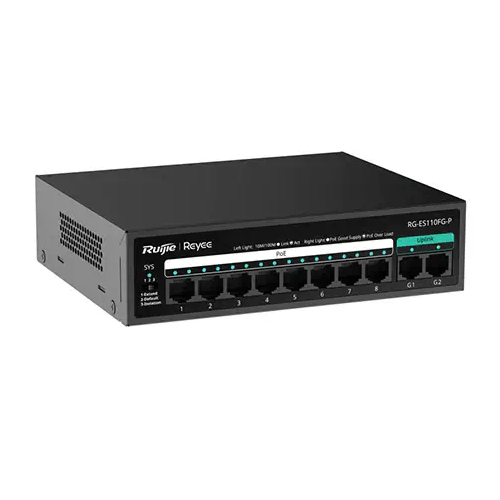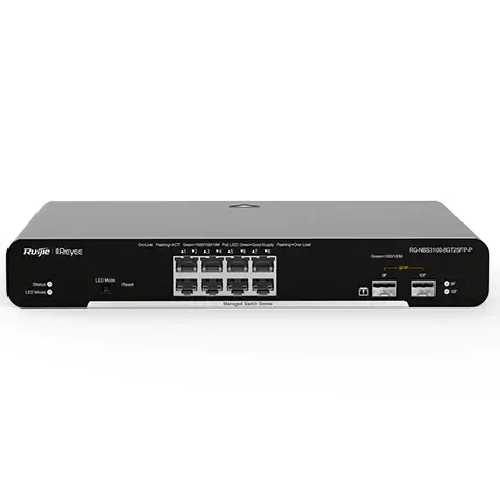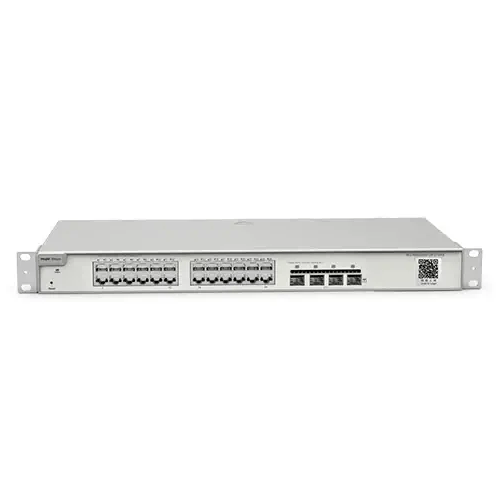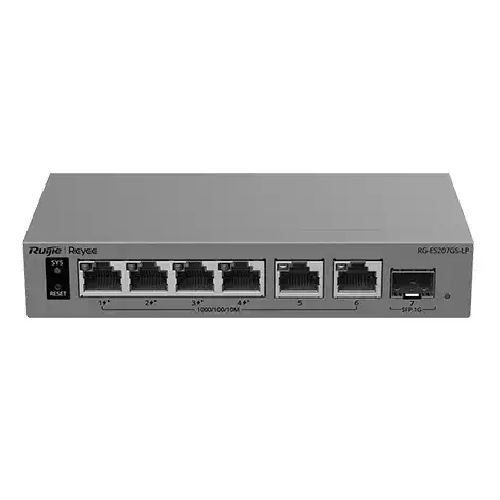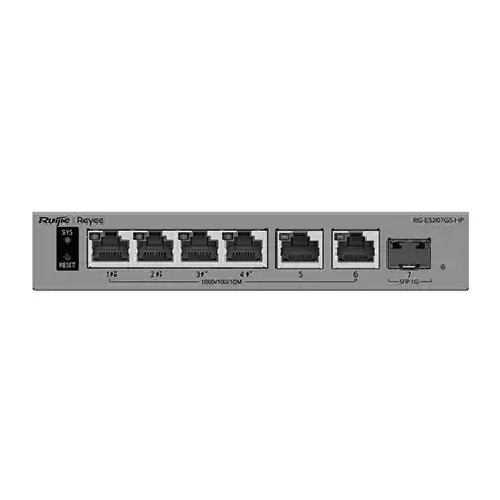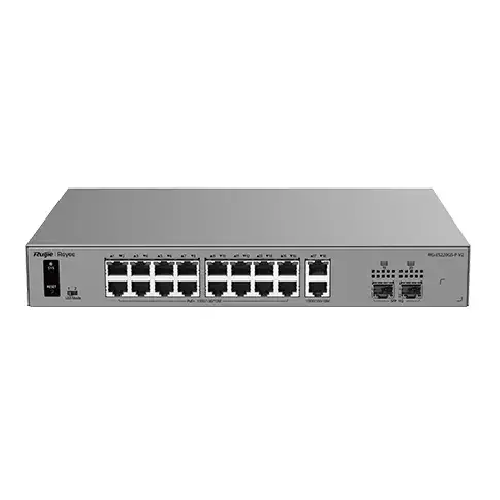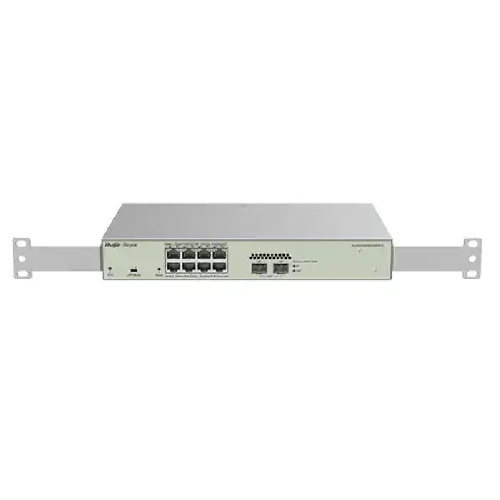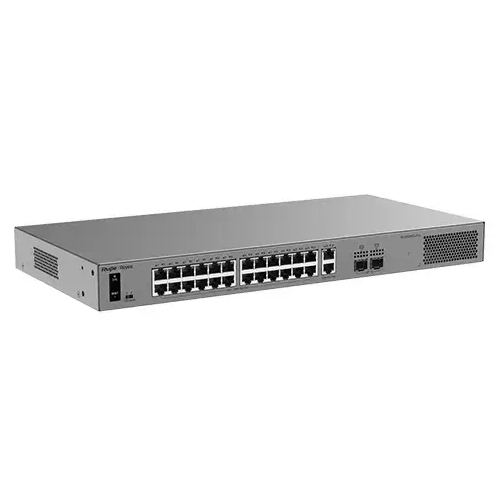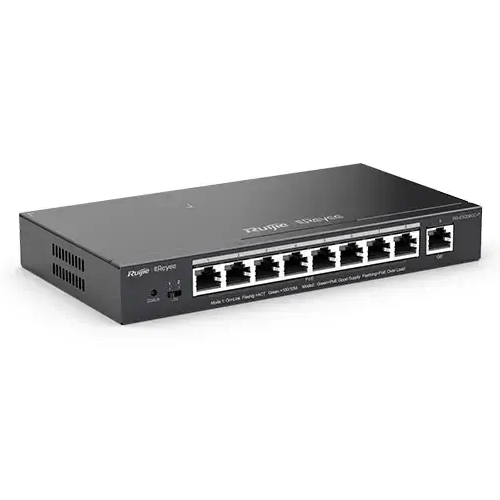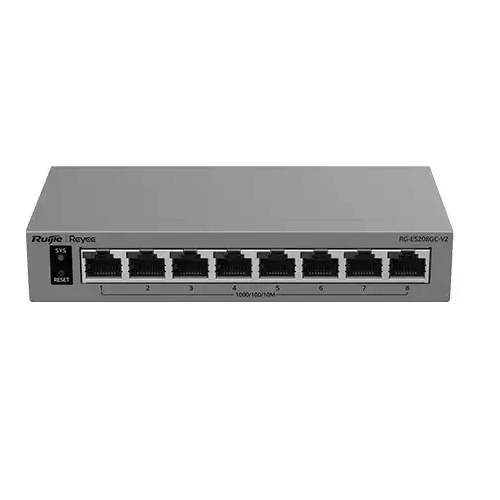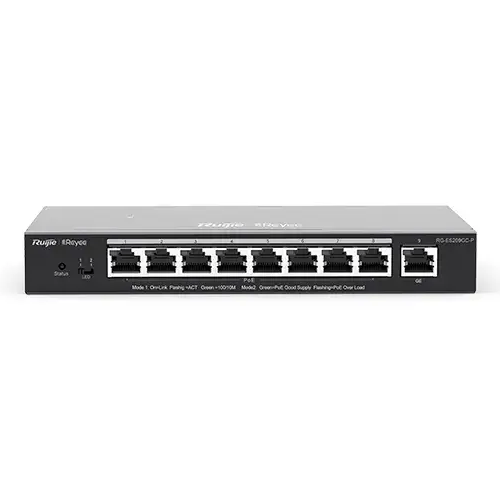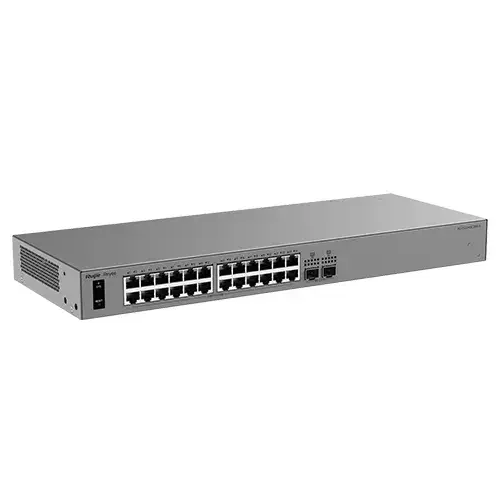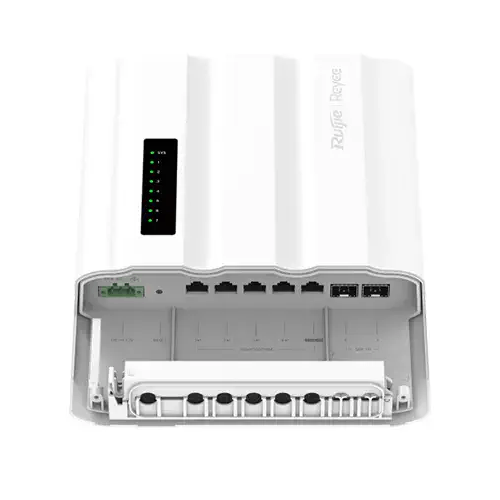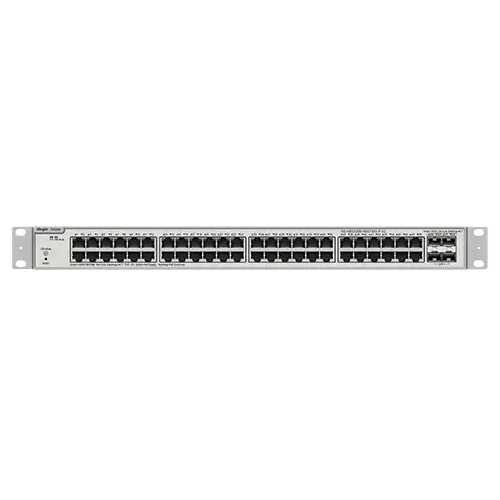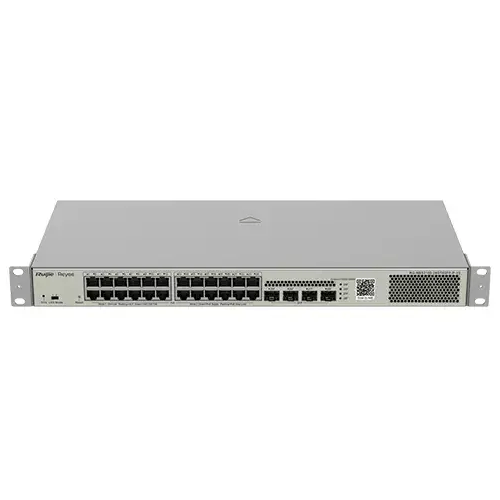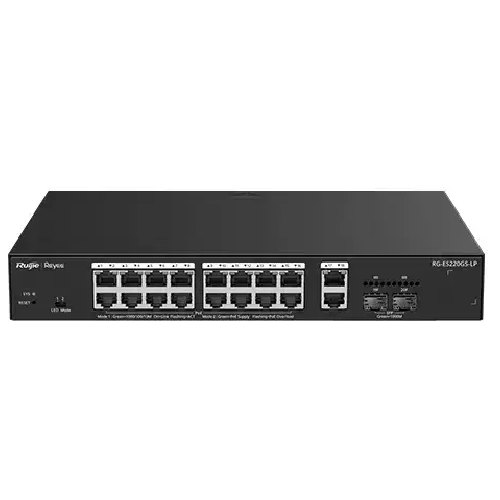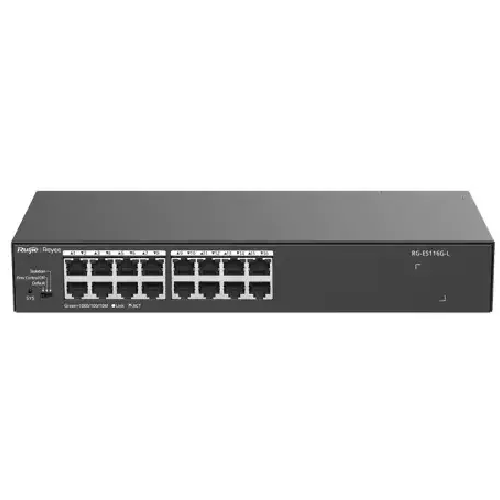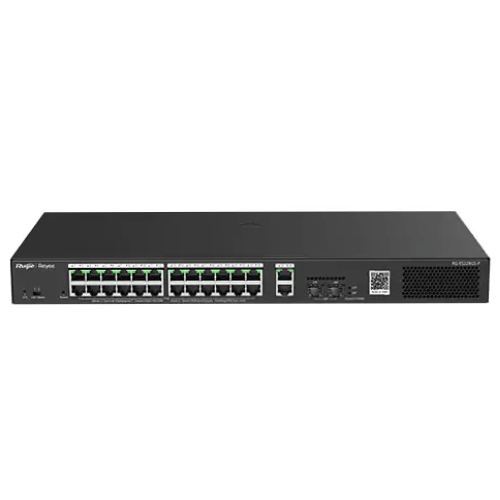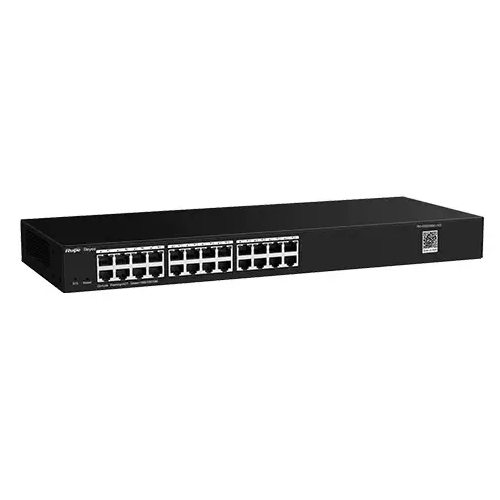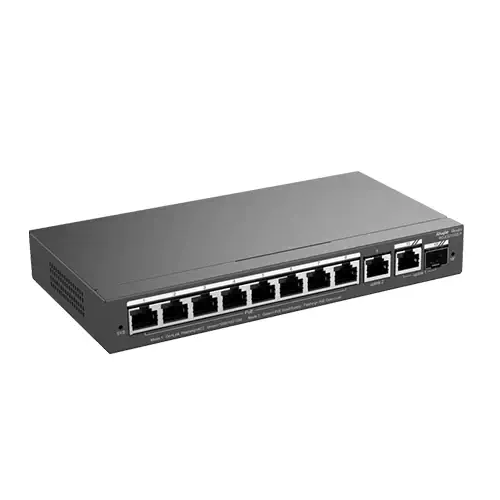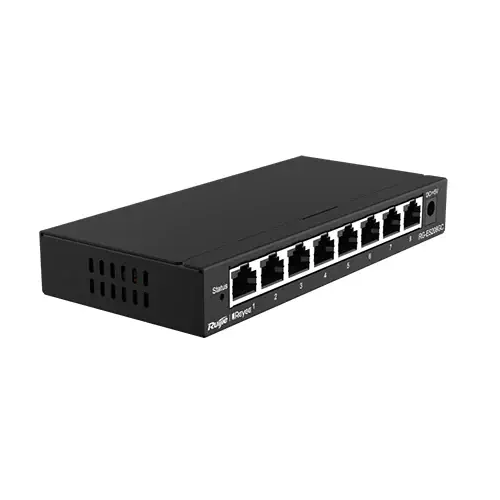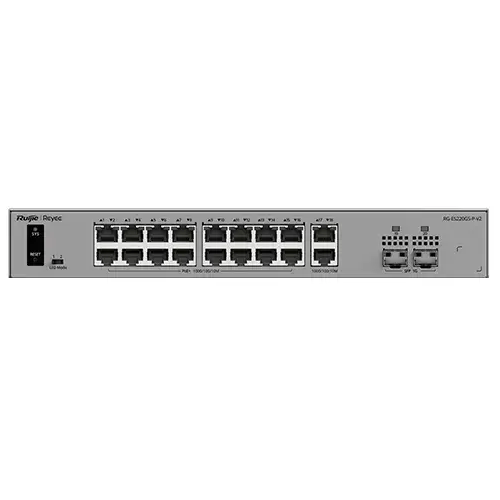
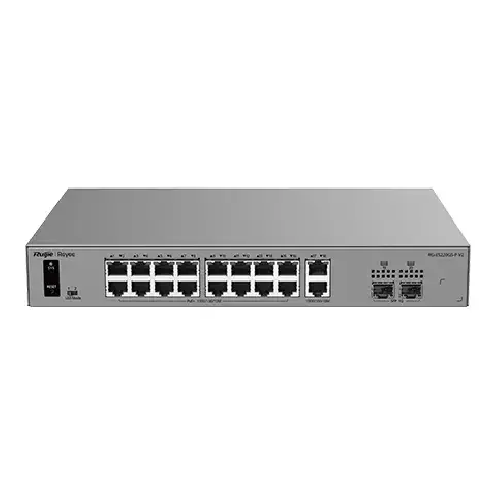
Ruijie Reyee RG-ES220GS-P-V2 20-Port Gigabit Smart Cloud-Managed PoE Switch
Regular Price:৳0.00Availability: SKU: 6.54.312.9609
Quick Overview
-
Support
Saturday – Thursday: 09 AM - 06 PM. -
Payment
Cash on Delivery | Card | Online Payment -
Shipping Cost
Inside Dhaka 100tk | Outside Dhaka 150tk -
Warranty Policy
Read More
Description
Ruijie Reyee RG-ES220GS-P-V2 20-Port Gigabit Smart Cloud-Managed PoE Switch in Bangladesh
The product title confirms its 20-port count, Gigabit category, cloud-managed description, and PoE designation. It does not specify the detailed port layout, the number of PoE-capable ports, supported PoE standards, total power budget, or specific cloud-management functions. These details matter when choosing endpoints and planning an installation, so check the current product documentation or ask BME to confirm them before ordering.
A switch connects compatible devices within a wired network. It does not replace a router, which typically provides routing and internet access, or an access point, which provides Wi-Fi. A CCTV recorder or another suitable system is still needed to receive and store camera footage. Understanding each device’s role helps you plan the complete network rather than expecting a switch to perform every function.
Twenty ports for an organised network
The 20-port format can suit a network with multiple wired endpoints. A small business might connect computers, printers, cameras, and access points. A shop may need connections for office equipment and network cameras, while a training centre may have devices in teaching and administrative areas. The switch can provide a shared connection point when its confirmed port arrangement fits the site.
Start by listing the devices you intend to connect. Include the link from the switch to the router or wider network in your plan, because that connection may use one of the available ports depending on the network layout. Then check the model’s documentation to confirm the purpose and capabilities of each port. The product title gives the total number but does not confirm the port-by-port configuration.
A simple port map is useful once the switch is installed. Record which device connects to each port and label cable ends where practical. This can make it easier to trace a connection if a camera is moved, a workstation is replaced, or a device loses network access. In a shared workspace, clear labels can also help other people understand the layout.
Twenty ports provide a useful planning figure, but the right capacity depends on the actual network. Count the equipment you have now, allow for realistic additions, and confirm how the switch will connect to the rest of the network. That way, you can assess whether the RG-ES220GS-P-V2 fits before buying.
Gigabit networking in everyday use
The RG-ES220GS-P-V2 is identified as a Gigabit switch. Gigabit Ethernet can support a link speed of up to 1,000 Mbps when the connected device, cable, and equipment at the other end of the link also support that speed. This can be useful for compatible computers and other equipment that needs a wired connection.
A Gigabit switch does not make every connected device operate at Gigabit speed. The endpoint’s network interface, cable quality, and other components in the connection all matter. If a device supports a lower link speed, or the cable installation is unsuitable, that can limit the connection. Check the requirements of the equipment you plan to connect and use cabling appropriate for the intended network.
Local network speed is different from internet speed. A switch can connect devices within a local network, but it cannot increase the speed of an internet subscription. Online performance also depends on the service plan, router, connected devices, cabling, and network conditions beyond the switch. Gigabit capability is a useful part of a network plan, not a guarantee that every online task will run at a particular speed.
Smart cloud-managed operation
The smart cloud-managed description makes this model relevant to users considering a cloud-based approach to network administration. A business or IT team may want network equipment to fit a supported management workflow rather than operate as a basic, unmanaged connection point.
The product title does not name the cloud platform, setup process, account requirements, or available management functions. If you need a particular app, remote-access option, monitoring feature, or configuration capability, confirm that it is supported by the RG-ES220GS-P-V2. Cloud-managed switches can differ in their tools and requirements, so check the details for this exact model.
Cloud management does not remove the need for a clear network plan. Someone still needs to decide how the switch connects to the router or wider network, which devices use each port, and who is responsible for managing access. Keeping an equipment list and port map can make the setup easier to understand and maintain.
For some buyers, cloud management may be an important part of how they oversee network equipment. Others may only need straightforward connectivity. Comparing the documented management features with your actual needs helps you decide whether this model’s approach is appropriate.
PoE capability and device compatibility
Power over Ethernet, or PoE, can carry network data and electrical power over a compatible Ethernet connection. In a suitable installation, this may simplify power arrangements for devices such as supported cameras, access points, or IP phones. It can be particularly useful when the preferred position for an endpoint is not close to a convenient power outlet.
The product title identifies the RG-ES220GS-P-V2 as a PoE switch, but it does not specify which ports provide PoE, the supported standards, or the total power budget. These are important details when selecting powered devices. Confirm the switch’s capabilities in current product documentation, then compare them with the requirements of every endpoint you intend to power.
PoE compatibility is not automatic. The switch and endpoint need compatible power requirements. If several devices will draw power at the same time, compare their combined requirements with the switch’s confirmed total budget. Do not assume that a total power budget is available separately on every port.
Also check whether the ports have different roles. The title confirms the switch’s PoE category but does not say that all 20 ports provide power. Devices that do not use PoE will still need their own suitable power source. A device list that notes both network and power requirements can make the selection process much clearer.
A potential fit for CCTV networks
A suitable PoE switch can connect compatible IP cameras to a wired network and may simplify how those cameras receive power. The Ruijie Reyee RG-ES220GS-P-V2 may be considered for this kind of installation if its confirmed port layout, PoE standards, and total power budget match the camera requirements.
The switch itself does not record video. A network video recorder, server, or other suitable system is needed to receive and store footage. Remote viewing may also depend on the router, internet connection, recording equipment, and configuration of the wider system.
Before choosing a switch for CCTV, list the cameras and check their network speeds and power requirements. Plan the routes from the cameras to the switch and from the switch to the recorder or wider network. Also consider where the equipment will be located and how the network will be powered. This makes it easier to decide whether the switch’s verified capabilities suit the complete installation.
Access points, phones, and other endpoints
A compatible PoE-enabled access point may receive network data and power through an Ethernet connection if its requirements match the switch’s documented capabilities. This can help with placement in an office or shop where an access point needs to be positioned away from a power outlet. The access point provides Wi-Fi; the switch provides its wired connection to the network.
Check the access point’s Ethernet speed and power requirements before planning its connection. The same applies to IP phones and other devices that may use PoE. If an endpoint does not support PoE, it will need a separate suitable power source. If you are combining devices from different manufacturers, verify compatibility rather than relying on a shared product category.
The switch can also connect compatible devices that use their own power supplies, such as computers and printers. For each endpoint, note its network speed, power method, and intended location. Those details help you decide which connections are needed and whether 20 ports are suitable for the installation.
Practical use in Bangladesh
An office in Dhaka, a shop in Chattogram, or a training centre elsewhere in Bangladesh may need wired connections for computers, printers, cameras, and access points. A 20-port switch can be considered for a network that has outgrown the connections available on a router or smaller switch, provided the product’s confirmed specifications match the equipment.
In a workplace, a planned cable layout helps keep network connections understandable. Decide where the switch will sit, map how cables reach each device, and label important connections where practical. This can make routine changes easier and help staff or technicians identify a cable when a device needs checking.
Retail and service settings may use a mix of office equipment and surveillance devices. Education spaces may have network-connected equipment spread across teaching and administration areas. In either case, the switch provides wired connections; the router, access points, cameras, and recording equipment continue to perform their separate roles.
Home networking, work, and study
A larger home network can include a desktop computer, printer, television, game console, cameras, storage devices, and wireless access points. The RG-ES220GS-P-V2 may be worth considering if several devices need wired connections and the network includes compatible PoE equipment. For a smaller setup that needs only a few basic connections, a simpler switch may be sufficient.
An Ethernet connection can be a practical option for stationary devices used for remote work, online classes, or entertainment. The switch provides network connectivity, but it does not guarantee faster internet, lower gaming latency, or uninterrupted video calls. Those experiences depend on the router, internet service, devices, network traffic, and the online service.
A switch does not create Wi-Fi coverage. A compatible router or access point is needed for wireless access. If an access point requires PoE, check its requirements against the switch’s confirmed PoE capabilities before relying on Ethernet for power.
Power continuity and load shedding
The switch does not provide backup power. If you want network service to continue during load shedding, plan suitable backup power for the switch and the other essential equipment. Depending on the setup, that may include a router, modem, access points, or CCTV recorder.
A backup arrangement should account for the combined power needs of the devices and the runtime required. Supplying backup power to the switch alone may not keep the network operating if the router or another essential device also loses power. Check the switch’s electrical input requirements on the product label or in current product documentation before connecting it to a local supply or backup system.
Do not infer the electrical input range from the model name. If you are unsure whether a power source or backup arrangement is appropriate, seek qualified technical guidance and follow the manufacturer’s instructions.
Installation, cabling, and general care
Before installation, decide how the switch will connect to the router or existing network and which devices will use its ports. Check the product documentation for the port layout and follow the manufacturer’s instructions for installation and cloud-management setup. If other switches are involved, plan the topology rather than connecting cables without a clear design.
Choose a dry, accessible location with room to connect and inspect cables. If the switch needs to fit a shelf or cabinet, confirm its dimensions and installation guidance first. Keep cables from being crushed, pulled tightly, or sharply bent, and arrange them so the ports remain easy to reach.
For general care, keep networking equipment away from moisture, excessive heat, and heavy dust. If a connected device loses access, check that it has power, inspect the Ethernet cable, and confirm the wider network is operating. Follow model-specific instructions for setup, maintenance, and troubleshooting.
Making a considered selection
The Ruijie Reyee RG-ES220GS-P-V2 is worth evaluating when you need a 20-port Gigabit switch described as smart cloud managed and PoE capable. Those characteristics provide a useful starting point, but a successful choice also depends on the details that the title does not list.
Make a device list, note each endpoint’s network speed and power needs, and identify any management functions your network requires. Then compare those needs with the confirmed port layout, PoE standards and budget, and cloud-management features. If an essential requirement is not confirmed, check the official documentation or ask BME before ordering.
✅ Key Features
- 20-Port Capacity: Provides a central connection point for a suitable group of wired network devices.
- Gigabit Networking: Supports Gigabit-capable connections when connected devices and cabling are compatible.
- PoE Capability: Supports PoE networking; verify port allocation, standards, and power budget before deployment.
- Smart Cloud-Managed Design: Consider it for a cloud-managed network after confirming the platform and supported features.
- Network Expansion: Adds wired switching capacity when the existing network needs more connections.
- CCTV Network Potential: May suit compatible IP cameras when their network and power requirements match.
- Access-Point Connectivity: Can connect suitable access points after checking their Ethernet and PoE requirements.
- Business Network Use: Can be evaluated for suitable office, retail, and small-business networks.
- Structured Port Planning: A device list and port map can help organise a multi-device network.
- Compatibility-Led Setup: Checking product documentation helps match the switch to the planned equipment.
✅ Usage / Applications
- Connecting compatible computers, printers, and other wired devices in an office.
- Expanding network connections in a shop or small business.
- Linking compatible IP cameras to a planned CCTV network.
- Connecting suitable PoE-enabled wireless access points.
- Supporting wired equipment in a training centre or education space.
- Bringing network devices together near a router or existing switch.
- Expanding a home network with compatible Ethernet devices.
- Considering PoE connections for supported endpoints after verifying specifications.
✅ Benefits of This Product?
- More Wired Connections: Use a central point for compatible devices that need Ethernet access.
- Gigabit-Capable Links: Support Gigabit networking when devices and cabling along the connection also support it.
- PoE Option: Consider Ethernet-based power for compatible equipment, subject to verified switch specifications.
- Cloud-Management Potential: Evaluate its cloud-managed approach if the supported tools suit your network.
- Practical Network Expansion: Add switching capacity when a router or smaller switch no longer has enough ports.
- Flexible Small-Site Use: Consider it for suitable home, office, retail, and education networks.
- Clearer Connection Planning: A port map can help users identify devices and cables.
- Fewer Compatibility Surprises: Checking the power budget and management features before purchase helps align equipment with the installation.
✅ Ideal For
The Ruijie Reyee RG-ES220GS-P-V2 may suit small-business owners, office administrators, network installers, and IT teams in Bangladesh looking for a 20-port Gigabit smart cloud-managed PoE switch. It is worth evaluating for an office, shop, training centre, or compatible CCTV network where multiple devices need wired connections and PoE may be useful.
It is most appropriate when the confirmed port layout, PoE standards and power budget, and cloud-management features match the equipment and network plan. Buyers should verify these details before ordering, especially if cameras or access points will rely on the switch for power. If your network requires a particular management feature, a specific PoE capacity, or more ports for future connections, confirm that the exact model meets those needs. A short inventory of devices and their power requirements can help determine whether this switch is a better fit than a basic unmanaged or non-PoE alternative.
✅ Why Choose the Ruijie Reyee RG-ES220GS-P-V2?
The Ruijie Reyee RG-ES220GS-P-V2 brings together a 20-port format, Gigabit networking, smart cloud-managed operation, and PoE capability. This combination may suit a network that needs more than basic Ethernet expansion, particularly when compatible powered devices are part of the plan. It gives buyers several practical points to compare with their requirements: port count, network category, management approach, and PoE support.
Gigabit networking can serve compatible endpoints when the cabling and wider network support it. PoE may simplify power arrangements for supported devices, while cloud-managed operation may fit an organisation’s network-administration approach. These are potential benefits, not guarantees of a particular connection speed, remote-management function, or power capacity.
The exact port layout, number of PoE-capable ports, supported standards, and total power budget are not stated in the product title. The cloud platform and available functions also need confirmation. These details are especially important if you plan to connect multiple cameras or access points, or if your IT team depends on a specific management tool.
A 20-port switch may be more capacity than a small home network needs. A basic unmanaged model may be more suitable for a simpler setup, while another switch may better meet a specific PoE or management requirement. Choose the RG-ES220GS-P-V2 when its verified specifications align with your device list, power needs, and network plan.
✅ Why Buy This Product from BME?
Business Machine & Equipment (BME) serves customers in Bangladesh looking for business and technology products. If you are considering the Ruijie Reyee RG-ES220GS-P-V2, share a brief outline of your network with BME: how many devices need connections, which endpoints require PoE, and whether you need particular cloud-management functions. This helps focus your enquiry on the specifications relevant to your installation.
Before ordering, confirm the exact model, current availability, price, included items, applicable warranty terms, and delivery arrangements with BME. These details can vary by listing or order, so check them for the specific unit rather than assuming they match another model. If you need product documentation or sourcing information for your organisation, ask BME what information is available.
Business and institutional buyers can also enquire about quotation and procurement-documentation requirements. If installation or configuration is needed, confirm separately whether a relevant service is available and what it includes. This approach helps set clear expectations without assuming a particular warranty, delivery commitment, or service package.
✅ Buying Guide
1. Count the devices: List every computer, camera, access point, phone, printer, and other network endpoint. Include the connection to the router or wider network in your port plan.
2. Confirm the port layout: The product title specifies 20 ports but does not describe the role of each one. Check current product documentation before assigning devices to specific ports.
3. Match network speeds: Check the Ethernet requirements of connected devices. Gigabit performance depends on compatible endpoints, suitable cabling, and the rest of the network.
4. Identify PoE devices: Note which endpoints need power over Ethernet. Confirm the supported standards, PoE-capable ports, and total power budget before planning the installation.
5. Check power requirements: Compare each powered device’s requirements with the switch’s confirmed capabilities. Do not assume every port supplies PoE or has the same power limit.
6. Confirm cloud-management needs: If you require a particular platform, app, or management function, verify that it is supported by this exact model. Check setup requirements before purchase.
7. Plan the network topology: Decide how the switch connects to the router or existing network. Follow the manufacturer’s instructions and avoid creating an unintended network loop.
8. Consider load shedding: If network service must continue during a power interruption, plan backup power for the switch and other essential equipment. Account for their combined power needs and the required runtime.
9. Check installation space: Confirm the product’s dimensions and placement guidance if it needs to fit a cabinet or shelf. Leave room to access ports and arrange cables safely.
10. Confirm purchase details: Before ordering from BME, verify the exact model, current availability, included items, applicable warranty terms, and delivery arrangements for your area.
✅ Customers Ask About / Frequently Asked Questions
Q: What is the Ruijie Reyee RG-ES220GS-P-V2?
A: It is described as a 20-port Gigabit smart cloud-managed PoE switch.
Q: How many ports does it have?
A: The product title specifies 20 ports. Check the current documentation for the detailed port layout and roles.
Q: Does it support PoE?
A: Yes, it is identified as a PoE switch. Confirm the supported standards, PoE port allocation, and total power budget before choosing powered devices.
Q: Can I connect IP cameras or access points?
A: They may be suitable if their network and PoE requirements match the switch’s confirmed specifications. A separate suitable system is needed to store CCTV footage.
Q: What is the PoE power budget?
A: The product title does not provide a budget figure. Check current product documentation or ask BME before planning how many devices the switch can power.
Q: What cloud-management features does it provide?
A: It is described as smart cloud managed, but the title does not name the platform or list its functions. Confirm these details for this model.
Q: Will it make my internet faster?
A: Not by itself. Internet performance depends on your service plan, router, connected devices, cabling, and wider network conditions.
Q: Is it suitable for Bangladesh’s electrical supply?
A: Check the unit label or current manufacturer documentation for its input requirements before connecting it. Do not assume a voltage range from the model name.
Q: Can it keep working during load shedding?
A: Only if the switch and other essential network equipment receive suitable backup power. Plan for the combined load and the runtime required.
Q: How do I set it up?
A: Plan its connection to the router or wider network, connect devices according to the documented port layout, and follow the manufacturer’s instructions for cloud-management setup.
Q: What are the warranty and delivery arrangements?
A: These depend on the current listing and order. Confirm the applicable warranty and delivery details with BME before purchasing.
Q: How should I maintain the switch?
A: Keep it in a suitable, dry location, protect it from heavy dust and moisture, and avoid pulling or sharply bending cables. Follow model-specific product guidance.
✅ Why Buy This Product
If your network needs 20 ports, Gigabit connectivity, PoE capability, and a smart cloud-managed approach, the Ruijie Reyee RG-ES220GS-P-V2 is worth considering. Its stated features may suit an office, shop, training centre, or compatible CCTV network where they match the devices and network plan.
Before ordering, confirm the port layout, PoE standards and power budget, and cloud-management functions. Check that the switch has enough suitable connections for both your endpoints and its link to the wider network. If cameras or access points will depend on PoE, verify compatibility rather than relying on the product title alone.
What is the price of Ruijie Reyee RG-ES220GS-P-V2 20-Port Gigabit Smart Cloud-Managed PoE Switch in Bangladesh?
Write a review
Question Answer
Have question about this product? Get specific details about this product from expert.