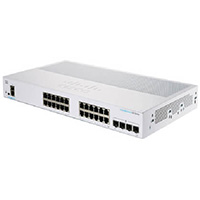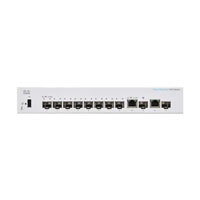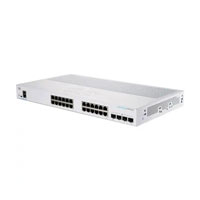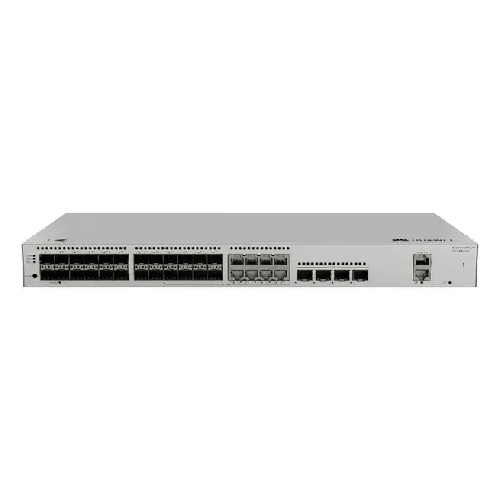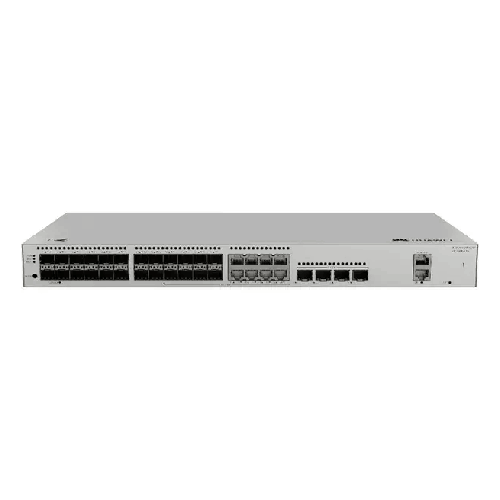
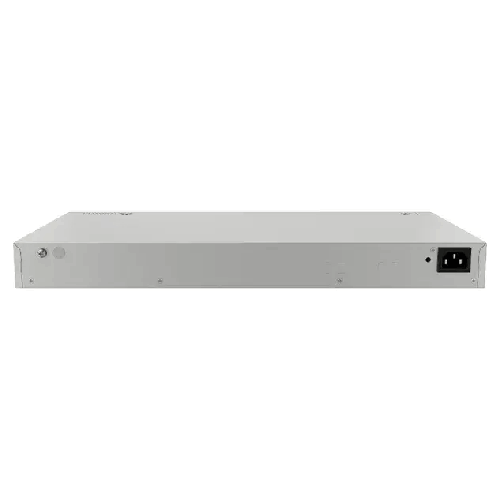
Huawei eKit S310-24ST4X Layer 3 Base Managed Gigabit Switch
Regular Price:৳0.00Availability: SKU: 6.54.130.9150
Quick Overview
-
Support
Saturday – Thursday: 09 AM - 06 PM. -
Payment
Cash on Delivery | Card | Online Payment -
Shipping Cost
Inside Dhaka 100tk | Outside Dhaka 150tk -
Warranty Policy
Read More
Description
Huawei eKit S310-24ST4X Layer 3 Base Managed Gigabit Switch Price in Bangladesh
The Huawei eKit S310-24ST4X is designed for organizations that need managed Gigabit connectivity together with Layer 3 networking capabilities and high-speed 10GE uplinks.
This configuration provides 24 × GE SFP ports, with the supplied interface description specifying 8 dual-purpose 10/100/1000 or SFP ports, alongside 4 × 10GE SFP+ uplink ports. It is a Layer 3 Base Managed Switch and is explicitly identified as a non-PoE model, meaning the supplied configuration does not provide a PoE power budget.
For Bangladesh businesses, offices, educational institutions, system integrators, and other professional network environments, the combination of Gigabit access connectivity and 10GE uplink capacity can be useful when building a structured network that needs more bandwidth between access and aggregation layers.
The product also comes with the supplied 03-Year Brand Warranty, giving buyers a clearly defined warranty term for this configuration.
Gigabit Connectivity for Professional Networks
The primary role of the Huawei eKit S310-24ST4X is to provide managed network connectivity for compatible Ethernet and SFP-based deployments.
Gigabit Ethernet remains a practical connectivity standard for many office networks, particularly where users need reliable access to shared servers, internet services, business applications, network storage, and other resources.
The supplied configuration combines 24 GE-class access interfaces with four 10GE SFP+ uplink ports. This creates a meaningful distinction between the network's edge connections and its higher-bandwidth uplinks.
A network can therefore connect compatible end devices through the Gigabit interfaces while using the 10GE SFP+ ports for high-capacity connections toward another switch, aggregation layer, server infrastructure, or other compatible network equipment.
The exact role of each interface should be determined during network design. SFP/SFP+ interfaces require compatible transceivers or direct-attach solutions where applicable, so buyers should confirm the intended fiber or copper connectivity before deployment.
24 GE SFP Ports and Dual-Purpose Interfaces
The supplied configuration identifies the switch with 24 × GE SFP ports, including 8 dual-purpose 10/100/1000 or SFP ports.
Dual-purpose interfaces can provide greater flexibility when designing the access layer because the available interface can be selected according to the connected equipment and network architecture.
For example, an organization may need copper Ethernet connectivity for some devices while using SFP-based connectivity for another part of its infrastructure. The exact supported combinations and interface behavior should be verified against the manufacturer's documentation for the specific hardware revision before installation.
This type of flexibility is particularly useful for network environments that are evolving from conventional Ethernet infrastructure toward fiber-based or mixed-media connectivity.
For system integrators in Bangladesh, understanding the interface type before deployment is essential. Network cabling, SFP modules, fiber type, connector type, distance, and connected-device interfaces should all be considered as part of the installation plan.
Four 10GE SFP+ Uplink Ports
One of the most important characteristics of the Huawei S310-24ST4X is its 4 × 10GE SFP+ uplink ports.
A network can have many Gigabit-connected devices but still experience congestion if the uplink between network layers is not sufficiently capable. High-speed uplinks help provide a larger connection path between the switch and upstream network infrastructure.
10GE connectivity is particularly relevant where a switch needs to exchange substantial amounts of data with another switch, server, storage system, or aggregation device.
The practical benefit depends on the entire network. A 10GE uplink does not automatically make every connected device operate at 10Gbps. Instead, it provides a higher-capacity path for compatible traffic between network components.
This distinction is important when designing an enterprise network. Access ports, uplinks, server interfaces, storage interfaces, and internet connections should be considered together.
Layer 3 Base Managed Switching
The Huawei eKit S310-24ST4X is supplied as a Layer 3 Base Managed Switch, placing it beyond the functionality of a simple unmanaged Ethernet switch.
A managed Layer 3 switch can form part of a more structured network architecture where administrators need greater control over network segmentation, traffic management, routing-related functions, monitoring, and configuration.
Layer 3 capability is particularly useful when a business network needs to be divided into different logical networks.
For example, an organization may separate administrative users, general employees, servers, guest access, security devices, or other departments into different network segments. The precise Layer 3 features available should be checked against the manufacturer's documentation and the required network design.
The key advantage is that the switch can be incorporated into a more organized network architecture rather than simply providing plug-and-play connectivity.
Managed Networking for Business Environments
Network management becomes increasingly important as the number of connected devices grows.
A small office with a handful of computers may function adequately with a basic switch, but larger environments typically require visibility and configuration control.
A managed switch allows network administrators to establish and maintain network policies rather than relying solely on default behavior.
This can be particularly valuable for organizations with multiple departments, separate network segments, centralized servers, or higher-bandwidth uplinks.
For Bangladesh businesses expanding their IT infrastructure, a managed switch can also provide a foundation for future network planning. Instead of replacing basic switching equipment immediately as the network becomes more sophisticated, an organization can select infrastructure with management capabilities from the beginning.
Non-PoE Configuration
The supplied product information clearly identifies the Huawei S310-24ST4X as a non-PoE model, with the PoE budget listed as not applicable.
This is an important purchasing detail.
A PoE switch can provide electrical power to compatible devices such as certain wireless access points, IP phones, and security cameras through Ethernet cabling. This particular configuration should not be selected when the project specifically requires integrated PoE power delivery.
Instead, if PoE devices are part of the deployment, the network design should include appropriate PoE switches or separate power solutions.
The non-PoE architecture can nevertheless be entirely appropriate for conventional Ethernet infrastructure where connected devices receive power independently.
10/100/1000 Connectivity
The supplied specification identifies eight interfaces as supporting 10/100/1000 or SFP operation.
This provides compatibility with different Ethernet speeds where the relevant interface configuration supports the connected device.
In a mixed network, not every device necessarily operates at the same speed. Some endpoints may use Fast Ethernet or Gigabit Ethernet, while uplinks may operate at much higher rates.
The ability to accommodate different network connections can make the switch relevant to environments where legacy and newer equipment need to coexist.
However, actual link speed depends on the connected equipment, cabling, transceiver, configuration, and negotiated interface capabilities.
High-Bandwidth Network Architecture
The four 10GE SFP+ uplinks make the switch particularly relevant to network designs where access-layer bandwidth needs to connect to a faster upstream infrastructure.
For example, a business may connect multiple user-facing Gigabit interfaces while using one or more 10GE links toward a higher-level switch.
This can help avoid designing an access layer with only Gigabit-to-Gigabit connections when the upstream network has higher bandwidth requirements.
High-speed uplinks can also be useful when the switch connects to compatible servers or storage infrastructure.
However, network performance is always determined by the complete path. The server, switch, transceiver, fiber, NIC, upstream switch, and network configuration must all support the intended bandwidth.
Suitable for Office Network Infrastructure
For a corporate office, the Huawei eKit S310-24ST4X can serve as part of a structured network architecture.
Users can connect computers and other compatible Ethernet devices to the available interfaces, while higher-bandwidth uplinks can connect the switch to the wider network.
In an office environment, network segmentation can also become increasingly important as businesses introduce guest Wi-Fi, IP cameras, VoIP, servers, printers, and other connected systems.
The Layer 3 managed architecture can provide a platform for network administrators to design an organized infrastructure according to the supported feature set and their organization's requirements.
Educational and Institutional Networking
Educational institutions can have many connected endpoints distributed across classrooms, offices, laboratories, libraries, and administrative departments.
A managed network switch can help provide structured connectivity across these environments.
The S310-24ST4X can be considered for parts of an institutional network where Gigabit access and 10GE uplink capability are appropriate.
The exact number of switches required will depend on the number of connected endpoints, building layout, network topology, redundancy requirements, and uplink architecture.
For larger campuses, the S310-24ST4X should generally be considered as one component within a larger network design rather than as a complete campus-network solution by itself.
Business Servers and Network Storage
Network servers and storage systems can generate significantly more traffic than ordinary office endpoints.
When a switch connects multiple users to centralized servers or storage, the uplink architecture becomes particularly important.
The 4 × 10GE SFP+ uplinks can provide high-speed connection options for compatible upstream equipment.
For example, a business may use a 10GE connection between the switch and an aggregation switch, depending on the network design. Alternatively, a compatible server or storage device with an SFP+ interface may connect directly where the architecture permits.
Actual performance will depend on the server's network interface, storage performance, transceiver or DAC, cabling, and configuration.
Fiber and SFP-Based Network Design
SFP and SFP+ interfaces can support network designs that use optical fiber or compatible direct-attach solutions.
This can be useful where the distance between network devices is greater than what conventional copper Ethernet cabling can comfortably support or where the network architecture is intentionally fiber-based.
However, SFP modules are not interchangeable without considering speed, wavelength, fiber type, connector, transmission distance, and equipment compatibility.
Before purchasing additional optics, buyers should verify the exact SFP/SFP+ requirements of the switch and the connected equipment.
This is especially important for Bangladesh network projects where a system integrator may be sourcing switches, transceivers, fiber patch cords, structured cabling, and other components from different vendors.
Network Expansion and Scalability
The switch can be used as a building block within a larger network.
An organization may begin with a relatively small deployment and later expand by adding additional access switches, higher-capacity uplinks, servers, wireless infrastructure, and network security equipment.
The four 10GE uplink ports provide several high-speed interface options, although the actual topology should be planned carefully.
Network expansion should also consider redundancy. Simply having several uplink ports does not automatically create a redundant network. Proper link aggregation, spanning-tree design, routing, and other supported technologies must be configured according to the network architecture.
Network Segmentation
Layer 3 managed switches are often selected when organizations need a more organized network structure.
Network segmentation can separate different groups of devices into logical network environments. This can help administrators structure access between departments and services.
For example, an organization may have separate logical networks for employees, servers, guests, security devices, or management traffic.
The exact implementation should be based on the features supported by the specific S310 software version and hardware configuration.
For professional deployments, network administrators should therefore consult the current Huawei documentation before designing the final configuration.
Reliability Through Structured Network Design
A network's reliability does not depend on the switch alone. Cabling, power, upstream connectivity, redundancy, configuration, and monitoring all contribute to overall network availability.
The Huawei S310-24ST4X can form one component of a structured network where administrators plan these elements together.
The switch's managed architecture provides a greater degree of control than a basic unmanaged switch, while the 10GE uplink ports allow the network to be designed around higher-capacity connections.
Organizations should still plan appropriate backup configurations and redundancy according to the importance of their network services.
Warranty for the Supplied Configuration
The product information supplied for this listing specifies a 03-Year Brand Warranty.
Warranty terms are important when purchasing professional networking equipment because the switch may become part of an organization's core infrastructure.
Before purchase, customers should confirm the exact warranty coverage, terms, and applicable service conditions for the supplied unit.
The warranty period should not be interpreted as a guarantee of network performance or uninterrupted operation. Correct installation, environmental conditions, configuration, and compatible accessories remain important.
Designed for Professional Network Infrastructure
The Huawei eKit S310-24ST4X is best understood as a managed network infrastructure component rather than simply a 24-port switch.
Its combination of Gigabit interfaces, SFP connectivity, 10GE SFP+ uplinks, Layer 3 Base management, and non-PoE design makes it suitable for network architectures where administrators require more flexibility than a basic unmanaged switch provides.
For Bangladesh businesses, system integrators, educational institutions, and professional network projects, the product can be considered when the required topology calls for Gigabit access connectivity and higher-speed uplinks.
The most important purchasing step is to match the switch to the actual network design, including endpoint interfaces, uplink speeds, fiber requirements, VLAN or routing requirements, PoE requirements, and future expansion.
✅ Key Features
- Layer 3 Base Managed Switching: Provides a managed networking platform for structured business and professional network deployments.
- 24 GE Interfaces: Provides multiple Gigabit-class connection options for compatible network devices.
- 8 Dual-Purpose Interfaces: The supplied configuration includes 8 interfaces supporting 10/100/1000 or SFP connectivity.
- 4 × 10GE SFP+ Uplinks: Provides high-speed uplink interfaces for compatible aggregation, server, storage, or network connections.
- Non-PoE Design: The supplied model does not provide a PoE power budget, making it suitable for networks where connected devices use separate power sources.
- SFP-Based Connectivity: Supports network designs requiring compatible optical or SFP-based connections.
- Professional Network Architecture: Can form part of structured office, institutional, business, and enterprise network deployments.
- 03-Year Brand Warranty: The supplied product information includes a three-year brand warranty.
- Rack-Based Network Deployment: Suitable for organized network infrastructure where the physical installation environment supports the product.
- Network Expansion Capability: Multiple Gigabit and 10GE interfaces provide connectivity options as a network grows.
✅ Usage / Applications
- Corporate Office Networks: Connect computers, printers, servers, and other compatible network devices.
- Small and Medium Business Infrastructure: Build a managed Gigabit network with high-speed uplink capability.
- Educational Institutions: Support structured connectivity for classrooms, offices, labs, and administrative areas.
- Server Room Networks: Connect compatible servers and upstream network infrastructure.
- Network Aggregation: Use the 10GE SFP+ ports for higher-bandwidth connections within an appropriately designed topology.
- Business Network Segmentation: Support structured Layer 3 network architectures where the required features are available.
- System Integrator Projects: Deploy as part of customized network installations for business and institutional customers.
- Fiber-Based Network Infrastructure: Use compatible SFP interfaces in network designs requiring optical connectivity.
- Branch Office Networks: Provide managed connectivity for appropriately sized branch infrastructure.
- Enterprise Access Networking: Use as part of a larger multi-layer network architecture with suitable aggregation and core equipment.
✅ Benefits of This Product?
- High-Speed Uplinks: Four 10GE SFP+ ports provide higher-capacity connection options for compatible upstream equipment.
- Managed Networking: Offers significantly more configuration flexibility than a basic unmanaged switch.
- Layer 3 Capability: Supports a more structured network architecture than simple Layer 2-only connectivity.
- Flexible Interfaces: The supplied configuration includes both Gigabit and SFP-oriented connectivity options.
- No Unnecessary PoE Cost: For deployments that do not require PoE, the non-PoE architecture keeps the configuration focused on network connectivity.
- Business-Oriented Design: Suitable for structured office and professional networking environments.
- Expansion Potential: Multiple uplink interfaces allow network planners to design for future connectivity requirements.
- Professional Warranty Coverage: The supplied configuration includes a 03-year brand warranty.
- Fiber Connectivity Options: SFP/SFP+ interfaces can support compatible optical network designs.
- Centralized Network Infrastructure: Helps organizations build a more organized and manageable network environment.
✅ Ideal For
The Huawei eKit S310-24ST4X is suited to businesses, institutions, system integrators, and professional network environments that require managed Gigabit connectivity together with higher-speed 10GE uplinks.
It can be particularly relevant for offices with multiple network endpoints, organizations connecting servers or storage systems, educational institutions, branch networks, and infrastructure projects where a basic unmanaged switch would not provide enough management flexibility.
The non-PoE design makes it appropriate for environments where connected devices have their own power sources or where PoE is provided elsewhere in the network. Buyers specifically looking to power access points, IP cameras, IP phones, or other PoE equipment directly through this switch should select a compatible PoE model instead.
For Bangladesh network projects, the product can be considered where the network architecture requires Gigabit access and SFP/SFP+ connectivity. System integrators should verify transceiver compatibility, fiber requirements, uplink architecture, network segmentation requirements, and the exact software features before deployment.
Its 10GE SFP+ uplinks also make it relevant to networks where higher-capacity connections are required between access and aggregation layers or between network equipment and compatible high-speed servers.
✅ Why Choose the Huawei eKit S310-24ST4X Layer 3 Base Managed Gigabit Switch?
The Huawei eKit S310-24ST4X combines managed Gigabit connectivity with four high-speed 10GE SFP+ uplink interfaces in a single network platform.
One of its defining characteristics is the balance between access connectivity and uplink capacity. The supplied configuration provides 24 GE SFP interfaces, including eight dual-purpose 10/100/1000 or SFP interfaces, while the four 10GE SFP+ ports provide higher-speed connection options.
This architecture can be useful when an organization has many Gigabit-connected devices but needs more bandwidth between the access switch and upstream network infrastructure.
The Layer 3 Base Managed classification also makes the product relevant to organizations that need a managed network architecture rather than simple plug-and-play switching.
Another important point is that the product is explicitly a non-PoE model. This makes the configuration suitable for networks where PoE is not required, while customers needing integrated power delivery should choose an appropriate PoE switch.
For Bangladesh network deployments, the S310-24ST4X can therefore be evaluated according to practical infrastructure requirements: number of endpoints, uplink bandwidth, SFP/SFP+ connectivity, network segmentation, rack environment, and future expansion.
The supplied 03-year brand warranty also provides a defined warranty period for the listed configuration.
Before purchase, organizations should verify the exact hardware and software feature set, supported transceivers, and intended network topology to ensure that the switch matches the project requirements.
✅ Why Buy This Product from BME?
Business Machine & Equipment (BME) provides Bangladesh customers with access to business technology and professional networking equipment. For a managed switch such as the Huawei eKit S310-24ST4X, selecting the correct configuration is important because interface type, uplink requirements, SFP compatibility, PoE needs, and network architecture all affect the suitability of the product.
BME can be approached when customers need to evaluate this switch for a specific office, institutional, server-room, or network-infrastructure project. Buyers should provide their intended topology and connectivity requirements so that the product configuration can be assessed against the actual deployment.
For procurement teams, system integrators, businesses, and institutions, configuration clarity is especially important. Before placing an order, customers should confirm the exact model, interface configuration, warranty terms, required SFP/SFP+ modules, and any accessories needed for deployment.
The supplied listing specifies a 03-year brand warranty, which should be reviewed together with the applicable warranty terms before purchase.
BME can also serve as a point of contact for product-related guidance and procurement discussions in Bangladesh. Customers planning larger network deployments should identify the number of endpoints, uplink requirements, PoE requirements, fiber connections, and Layer 3 networking objectives before finalizing their equipment list.
✅ Buying Guide
1. Count Your Network Devices: Determine how many computers, servers, access points, printers, cameras, phones, and other network devices need direct connections.
2. Identify Port Types: Confirm whether connected devices require copper Ethernet, SFP, or SFP+ interfaces. Do not assume that every SFP port accepts every type of transceiver.
3. Evaluate Uplink Requirements: Determine how much traffic will move between this switch and upstream equipment. The four 10GE SFP+ ports are particularly relevant where higher-capacity uplinks are required.
4. Check PoE Requirements: This is a non-PoE model. If your deployment requires the switch to power IP cameras, wireless access points, VoIP phones, or other PoE devices, choose a compatible PoE model instead.
5. Plan Layer 3 Networking: Determine whether your project requires Layer 3 functionality, network segmentation, inter-network communication, or other managed features.
6. Verify SFP/SFP+ Compatibility: Check the required transceiver type, fiber standard, wavelength, distance, connector, and speed before purchasing additional optics.
7. Plan the Network Topology: Decide whether the switch will function at the access, aggregation, or another appropriate layer of the network.
8. Consider Future Growth: Do not design the switch only for today's device count. Consider additional users, servers, access points, and uplink requirements.
9. Check Rack and Installation Requirements: Confirm that the installation location, rack, airflow, cabling, and power environment are appropriate.
10. Verify Warranty: The supplied configuration specifies a 03-year brand warranty. Confirm the exact applicable warranty terms before purchase.
11. Confirm Software Features: Layer 3 Base managed products can differ in their supported software features. Verify the current feature set against your network requirements.
12. Avoid Choosing Based Only on Port Count: A switch with the right number of ports may still be unsuitable if the uplink speed, interface type, PoE capability, or Layer 3 functionality does not match the project.
✅ Customers Ask About / Frequently Asked Questions
Q: What type of switch is the Huawei eKit S310-24ST4X?
A: It is a Layer 3 Base Managed Gigabit Switch according to the supplied product configuration.
Q: How many ports does the S310-24ST4X have?
A: The supplied configuration identifies 24 GE SFP ports, including 8 dual-purpose 10/100/1000 or SFP interfaces, plus 4 × 10GE SFP+ uplink ports.
Q: Does the Huawei S310-24ST4X support PoE?
A: No. The supplied configuration is explicitly identified as a non-PoE model, with the PoE budget listed as not applicable.
Q: Does this switch have 10GE ports?
A: Yes. The supplied configuration includes 4 × 10GE SFP+ uplink ports.
Q: What are the SFP+ ports used for?
A: They can be used for compatible high-speed network connections, such as uplinks to other network equipment or compatible servers and storage systems, depending on the network design.
Q: Can I use SFP modules with the switch?
A: The supplied configuration includes SFP and SFP+ interfaces, but the exact transceiver must be compatible with the interface, speed, fiber type, wavelength, distance, and connected equipment.
Q: Is the S310-24ST4X suitable for an office network in Bangladesh?
A: It can be considered for suitable office network deployments where managed Gigabit connectivity and 10GE uplinks are required. The final suitability depends on the network topology and connected equipment.
Q: Can this switch power IP cameras or Wi-Fi access points?
A: Not through PoE. The supplied model is explicitly non-PoE, so PoE devices would require another appropriate power source or PoE equipment.
Q: What warranty is included?
A: The product information supplied for this listing specifies a 03-Year Brand Warranty. Exact warranty terms should be confirmed before purchase.
Q: Is this an unmanaged switch?
A: No. It is identified as a Layer 3 Base Managed Switch, meaning it is designed for managed network environments.
Q: Can it be used with a 10GE network?
A: It includes four 10GE SFP+ uplink ports, so it can participate in a compatible 10GE network design. The connected equipment and transceivers must also support the required standard.
Q: What should I check before buying SFP modules?
A: Check speed, SFP/SFP+ type, fiber type, wavelength, transmission distance, connector, and compatibility with both the switch and the connected network device.
✅ Why Buy This Product
The Huawei eKit S310-24ST4X Layer 3 Base Managed Gigabit Switch is a practical option for organizations that need more than basic Ethernet switching.
Its combination of 24 GE SFP interfaces, eight dual-purpose 10/100/1000 or SFP interfaces, and four 10GE SFP+ uplinks gives network planners several connectivity options for structured business infrastructure.
The Layer 3 Base managed architecture makes it suitable for network environments where administrators need greater control over network configuration and segmentation than an unmanaged switch can provide.
At the same time, the non-PoE design makes the product clearly targeted toward deployments where integrated Ethernet power delivery is not required.
For Bangladesh businesses, educational institutions, system integrators, offices, and professional IT projects, the switch can be considered when Gigabit access and high-speed 10GE uplinks are important parts of the network design.
Order the Huawei eKit S310-24ST4X today when your network requires managed Gigabit connectivity with high-speed SFP+ uplink capability. Before ordering, confirm the required SFP/SFP+ modules, topology, PoE requirements, and Layer 3 feature requirements to ensure the configuration matches your project.
What is the price of Huawei eKit S310-24ST4X Layer 3 Base Managed Gigabit Switch in Bangladesh?
Write a review
Question Answer
Have question about this product? Get specific details about this product from expert.