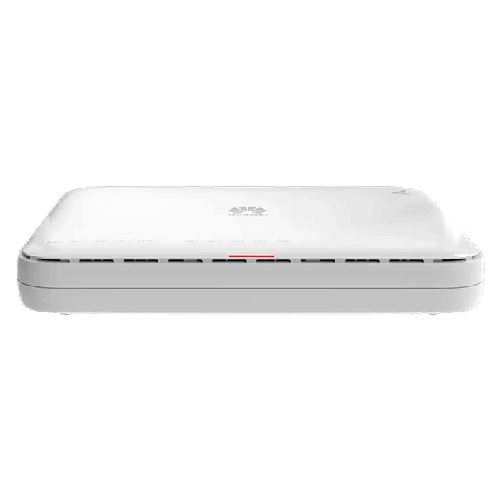
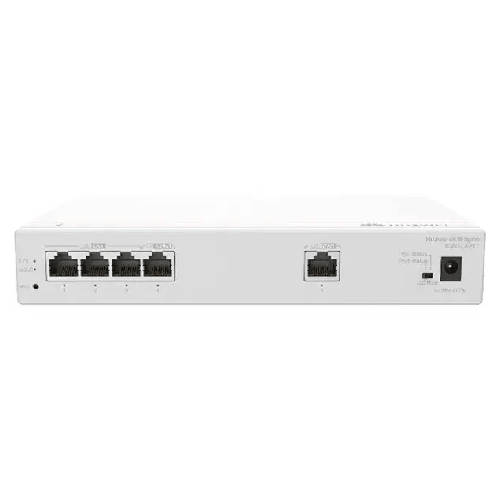
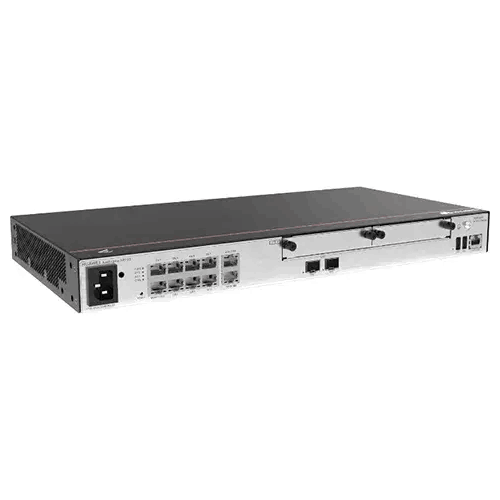
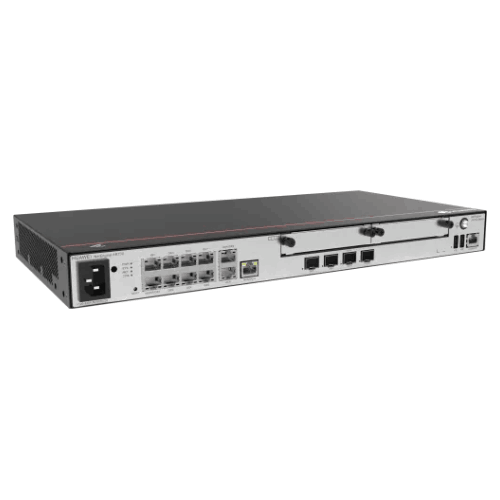
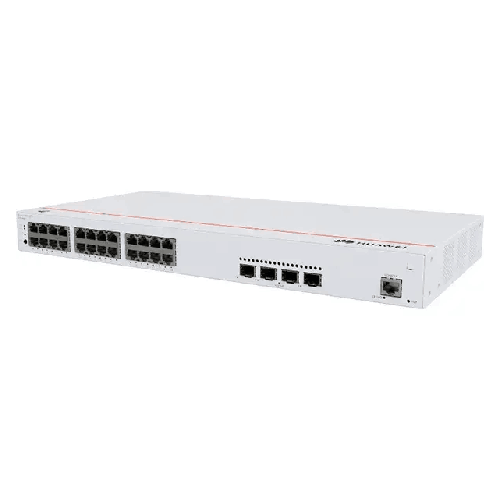
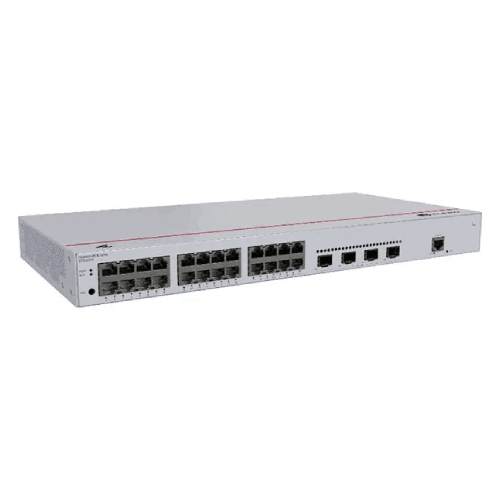
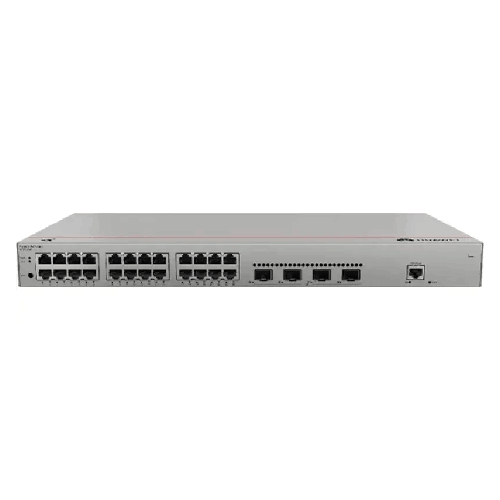
Huawei eKitEngine AR280 Enterprise Grade 2.5GE Multi Service Router
Regular Price:৳0.00Availability: SKU: 6.54.130.9182
Quick Overview
-
Support
Saturday – Thursday: 09 AM - 06 PM. -
Payment
Cash on Delivery | Card | Online Payment -
Shipping Cost
Inside Dhaka 100tk | Outside Dhaka 150tk -
Warranty Policy
Read More
Description
Huawei eKitEngine AR280 Enterprise Grade 2.5GE Multi Service Router in Bangladesh
The Huawei eKitEngine AR280 Enterprise Grade 2.5GE Multi Service Router is a compact, high-performance networking platform designed for small and medium-sized businesses that need reliable routing, high-speed broadband access, PoE connectivity, VPN functionality, wireless access management and intelligent network control in a single device. Huawei positions the AR280 as an enterprise-grade 2.5G multi-service router for SME environments where network simplicity, flexibility and efficient deployment are important.
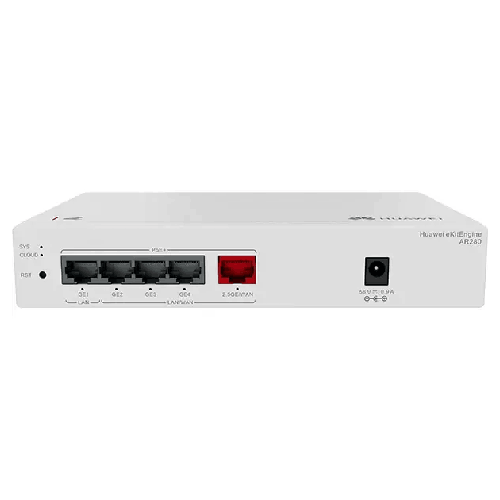
At the heart of the Huawei AR280 is a 2.5GE electrical interface that can operate as a high-speed WAN port and can also be configured as a LAN port. This gives businesses access to multi-gigabit networking while preserving flexibility for internal network design. The router also provides four GE electrical interfaces, with one fixed LAN interface and three interfaces that can be used as LAN/WAN ports.
The AR280 is more than a conventional broadband router. Huawei combines several networking functions into one compact platform, including static routing, switching, Wireless Access Controller functionality, PoE, load balancing, IPSec VPN and application control. This multi-service architecture can help reduce the number of separate network devices required in an SME deployment.
Another important capability is its integrated PoE+ functionality. The AR280 provides four GE PoE+ electrical ports and one 2.5GE PoE+ electrical port. Huawei specifies a maximum PoE output power of 41W, allowing compatible powered devices to receive both network connectivity and electrical power through Ethernet cabling.
The router is also designed with compatibility in mind. Huawei states that the AR280 supports LLDP power negotiation and compatibility with more than 100 non-standard terminals. Its perpetual PoE capability is designed to keep connected powered devices supplied during router restarts, helping reduce unnecessary interruptions for supported deployments.
With support for up to 150 connected terminals, 16 IPSec tunnels, 16 managed APs, and 32 managed devices, the AR280 is positioned for small business networks that require considerably more than basic Internet sharing. Huawei specifies 2Gbps egress bandwidth and 200Mbps VPN forwarding performance, providing a useful combination of broadband and secure remote connectivity capabilities.
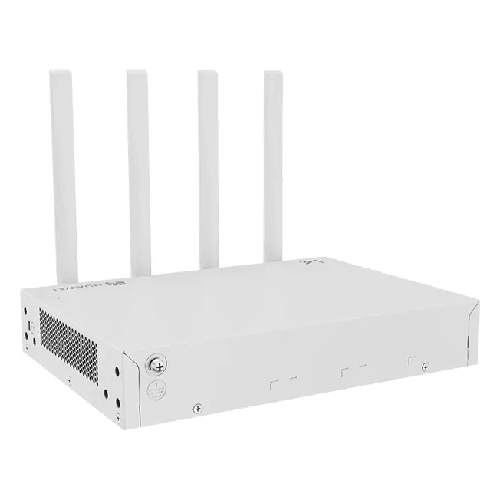
The compact fanless design further strengthens its suitability for offices, retail stores, educational environments, budget hotels and other locations where low noise and space-efficient installation matter. Huawei specifies natural heat dissipation and fanless operation, while the device can be installed on a workbench or against a wall.
For Bangladesh businesses upgrading from conventional gigabit networking, the Huawei eKitEngine AR280 provides a practical route toward multi-gigabit connectivity while combining routing, PoE, VPN and network-management capabilities in one platform.
✅ Key Features
✅ 2.5GE High-Speed WAN Connectivity
The Huawei AR280 includes one 2.5GE electrical port designed for high-speed WAN connectivity. The port supports 2.5G, 1G, 100M and 10M Ethernet rates and can also be configured as a LAN interface when required.
This flexibility makes the AR280 suitable for environments where the same hardware may need to serve different network architectures over time. Huawei's product documentation states that the 2.5GE interface can support broadband access at up to 2000 Mbit/s and can be switched to LAN operation for high-speed internal data transmission.
✅ Four GE Ethernet Interfaces
In addition to the 2.5GE port, the router provides four GE electrical Ethernet interfaces. One GE interface is fixed as a LAN port, while the remaining three GE interfaces can be used as LAN/WAN interchangeable ports.
This arrangement gives network administrators greater flexibility when planning Internet uplinks, internal network segments and connected network devices.
✅ Integrated PoE+ Networking
One of the major advantages of the Huawei AR280 is the integration of PoE+. The device provides five PoE+ ports in total, consisting of four GE PoE+ ports and one 2.5GE PoE+ port. Huawei specifies a maximum PoE output power of 41W.
With PoE networking, compatible access points and other powered Ethernet devices can receive power and data over the same Ethernet cable. This can simplify installations by reducing the need for separate power adapters and electrical outlets near every network endpoint.
✅ Perpetual PoE
The AR280 supports Huawei's perpetual PoE functionality. According to Huawei, this allows connected powered devices to remain powered during a router restart, helping maintain continuity for supported PoE endpoints.
For business networks using PoE-connected infrastructure, this feature can be particularly useful because a reboot of the router does not necessarily have to mean an interruption of power to compatible downstream devices.
✅ Multi-Service Architecture
The AR280 combines multiple networking functions in a single device. Huawei identifies static routing, switching, WAC, PoE, load balancing, IPSec VPN and online behavior management among its integrated functions.
Instead of deploying separate devices for every individual networking requirement, an SME can use the AR280 as a centralized networking platform. This can simplify physical deployment, cabling and day-to-day network administration.
✅ IPSec VPN Support
Secure remote connectivity is an important requirement for modern businesses. The Huawei AR280 supports IPSec VPN and provides a specified VPN forwarding performance of 200Mbps. Huawei also specifies support for up to 16 IPSec tunnels.
This makes the router suitable for business environments where secure connectivity between offices, remote users or other supported network locations is required.
✅ Load Balancing
The AR280 integrates load-balancing functionality as part of its multi-service networking architecture. Load balancing can be used as part of a multi-WAN network strategy to distribute traffic according to configured policies and available links.
For businesses that use more than one Internet connection, this type of functionality can help make better use of available WAN resources while providing a more flexible network design.
✅ Wireless Access Controller Functionality
The Huawei AR280 includes WAC functionality and can manage up to 16 access points, according to Huawei's official product specifications.
This allows the router to play a role in centralized wireless network management rather than functioning solely as an Internet gateway.
✅ Application Control
Huawei specifies application control capable of accurately identifying more than 500 common applications. The system supports application blocking, priority assurance and bandwidth control. Policies can also be configured according to effective dates, times and specific IP addresses.
This provides businesses with greater control over how network bandwidth is consumed. For example, organizations can prioritize important business applications while controlling less-critical traffic according to their network policies.
✅ Up to 150 Connected Terminals
The AR280 supports up to 150 connected terminals, according to Huawei's current product information.
This makes it suitable for many small and medium-sized business environments where multiple employees, network devices and connected endpoints need access through a centralized network gateway.
✅ 2Gbps Egress Bandwidth
Huawei specifies 2Gbps egress bandwidth for the AR280.
Combined with the 2.5GE Ethernet interface, this provides the hardware foundation for high-speed broadband environments that have moved beyond traditional 1Gbps networking.
✅ Compact Fanless Design
The AR280 uses a compact chassis with natural heat dissipation and fanless operation. Huawei lists the device as fanless and silent under normal operating conditions.
The dimensions without packaging are 35 × 195 × 130 mm, with maximum dimensions of 35 × 195 × 136 mm. The device weighs approximately 0.93 kg without packaging.
This compact footprint makes the router practical for locations where rack-mounted enterprise hardware may not be necessary or where network equipment must fit inside a compact communications area.
✅ Flexible Port Configuration for Modern SME Networks
A major design advantage of the Huawei eKitEngine AR280 is its flexible Ethernet architecture.
The 2.5GE port can serve as a high-speed WAN connection or be switched to LAN operation. This means organizations are not locked into a single port arrangement.
The four GE electrical interfaces provide additional flexibility. Huawei identifies one fixed LAN port and three LAN/WAN interchangeable ports. This allows the router to adapt to different network topologies depending on the number of Internet links, internal network segments and connected devices.
For example, a business may initially use the 2.5GE interface for its Internet connection while using the GE interfaces for local networking. As the network evolves, the flexible port configuration can support a different allocation without necessarily requiring a completely different router.
This type of flexibility is especially useful for SMEs because network requirements often change as businesses add employees, access points, security devices, IP-based equipment and additional Internet services.
✅ Enterprise-Grade Routing in a Compact Platform
The AR280 is designed to bring enterprise-oriented networking functionality into a compact SME router.
Static routing allows administrators to define specific routes between network segments. Switching functionality allows Ethernet connectivity to be integrated into the same platform. WAC capabilities provide centralized management functions for supported wireless access points.
The integrated architecture also reduces the complexity of having multiple standalone devices performing individual functions.
For a small office, retail branch or other business environment, a multi-service router can provide a more straightforward infrastructure model: Internet connectivity, internal Ethernet networking, PoE, VPN, wireless management and application control can be handled through one central platform.
✅ PoE+ for Simplified Network Deployment
PoE is particularly useful when network devices need to be installed in locations where conventional power outlets are inconvenient.
The Huawei AR280 provides five PoE+ power ports. Huawei lists four GE PoE+ electrical ports and one 2.5GE PoE+ electrical port, with maximum PoE output power of 41W.
Because power and network data can travel through Ethernet cabling to compatible devices, installations can become more organized and easier to manage.
The perpetual PoE capability adds another operational benefit. Huawei states that connected devices can remain powered during a system restart, which is useful for maintaining power continuity for supported PoE endpoints.
The exact powered-device compatibility and power requirements should always be checked against the connected device specifications before deployment.
✅ Network Application Control
Modern business networks carry many different types of traffic. Email, cloud applications, video conferencing, web browsing, file transfers and other applications can compete for available bandwidth.
The AR280's application-control capabilities are designed to give administrators more control over this traffic. Huawei states that the device can identify more than 500 common applications and provides three management modes: application blocking, priority assurance and bandwidth control.
Policies can also be associated with effective dates and times and can be applied to specific IP addresses.
This allows organizations to create network policies that correspond to their operating requirements rather than relying solely on basic port-based traffic management.
For example, an organization may choose to prioritize critical business applications during working hours while applying bandwidth limits to less-important services.
✅ IPSec VPN for Secure Business Connectivity
Businesses increasingly need secure connections between offices, remote locations and other network environments.
The Huawei AR280 supports IPSec VPN and provides 200Mbps VPN forwarding performance, with support for up to 16 IPSec tunnels.
This makes the AR280 suitable for SME network designs where encrypted site connectivity is required.
VPN performance can vary depending on configuration, traffic characteristics and enabled services, so actual network throughput should always be evaluated against the requirements of the intended deployment.
✅ Designed for Small and Medium-Sized Businesses
Huawei specifically positions the AR280 for SME scenarios. Its combination of 2.5GE networking, flexible GE ports, PoE+, VPN, WAC, application control and load balancing makes it appropriate for several business-oriented deployments.
Potential environments include:
- Retail stores
- SME offices
- Budget hotels
- Primary and secondary educational environments
- Real-estate pre-installation projects
- Small commercial locations
- Branch-office networking
- Multi-device business networks
These applications benefit from a compact router that combines multiple network functions instead of requiring a collection of separate devices.
✅ Suitable for Retail Stores
Retail businesses often need reliable Internet access, wired Ethernet connectivity, wireless infrastructure and powered network equipment.
The AR280 can provide a centralized networking platform for such environments. Its 2.5GE interface supports high-speed broadband connectivity, while the GE ports provide local Ethernet connectivity and PoE+ can power compatible network devices.
Application control can also help businesses manage network traffic according to operational requirements.
✅ Suitable for Business Offices
For an office environment, the AR280 can function as the central network gateway while providing wired connectivity, PoE, VPN and wireless access management.
Its support for up to 150 connected terminals gives the platform capacity for a wide range of SME environments, although the appropriate deployment size depends on traffic patterns, applications and network design.
✅ Suitable for Educational Environments
Schools and other educational organizations often have multiple users and different categories of network traffic.
The AR280's application-control functionality can help administrators establish policies for supported applications, while its WAC and PoE capabilities can simplify the deployment of compatible wireless and Ethernet-connected devices.
✅ Suitable for Hospitality and Budget Hotels
Budget hotels and similar hospitality businesses often require Internet connectivity across multiple areas while maintaining a compact networking infrastructure.
The AR280's combination of routing, PoE, wireless access management and application control can provide a centralized network platform for supported deployments.
✅ Efficient Fanless Operation
The AR280 uses a fanless architecture and natural heat dissipation. Huawei lists noise at normal temperature as fanless and silent.
This can be advantageous in offices, retail counters and other business areas where equipment noise is undesirable.
The specified long-term operating temperature is 0°C to 40°C, while the long-term operating relative humidity range is 5% to 95%, non-condensing. Huawei also specifies operation at altitudes below 5,000 meters, with altitude-related temperature limitations applying at higher elevations.
✅ Compact Installation Design
The AR280 is designed for workbench or wall installation rather than a conventional large rack chassis.
Its basic dimensions are approximately 35 mm high × 195 mm wide × 130 mm deep, while the maximum dimensions are 35 × 195 × 136 mm.
With a weight of approximately 0.93 kg without packaging, it is considerably more compact than traditional enterprise routing platforms.
This makes the AR280 practical for small network cabinets, communications areas, retail environments and offices where space is limited.
✅ Reliable Power Architecture
Huawei specifies an AC power adapter as the AR280's power supply mode.
The rated input voltage is 100V AC to 240V AC at 50/60Hz, while the supported input voltage range is 90V AC to 264V AC at 45Hz to 65Hz.
The official specifications list typical power consumption at 5.8W and maximum power consumption at 49W, including up to 41W of PoE output. The maximum output power is specified as 50W.
These figures should be distinguished from the PoE output budget: maximum device power consumption and maximum PoE output are separate specifications.
✅ Huawei eKitEngine AR280 for Bangladesh Business Networks
For businesses in Bangladesh that are moving toward multi-gigabit broadband, the Huawei eKitEngine AR280 provides a combination of modern Ethernet connectivity and integrated network services.
The 2.5GE interface is particularly relevant for high-speed broadband environments where a conventional 1Gbps WAN interface can become a limitation.
At the same time, the AR280 retains conventional GE connectivity for compatible existing network infrastructure. This allows organizations to adopt higher-speed networking without requiring every connected endpoint to support 2.5Gbps Ethernet immediately.
The integrated PoE+ ports can further reduce installation complexity for compatible devices.
For Bangladesh offices, retail stores, educational organizations and other SME environments, the compact fanless architecture can also be useful where networking equipment needs to be placed close to users or inside smaller communications spaces.
✅ Why Choose Huawei eKitEngine AR280 Enterprise Grade 2.5GE Multi Service Router?
The Huawei eKitEngine AR280 brings several networking functions together in a compact enterprise-oriented platform.
Its 2.5GE Ethernet interface provides a significant step beyond conventional gigabit connectivity, while the flexible port configuration allows the 2.5GE interface and selected GE interfaces to be adapted according to network requirements.
Its integrated PoE+ capability is another important advantage. With four GE PoE+ ports and one 2.5GE PoE+ port, the router can provide power and network connectivity to compatible powered devices without requiring separate local power supplies for every endpoint.
The AR280 also goes beyond basic routing by integrating static routing, switching, WAC, load balancing, IPSec VPN and application control. This multi-service approach can reduce the need for multiple independent networking devices in an SME environment.
For organizations requiring secure remote connectivity, the support for up to 16 IPSec tunnels and 200Mbps VPN forwarding performance provides a defined platform for VPN-based deployments.
The application-control capability adds another layer of network management, with Huawei specifying identification of more than 500 common applications and support for application blocking, priority assurance and bandwidth control.
Its fanless construction, compact dimensions and workbench/wall installation options make the AR280 suitable for locations where conventional rack-based enterprise routers may not be practical.
Overall, the AR280 is designed around a straightforward concept: provide high-speed connectivity and multiple enterprise-oriented network functions in one compact SME platform.
✅ Huawei eKitEngine AR280 Price in Bangladesh
The Huawei eKitEngine AR280 Enterprise Grade 2.5GE Multi Service Router is designed for organizations seeking a compact business router with multi-gigabit Ethernet, PoE+, VPN, wireless access management, application control and load-balancing functionality.
The actual Huawei AR280 price in Bangladesh can vary depending on the current local supply situation, configuration, procurement channel and applicable commercial terms. For an accurate current price, buyers should confirm the latest quotation for the exact AR280 model and required accessories.
When evaluating the router for a business deployment, it is also important to consider the complete network design rather than comparing routers only by their port count. The AR280 combines routing, switching, PoE, wireless management, VPN and application-control functions, which can affect the overall equipment requirement for an SME network.
What is the price of Huawei eKitEngine AR280 Enterprise Grade 2.5GE Multi Service Router in Bangladesh?
Write a review
Question Answer
Have question about this product? Get specific details about this product from expert.