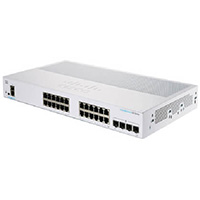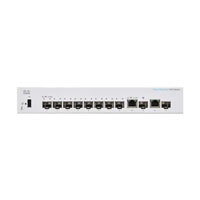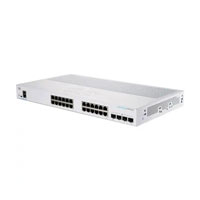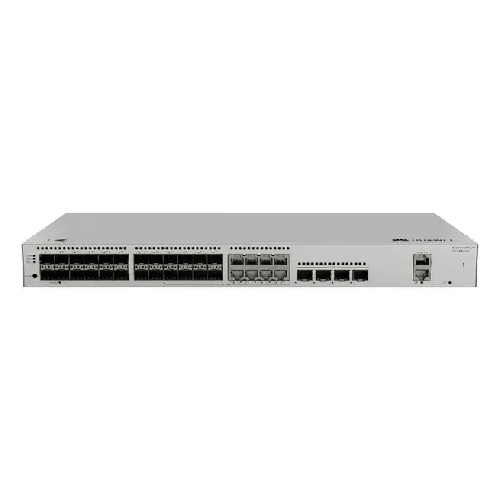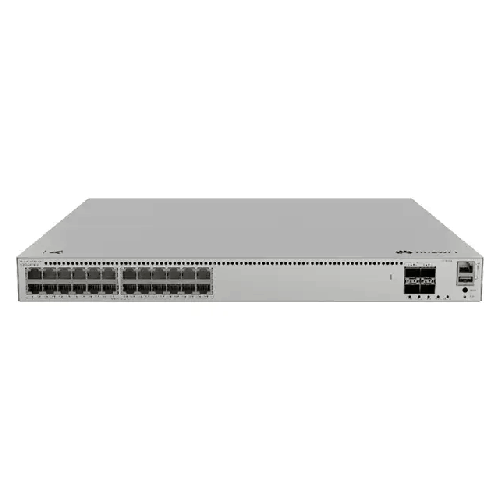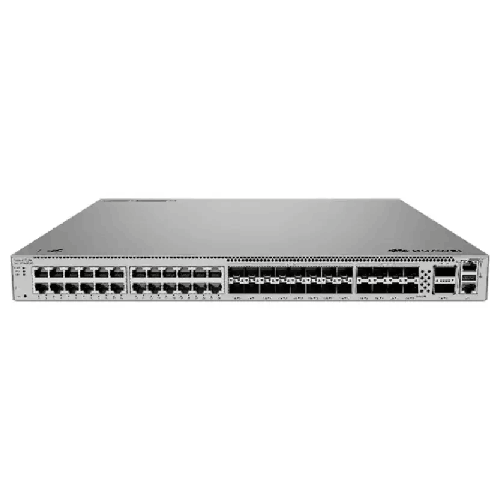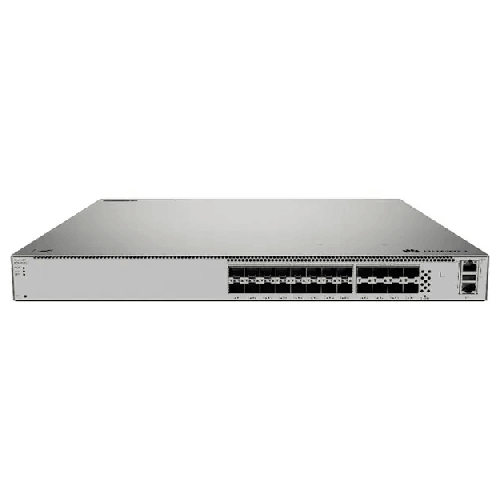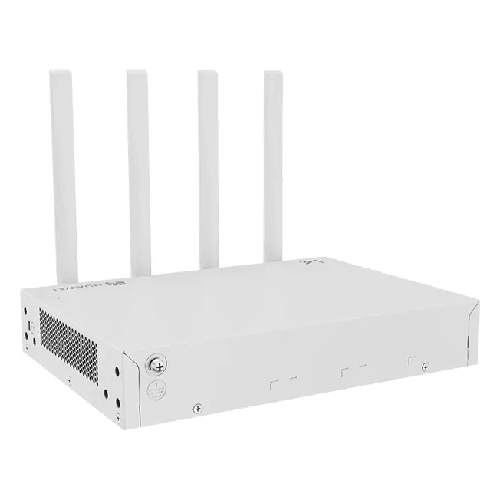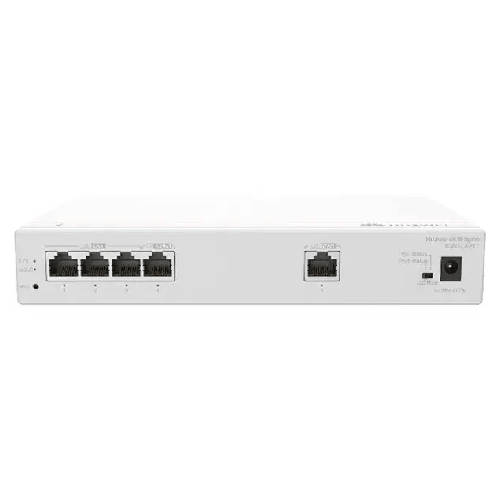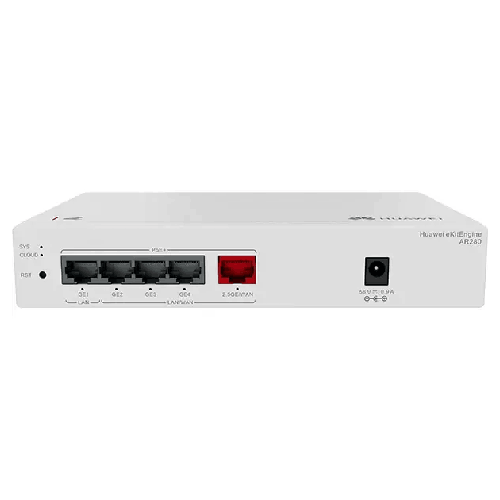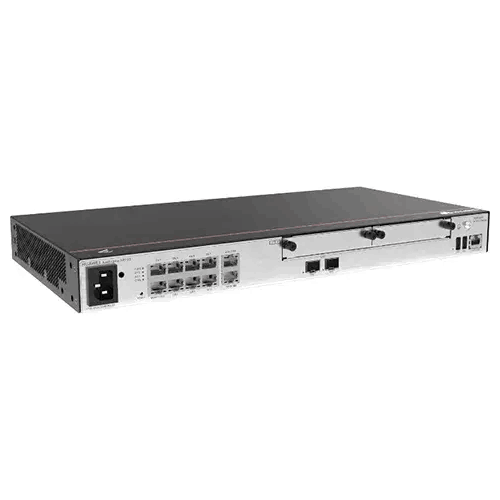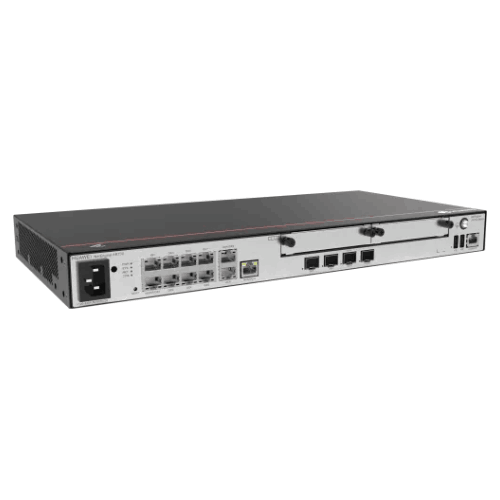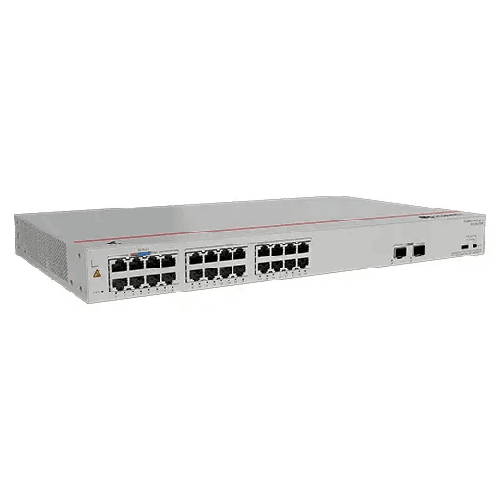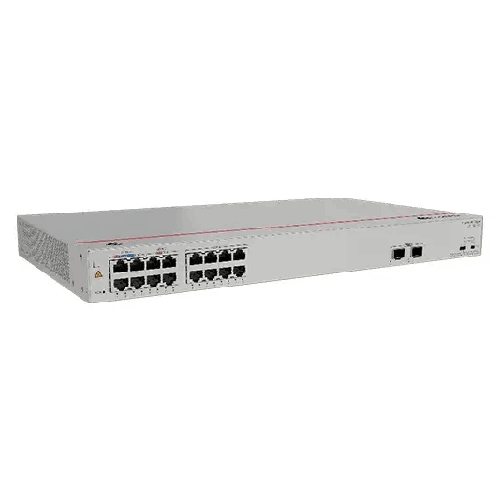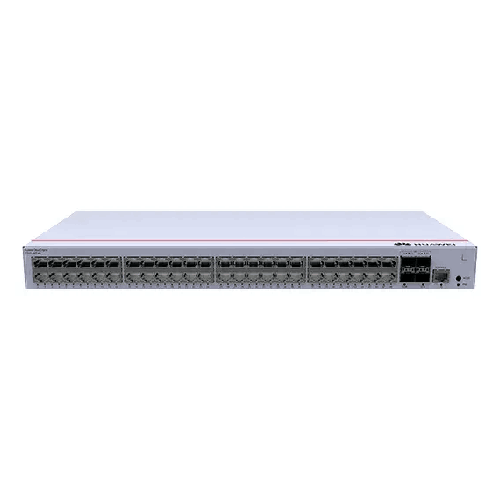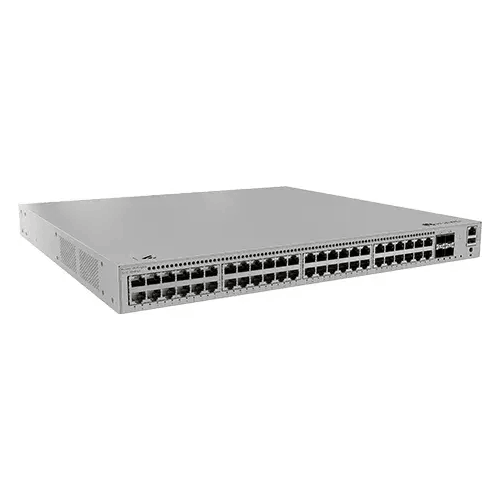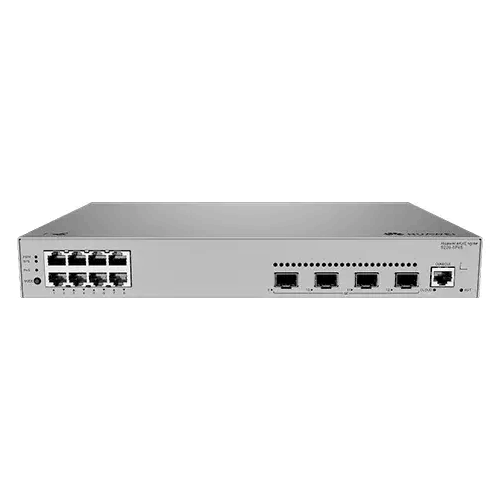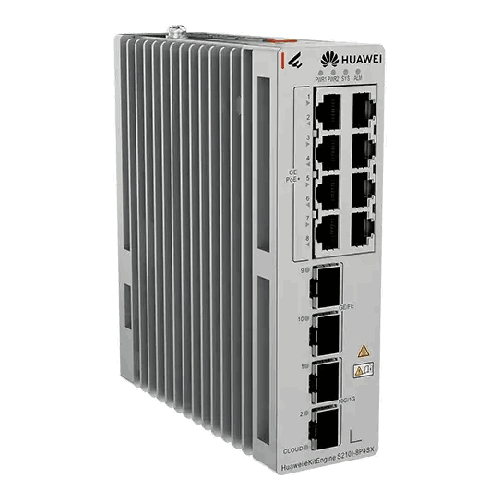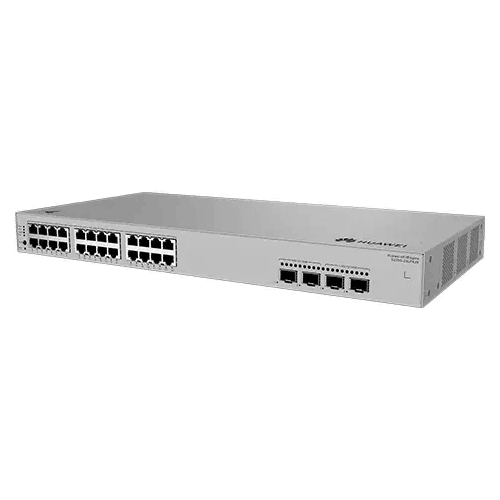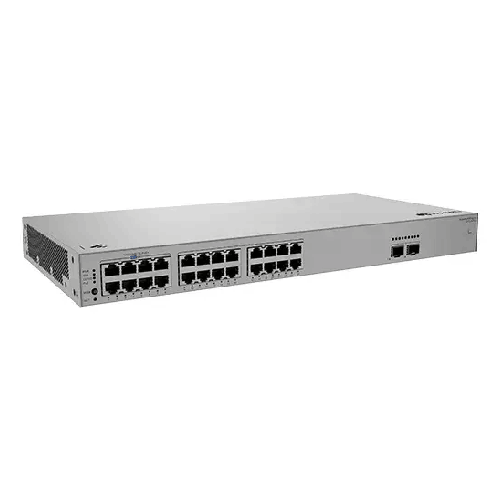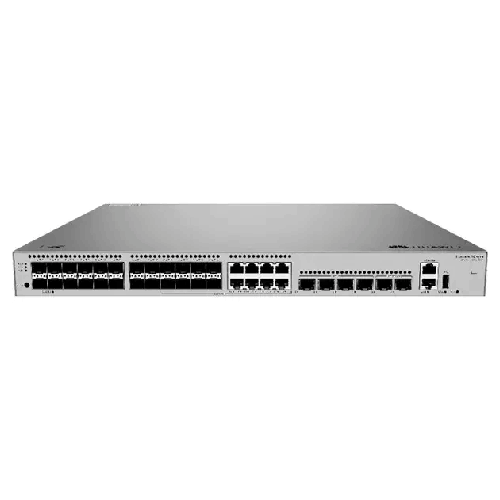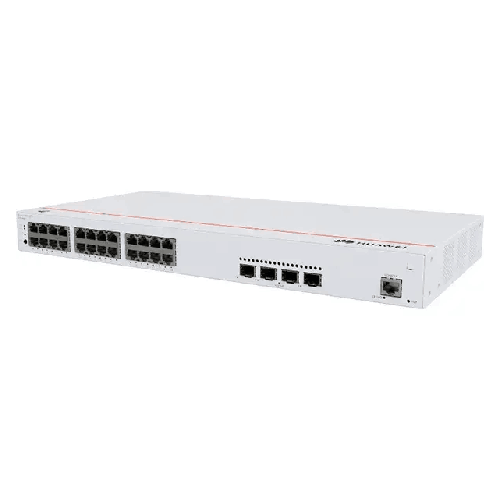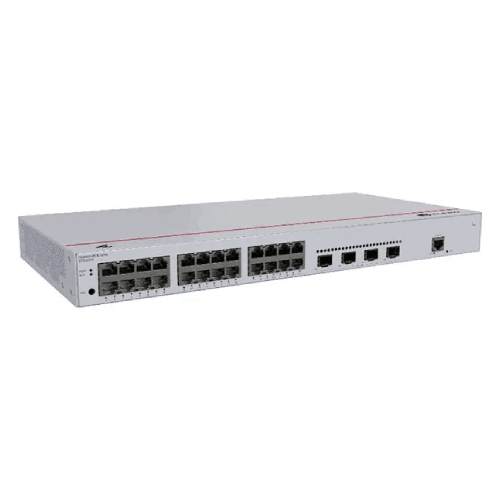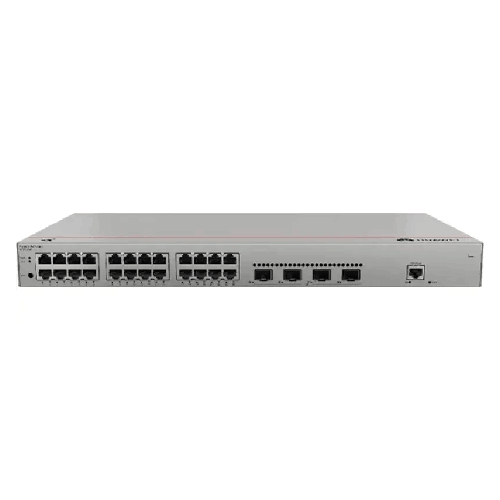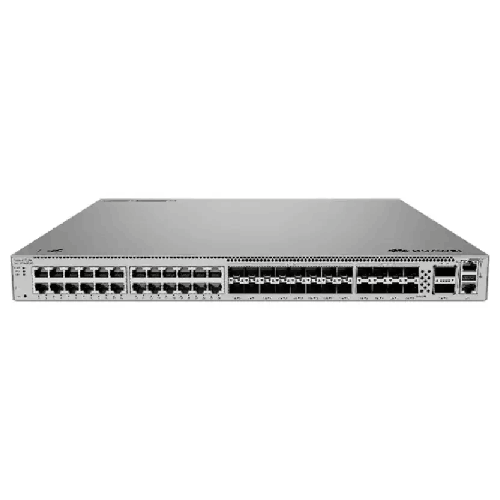
Huawei eKit S620-24T16X8Y2CZ 24-Port 10 to 1000M & 16-Port 10GE SFP+ & 8-Port 25GE SFP28 & 2-Port 40GE/100GE QSFP28 Managed Non-PoE Switch
Regular Price:৳0.00Availability: SKU: 6.54.130.9161
Quick Overview
-
Support
Saturday – Thursday: 09 AM - 06 PM. -
Payment
Cash on Delivery | Card | Online Payment -
Shipping Cost
Inside Dhaka 100tk | Outside Dhaka 150tk -
Warranty Policy
Read More
Description
Huawei eKit S620-24T16X8Y2CZ 24-Port 10 to 1000M & 16-Port 10GE SFP+ & 8-Port 25GE SFP28 & 2-Port 40GE/100GE QSFP28 Managed Non-PoE Switch Price in Bangladesh
The Huawei eKit S620-16X8YZ 16-Port 10GE SFP+ & 8-Port 25GE SFP28 Managed Non-PoE Switch is a high-performance enterprise networking platform designed for organizations that need substantial fiber bandwidth, 10 Gigabit connectivity, 25 Gigabit Ethernet interfaces, advanced Layer 3 capabilities, stacking, and flexible redundant power options.
With 16 × 10GE SFP+ ports and 8 × 25GE SFP28 ports, this switch is built for high-speed optical networking rather than conventional Gigabit copper access. Huawei specifies a 1120 Gbit/s switching capacity and 833 Mpps packet forwarding rate, giving the platform the processing capability required for demanding aggregation, server connectivity, campus backbone, data communication, and high-bandwidth enterprise deployments.
The S620-16X8YZ is a managed Non-PoE switch, meaning its Ethernet interfaces are intended for data connectivity rather than supplying Power over Ethernet to connected devices. This makes the model particularly relevant to network architectures where connected equipment already has its own power source or where PoE is handled elsewhere in the infrastructure.
For organizations in Bangladesh upgrading from 1GE or conventional 10GE infrastructure, the availability of 25GE SFP28 ports provides a pathway toward higher-bandwidth server and aggregation connectivity without requiring every network connection to operate at the same speed.
High-Performance 1120 Gbit/s Switching Capacity
The Huawei eKit S620-16X8YZ is specified with a 1120 Gbit/s switching capacity.
Switching capacity is an important specification when evaluating a high-speed network switch because modern business environments can generate substantial simultaneous traffic. Enterprise servers, virtualization platforms, storage systems, cloud applications, video workloads, backup traffic, surveillance systems, and inter-switch communication can all contribute to network load.
The high switching capacity of the S620-16X8YZ makes it appropriate for environments where the network infrastructure must accommodate multiple high-speed links.
The actual performance of a complete network will depend on connected devices, transceiver specifications, cabling, traffic patterns, software configuration, and the architecture of the wider network. Nevertheless, the 1120 Gbit/s specification places the S620-16X8YZ in a high-bandwidth switching category.
833 Mpps Packet Forwarding Rate
Huawei specifies a packet forwarding rate of 833 Mpps for the S620-16X8YZ.
Packet forwarding performance describes the switch's ability to process large numbers of packets. This is particularly relevant in enterprise environments where traffic consists of many simultaneous flows rather than only a small number of large transfers.
High packet-processing capability can be useful in server aggregation, enterprise backbone, campus networks, virtualization environments, and other deployments where numerous endpoints communicate concurrently.
When evaluating this specification, it is important to understand that Mpps is a hardware forwarding metric rather than a guarantee of application performance. Real-world results depend on traffic patterns, packet sizes, configuration, and the capabilities of connected equipment.
16 × 10GE SFP+ Ports
The S620-16X8YZ provides 16 × 10GE SFP+ ports, with Huawei specifying support for 10G/2.5G/1G operation on these interfaces.
This provides a substantial number of high-speed optical interfaces for connecting servers, aggregation switches, storage systems, network appliances, or other compatible equipment.
Ten Gigabit Ethernet remains widely used in enterprise infrastructure because it provides significantly more bandwidth than 1 Gigabit Ethernet while supporting a broad ecosystem of SFP+ transceivers and optical connectivity options.
The SFP+ design also gives network administrators flexibility in selecting appropriate transceivers according to distance, fiber type, wavelength, and deployment requirements.
8 × 25GE SFP28 Ports
One of the most important characteristics of the S620-16X8YZ is its 8 × 25GE SFP28 ports.
25 Gigabit Ethernet provides substantially more bandwidth per interface than traditional 10GE connections and is particularly useful for modern server, aggregation, virtualization, and high-performance networking environments.
SFP28 interfaces can support compatible 25G optical transceivers and related connectivity solutions. Huawei specifies these interfaces as supporting 25G/10G/2.5G/1G operation, giving network designers flexibility when integrating different generations of compatible equipment.
The eight 25GE interfaces can therefore be used as high-speed server connections, aggregation links, or other network connections where 25 Gigabit bandwidth is required.
Flexible 10GE and 25GE Network Architecture
The combination of 16 × 10GE SFP+ and 8 × 25GE SFP28 ports makes the S620-16X8YZ suitable for mixed-speed network architectures.
For example, an organization can use 10GE interfaces for established enterprise links while deploying 25GE connectivity for newer servers or higher-bandwidth network segments.
This type of architecture can be useful during infrastructure upgrades because not every part of the network needs to migrate to the same interface speed simultaneously.
Network administrators can therefore design migration strategies around actual bandwidth requirements instead of replacing all connected equipment at once.
Enhanced Layer 3 Networking
Huawei positions the S620 as an L3 managed switch. Huawei's S620 documentation identifies Layer 3 capabilities including IPv4 static routing, policy-based routing, IPv6, OSPF, IS-IS, VRRP, BGP, and RIP.
Layer 3 functionality allows the switch to participate in more advanced network architectures than a basic Layer 2 switch.
For example, an organization can divide its infrastructure into different IP subnets and VLANs and implement routing policies between those network segments. This can be useful in corporate offices, campuses, data rooms, hospitals, educational institutions, and other environments where network segmentation is required.
Routing design should always be based on the organization's IP addressing, security, redundancy, and application requirements.
64K MAC Address Capacity
Huawei's S620 documentation specifies support for 64K MAC address entries.
MAC address capacity is particularly relevant in larger Layer 2 environments where a switch may need to learn and maintain a large number of endpoint addresses.
A higher MAC-table capacity can be useful in enterprise networks with many servers, switches, access points, workstations, cameras, and other network-connected devices.
The actual number of active devices in a deployment should still be evaluated against the overall network architecture rather than relying solely on the maximum hardware specification.
4K VLAN Support
The S620 series supports up to 4K VLANs.
VLANs allow administrators to logically divide network traffic without requiring a separate physical switching infrastructure for every group.
For example, an enterprise could use different VLANs for employees, servers, voice systems, management traffic, guest access, security systems, and other services.
Proper VLAN planning can improve network organization and make traffic policies easier to manage. VLANs should be implemented alongside appropriate routing and security policies to meet the organization's requirements.
iStack Support for Network Expansion
Huawei specifies iStack support for up to nine switches of the same series in a stack.
Stacking can be useful when a network requires multiple physical switches but administrators want a more unified management and architecture model.
Instead of treating every compatible switch as an entirely independent device, stacking allows multiple switches to operate as a logical system.
This can simplify certain management tasks and provide an expansion mechanism for organizations whose network requirements increase over time.
For larger enterprise environments, stacking can be considered as part of a broader redundancy and availability strategy.
Enterprise Network Resilience
The S620 series supports several technologies intended for resilient Ethernet network design, including STP, RSTP, MSTP, and ERPS.
Spanning Tree Protocol technologies can help prevent Layer 2 loops in networks with redundant physical paths. RSTP can provide faster topology convergence than traditional STP, while MSTP supports multiple spanning-tree instances.
ERPS is designed for Ethernet ring protection scenarios and can be useful where ring-based network architectures are deployed.
These technologies should be selected and configured according to the actual network topology rather than enabled without a defined design objective.
Advanced Traffic Management
Enterprise networks often carry multiple types of traffic with different performance requirements.
Voice, video conferencing, business applications, backup traffic, file transfers, server communication, and general internet traffic may all share the same infrastructure.
The S620 platform provides enterprise switching and traffic-management capabilities that allow network administrators to implement appropriate traffic policies.
QoS planning can be used to classify and prioritize important traffic while controlling less critical traffic where required.
A well-designed QoS policy should reflect actual application requirements and should be tested after deployment.
Security-Oriented Network Architecture
The S620 series is designed for managed enterprise networking and provides a range of Layer 2, Layer 3, authentication, access-control, and network-security capabilities.
These capabilities can support controlled access to network resources, segmentation between different groups, and protection against certain common network threats.
Enterprise security should not rely on the switch alone. The switch should operate as one component of a broader security architecture involving endpoint protection, firewall controls, authentication, monitoring, access policies, and appropriate administrative procedures.
High-Speed Server Connectivity
The 25GE SFP28 interfaces make the S620-16X8YZ relevant to server environments where 10GE may no longer provide sufficient bandwidth for selected workloads.
Modern virtualization, database, analytics, high-speed file services, backup systems, and other server workloads can generate significant east-west traffic.
A 25GE connection can provide additional bandwidth between compatible servers and network infrastructure.
The actual benefit depends on whether the connected server, network adapter, transceiver, operating system, cabling, and application workload all support the intended speed.
Data Center and Aggregation Applications
The S620-16X8YZ can be considered for selected data-center and aggregation roles where high-speed SFP+ and SFP28 connectivity is required.
The combination of 10GE and 25GE interfaces allows the switch to connect equipment operating at different speeds within the same network architecture.
This can be useful for organizations that are progressively moving from 10GE infrastructure toward 25GE connectivity.
Network architects should determine whether the switch is intended for access, aggregation, or another role based on the required traffic flows and redundancy model.
50W Static Power Consumption
Huawei specifies 50W static power consumption for the S620-16X8YZ.
It is important to distinguish static power consumption from actual operating consumption. Huawei's current product documentation separately lists typical and maximum power consumption based on traffic and installed power modules.
The current Huawei specifications indicate typical consumption of 79W with two 180W AC modules under 30% traffic using the ATIS standard, or 73W with two 240W DC modules. Maximum consumption is listed as 85W with two 180W AC modules or 78W with two 240W DC modules under 100% traffic using the same standard.
This distinction is useful when planning rack power, UPS capacity, heat load, and operational budgets.
1+1 Redundant Power Supply
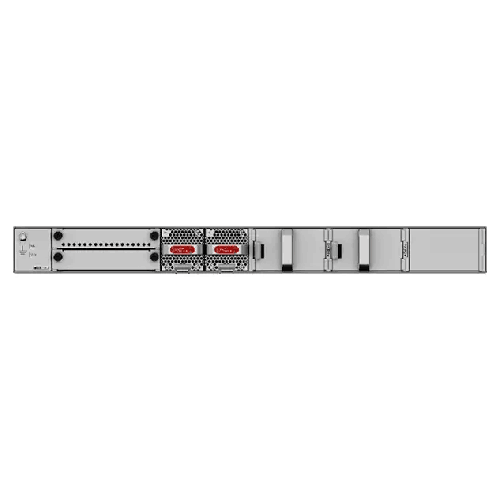
The S620-16X8YZ has two power slots and supports a 1+1 redundant power supply architecture.
Huawei documents support for pluggable AC and DC power modules and states that AC and DC power modules can be used together on the same device, subject to the documented module compatibility requirements.
Redundant power can be valuable in environments where network availability is important. With the appropriate dual-power configuration, a single power-module failure does not necessarily require the entire switch to be taken offline.
Before procurement, customers should confirm which power modules are included with the particular supplied configuration.
Pluggable Power Architecture
The S620-16X8YZ uses a pluggable power-supply architecture.
Huawei documents compatible 180W AC and 240W DC power modules for the model. This modular design gives organizations additional flexibility when planning power infrastructure.
The correct power module should be selected according to the installation environment and the required power architecture.
Because power modules can affect redundancy, consumption, heat generation, and maintenance, they should be treated as part of the overall network design rather than as a secondary accessory.
Rack-Mountable 1U Design
The S620-16X8YZ is designed for professional network environments and supports rack mounting and desk mounting.
Huawei specifies basic dimensions of 43.6 mm × 442.0 mm × 420.0 mm, while the maximum chassis depth including rear protruding parts is 454.0 mm.
The 43.6 mm height corresponds to a 1U-class rack form factor, making the switch suitable for standard network cabinets and server racks.
When installing the device in Bangladesh, sufficient cabinet depth, airflow, cable clearance, power distribution, and service access should be considered.
Metal Chassis Construction
Huawei identifies the chassis material as metal.
A metal chassis is appropriate for professional networking equipment because the switch is designed for rack and structured infrastructure environments rather than consumer desktop networking.
The installation area should still provide appropriate environmental conditions and ventilation.
Intelligent Fan Speed Adjustment
Huawei specifies air cooling for heat dissipation with intelligent fan-speed adjustment.
The S620-16X8YZ is equipped with two fan modules according to Huawei's current product information.
Proper airflow remains important even with intelligent fan management. The switch should not be installed where front/right air intake or rear exhaust is obstructed.
Operating Temperature
Huawei specifies a long-term operating temperature of -5°C to +45°C at an altitude of 0 to 1,800 meters for the S620-16X8YZ.
This specification is important for network installations in server rooms, communication cabinets, offices, factories, hospitals, schools, and other facilities.
Bangladesh deployments should pay particular attention to server-room temperature and ventilation because poorly ventilated network cabinets can experience significantly higher internal temperatures than the surrounding room.
Humidity and Environmental Planning
Huawei specifies a long-term operating relative humidity range of 5% to 95%, non-condensing.
This is particularly relevant when deploying network equipment in environments where humidity levels can vary.
The switch should be installed in a clean, dry, properly ventilated location and should be protected from direct water exposure, condensation, excessive dust, and other environmental hazards.
High-Speed Networking for Bangladesh
For Bangladesh organizations upgrading their network infrastructure, the S620-16X8YZ can be relevant where high-speed optical connectivity is required.
Corporate headquarters, enterprise server rooms, educational campuses, hospitals, technology companies, data-intensive businesses, and organizations operating virtualization or high-performance server infrastructure may have applications that require more bandwidth than conventional Gigabit networking provides.
The switch's combination of 10GE SFP+ and 25GE SFP28 interfaces allows organizations to build a mixed-speed high-bandwidth network architecture.
For procurement, customers should confirm the required optical transceivers, fiber types, distances, server adapters, upstream compatibility, and power configuration before deployment.
✅ Key Features
- 16 × 10GE SFP+ Ports: Provides high-speed fiber connectivity with support for 10G/2.5G/1G operation.
- 8 × 25GE SFP28 Ports: Provides higher-bandwidth 25G connectivity with support for 25G/10G/2.5G/1G operation.
- 1120 Gbit/s Switching Capacity: Provides substantial switching capability for demanding enterprise traffic.
- 833 Mpps Forwarding Rate: Supports high-speed packet processing across the network.
- Layer 3 Managed Platform: Provides routing and advanced enterprise switching capabilities.
- Up to 9-Switch iStack: Supports scalable stacking with compatible S620-series switches.
- 64K MAC Entries: Provides a large Layer 2 address table for enterprise environments.
- 4K VLAN Support: Enables logical traffic segmentation across business networks.
- 1+1 Power Redundancy: Supports redundant power architecture with compatible pluggable power modules.
- Metal Chassis: Designed for professional networking and rack-based installations.
- Rack or Desk Installation: Supports flexible placement according to the deployment environment.
- Intelligent Fan-Speed Adjustment: Helps manage cooling according to equipment operating conditions.
✅ Usage / Applications
- Enterprise Network Aggregation: Connects multiple high-speed network segments within corporate infrastructure.
- Data Center Networking: Provides 10GE and 25GE connectivity for selected server and aggregation workloads.
- Server Connectivity: Suitable for compatible 10GE and 25GE network adapters.
- Campus Networks: Can serve as a high-speed aggregation or distribution switch in larger campuses.
- Healthcare Infrastructure: Suitable for data-intensive medical and administrative network environments.
- Educational Institutions: Supports high-bandwidth connectivity between network segments and server infrastructure.
- Corporate Server Rooms: Provides high-speed optical connectivity in structured network environments.
- Virtualization Infrastructure: Can connect compatible virtualization hosts and network aggregation equipment.
- High-Bandwidth Business Networks: Suitable for organizations moving beyond traditional Gigabit switching.
- Fiber-Based Network Backbones: Provides multiple SFP+ and SFP28 interfaces for optical network architecture.
✅ Benefits of This Product?
- Supports both 10GE and 25GE networking in one switch.
- Provides substantial aggregate switching capacity.
- Offers high packet-forwarding performance.
- Supports advanced Layer 3 networking.
- Provides 64K MAC address capacity.
- Supports up to 4K VLANs.
- Enables iStack expansion with compatible S620-series switches.
- Supports redundant power architecture.
- Provides flexible rack or desk installation.
- Offers a high-speed optical interface platform for enterprise infrastructure.
✅ Ideal For
The Huawei eKit S620-16X8YZ is designed for organizations that require high-speed optical network connectivity and advanced managed switching capabilities. It is particularly suitable for enterprise environments where 10GE and 25GE connectivity is needed for servers, aggregation links, campus infrastructure, virtualization platforms, or other high-bandwidth applications.
Data-intensive organizations can use the switch as part of an aggregation or backbone architecture, while businesses upgrading from traditional 1GE or 10GE infrastructure can use the 25GE SFP28 interfaces for selected high-performance connections.
The model can also suit organizations planning a scalable network because Huawei supports iStack with up to nine same-series switches in a stack.
It is a Non-PoE switch, so it should be selected when connected devices do not need power through Ethernet or when PoE is provided separately elsewhere in the network.
Before purchasing, organizations should verify transceiver compatibility, fiber requirements, server adapter speeds, uplink design, rack dimensions, power-module configuration, and the intended Layer 2/Layer 3 topology.
✅ Why Choose the Huawei eKit S620-16X8YZ?
The Huawei eKit S620-16X8YZ combines a high-density 16-port 10GE SFP+ configuration with eight 25GE SFP28 interfaces, giving organizations a flexible platform for modern high-bandwidth networking.
Its 1120 Gbit/s switching capacity and 833 Mpps forwarding rate are suited to demanding enterprise traffic environments, while the mixture of 10GE and 25GE interfaces allows different generations of network equipment to operate within the same infrastructure.
The S620 platform also provides Layer 3 networking functions and supports technologies such as IPv4 static routing, policy-based routing, IPv6, OSPF, IS-IS, VRRP, BGP, and RIP. It also supports STP, RSTP, MSTP, and ERPS for network architectures that require controlled redundancy and loop prevention.
For organizations expecting network expansion, Huawei's iStack capability allows up to nine switches of the same series to operate in a stack. This can provide an additional architectural option as the number of high-speed connections increases.
Power flexibility is another consideration. The S620-16X8YZ has two power slots and supports 1+1 redundant power architecture with compatible pluggable AC and DC power modules.
For Bangladesh businesses, institutions, and enterprise network operators seeking a managed high-speed fiber switch with 10GE and 25GE connectivity, the S620-16X8YZ provides a specification set suited to professional network infrastructure.
✅ Why Buy This Product from BME?
Business Machine & Equipment (BME) provides networking and business technology products for customers in Bangladesh. When purchasing a high-performance switch such as the Huawei eKit S620-16X8YZ, choosing the correct model and configuration is important because network switches with similar physical designs can have substantially different interface speeds, power architectures, and management capabilities.
BME can assist customers in identifying the required product configuration according to their network requirements. Before procurement, it is useful to determine whether the installation requires 10GE SFP+, 25GE SFP28, Layer 3 routing, iStack, redundant power, specific optical transceivers, or particular fiber connectivity.
For corporate and institutional projects, customers should also provide information about the number of connected devices, required uplink speeds, network topology, server interfaces, rack environment, and power requirements. This makes it easier to determine whether the S620-16X8YZ fits the planned infrastructure.
Customers should confirm current stock status, warranty terms, delivery arrangements, included power modules, transceiver requirements, and any project-specific service conditions with BME before final purchase.
✅ Buying Guide
1. Determine Required Interface Speed
First identify whether your network requires 10GE, 25GE, or both. The S620-16X8YZ provides 16 × 10GE SFP+ and 8 × 25GE SFP28 interfaces.
2. Check Existing Network Hardware
Verify that servers, switches, network cards, storage devices, routers, and other connected equipment support the intended interface speed and transceiver type.
3. Select Compatible Optical Transceivers
SFP+ and SFP28 interfaces require compatible optical modules or direct-attach solutions. Select them according to distance, fiber type, wavelength, connector, and equipment compatibility.
4. Plan the Network Topology
Determine whether the switch will operate as an access, aggregation, distribution, or another network layer. The required VLAN and routing configuration should be established before installation.
5. Evaluate Layer 3 Requirements
If inter-VLAN routing, dynamic routing, redundancy, or policy-based routing is required, plan these functions before deployment.
6. Consider iStack
If multiple compatible S620 switches are planned, determine whether iStack will be used. Huawei specifies stacking support for up to nine switches of the same series.
7. Plan Power Redundancy
The switch has two power slots and supports 1+1 redundancy. Confirm whether the intended deployment requires dual AC modules, dual DC modules, or another supported configuration.
8. Check Rack Dimensions
The basic chassis dimensions are 43.6 × 442 × 420 mm, with a maximum depth of 454 mm including rear protruding parts. Ensure that the rack provides sufficient depth and cable clearance.
9. Check Cooling Requirements
The switch uses air cooling with intelligent fan-speed adjustment. Maintain unobstructed airflow around the equipment.
10. Confirm Non-PoE Requirements
This is a Non-PoE switch. If connected devices require power through Ethernet, provide an appropriate PoE switch, injector, or separate power architecture.
✅ Customers Ask About / Frequently Asked Questions
1. What is the Huawei eKit S620-16X8YZ?
It is a managed high-speed network switch with 16 × 10GE SFP+ ports and 8 × 25GE SFP28 ports.
2. What is the switching capacity of the S620-16X8YZ?
Huawei specifies a 1120 Gbit/s switching capacity.
3. What is the forwarding rate?
The documented packet forwarding rate is 833 Mpps.
4. How many 10GE SFP+ ports are available?
The switch has 16 × 10GE SFP+ ports, supporting 10G/2.5G/1G operation.
5. How many 25GE SFP28 ports does it have?
The S620-16X8YZ provides 8 × 25GE SFP28 ports, supporting 25G/10G/2.5G/1G operation.
6. Does the Huawei S620-16X8YZ support stacking?
Yes. Huawei specifies iStack support for up to nine switches of the same series in a stack.
7. Is the S620-16X8YZ a PoE switch?
No. It is a managed Non-PoE switch.
8. How many MAC addresses does the S620 series support?
Huawei's S620 documentation specifies 64K MAC address entries.
9. How many VLANs are supported?
Huawei specifies support for up to 4K VLANs.
10. Does it support Layer 3 routing?
Yes. The S620 series supports Layer 3 functions including IPv4 static routing, policy-based routing, IPv6, OSPF, IS-IS, VRRP, BGP, and RIP.
11. Does it support redundant power?
Yes. The S620-16X8YZ has two power slots and supports 1+1 redundant power with compatible pluggable power modules.
12. What is the static power consumption?
Huawei specifies 50W static power consumption. Actual typical and maximum operating consumption varies according to traffic and installed power modules.
13. What is the operating temperature?
The documented long-term operating temperature is -5°C to +45°C at an altitude of 0–1,800 meters.
14. Can it be rack mounted?
Yes. Huawei specifies both rack mounting and desk mounting as supported installation types.
✅ Why Buy This Product
The Huawei eKit S620-16X8YZ provides a high-speed optical switching platform for organizations that need both 10GE and 25GE connectivity. Its 16 SFP+ interfaces and eight SFP28 interfaces allow network administrators to build mixed-speed infrastructures for servers, aggregation, campus networks, and other bandwidth-intensive applications.
The combination of 1120 Gbit/s switching capacity and 833 Mpps forwarding performance provides the processing capability expected from a high-performance enterprise switch.
Its Layer 3 functionality, 64K MAC address capacity, 4K VLAN support, iStack capability, network-resilience features, and redundant power architecture further extend its suitability for professional network environments.
For customers in Bangladesh planning a high-bandwidth fiber network, the S620-16X8YZ can be considered where 10GE and 25GE connectivity, scalable management, and enterprise switching functionality are required.
Before ordering, confirm the required transceivers, fiber infrastructure, server adapters, power-module configuration, rack dimensions, and compatibility with the existing network.
What is the price of Huawei eKit S620-24T16X8Y2CZ 24-Port 10 to 1000M & 16-Port 10GE SFP+ & 8-Port 25GE SFP28 & 2-Port 40GE/100GE QSFP28 Managed Non-PoE Switch in Bangladesh?
Write a review
Question Answer
Have question about this product? Get specific details about this product from expert.