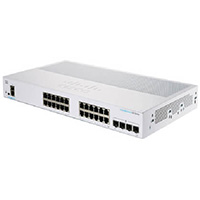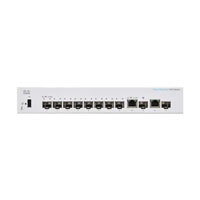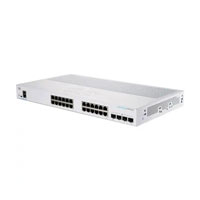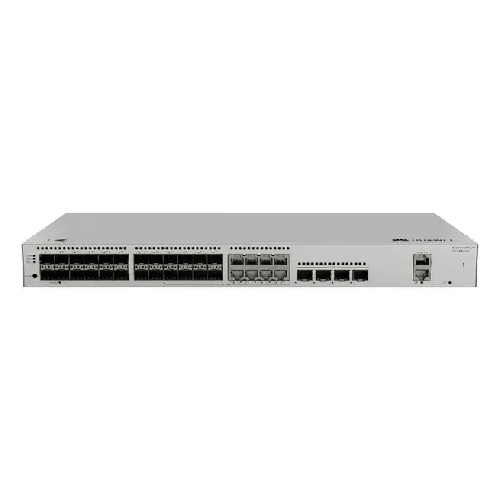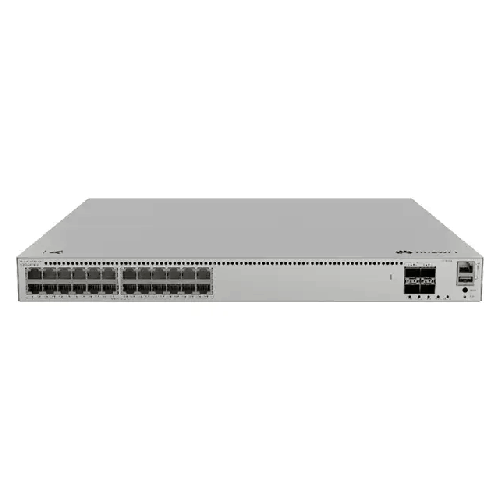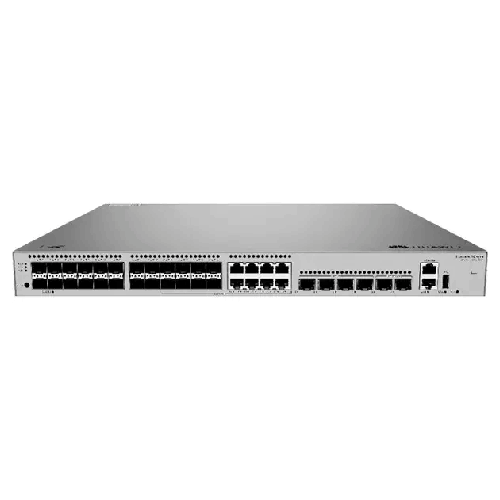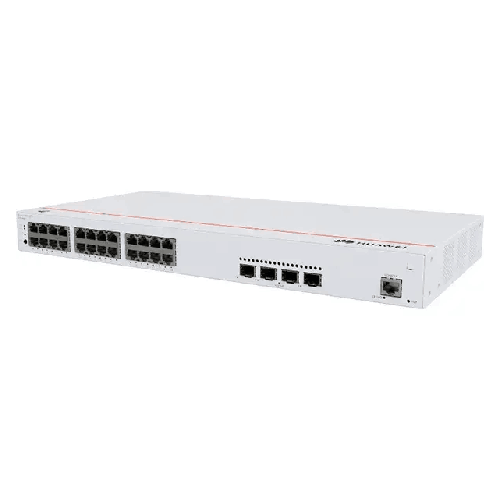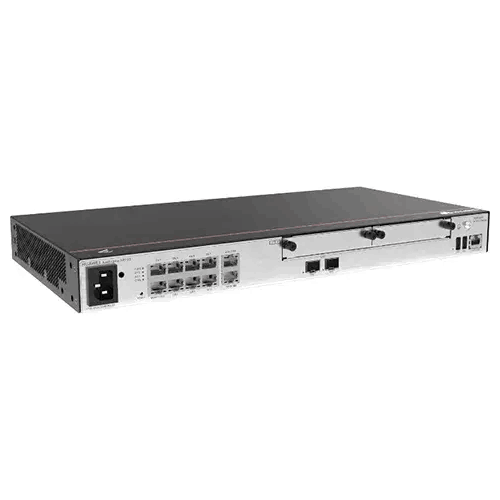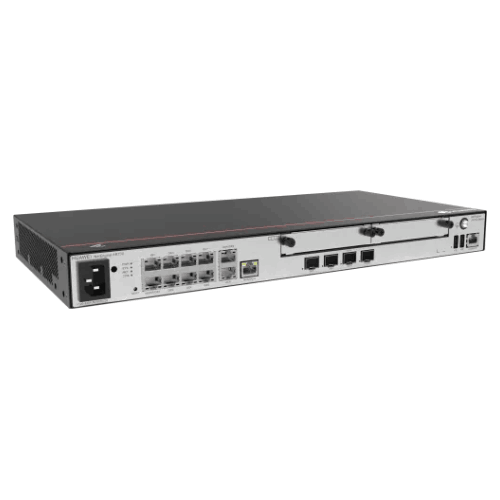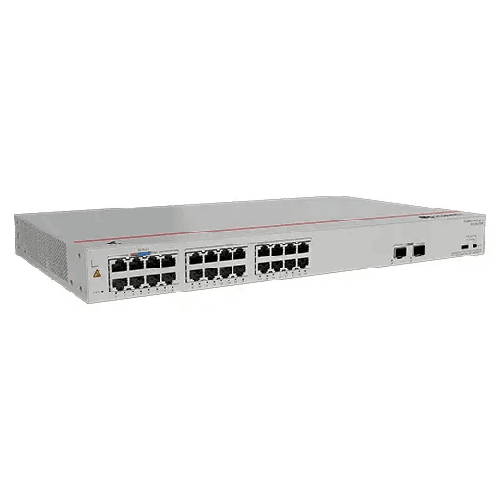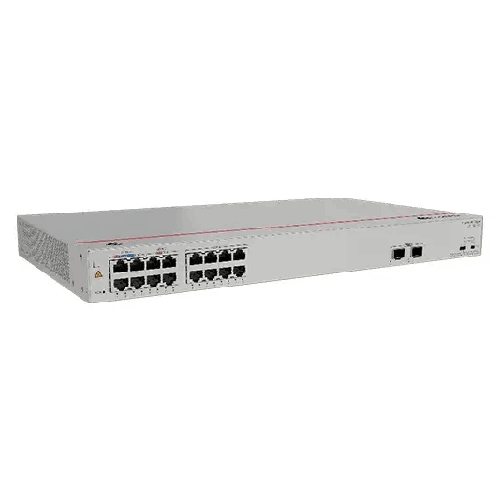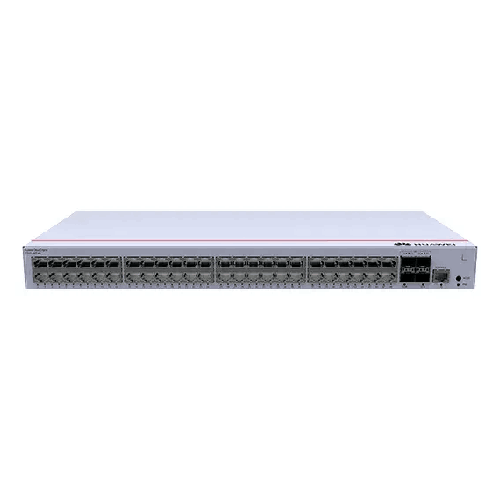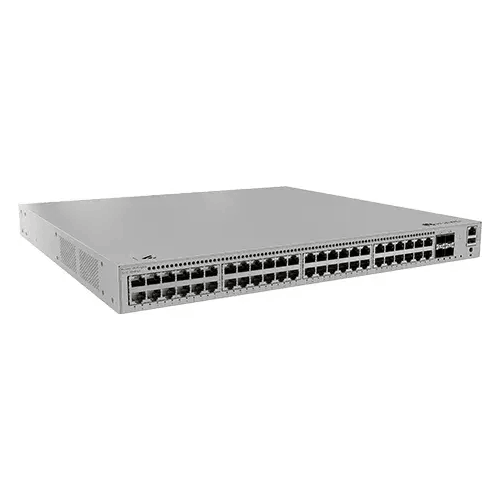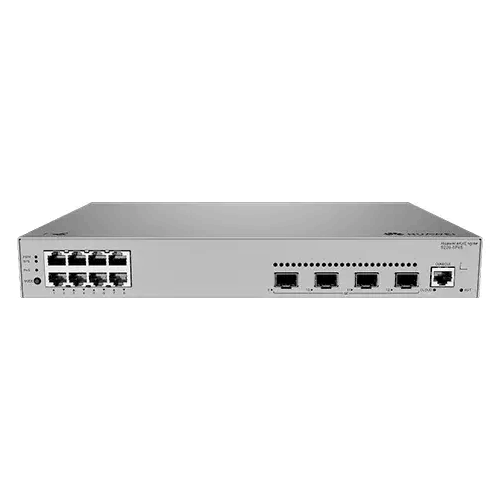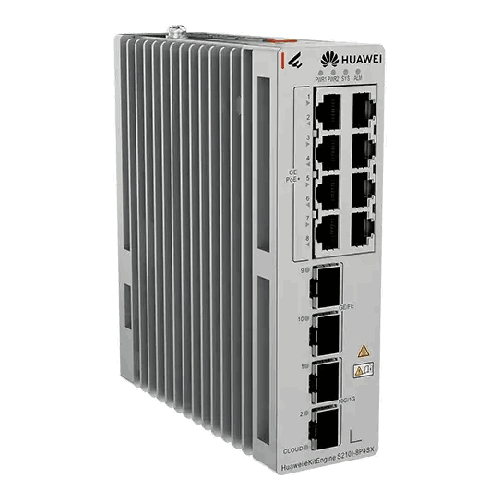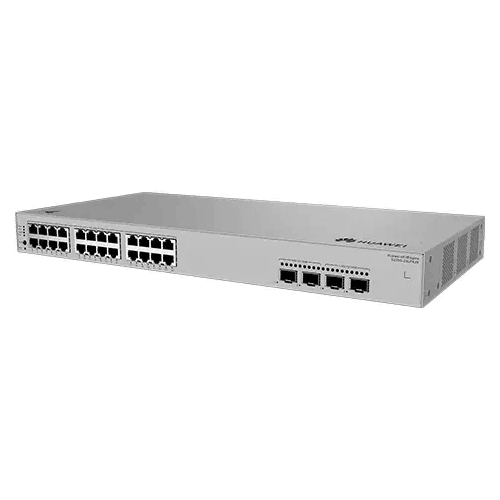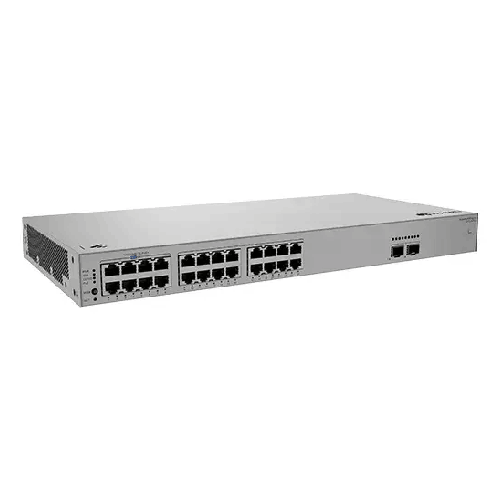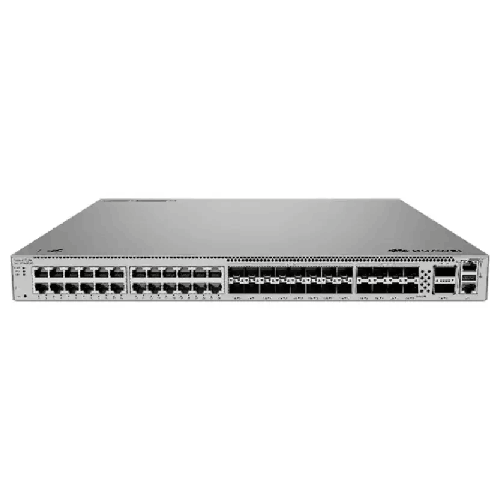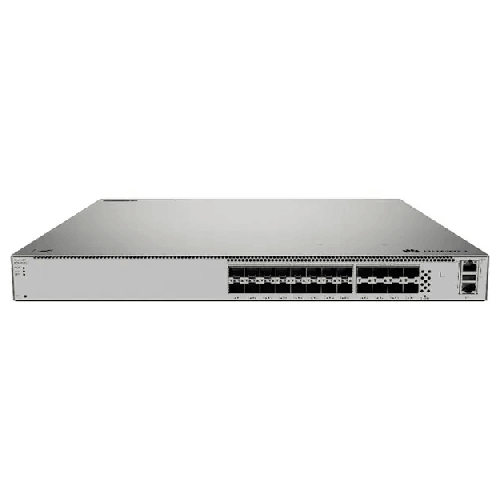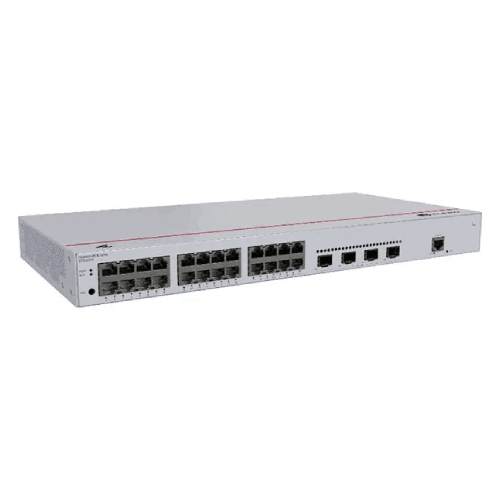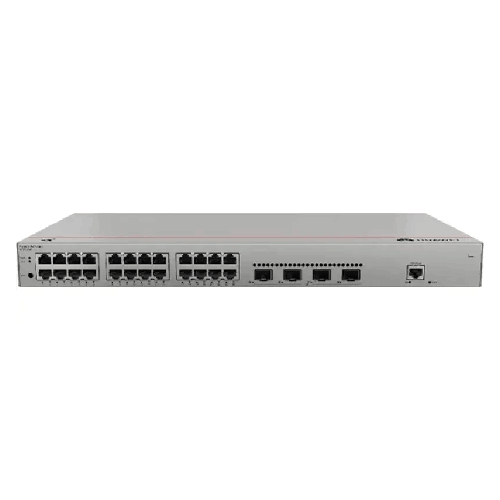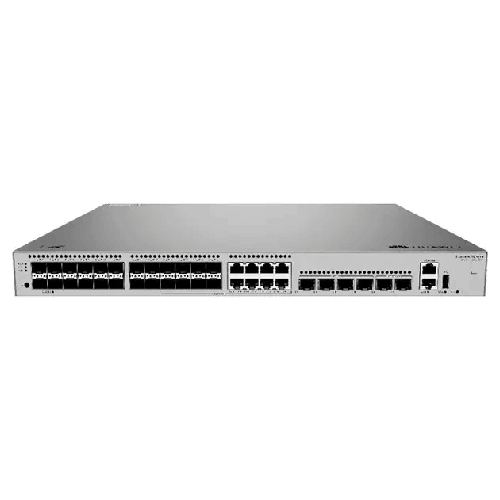
Huawei eKit S530-24ST4XE 24-Port GE SFP & 4-Port 10GE SFP+ & 2-Port 10GE Stack Managed Non-PoE Switch
Regular Price:৳0.00Availability: SKU: 6.54.130.9159
Quick Overview
-
Support
Saturday – Thursday: 09 AM - 06 PM. -
Payment
Cash on Delivery | Card | Online Payment -
Shipping Cost
Inside Dhaka 100tk | Outside Dhaka 150tk -
Warranty Policy
Read More
Description
Huawei eKit S530-24ST4XE 24-Port GE SFP & 4-Port 10GE SFP+ & 2-Port 10GE Stack Managed Non-PoE Switch Price in Bangladesh
The Huawei eKit S530-24ST4XE 24-Port GE SFP & 4-Port 10GE SFP+ & 2-Port 10GE Stack Managed Non-PoE Switch is an enhanced Layer 3 managed networking platform designed for organizations that require high-density Gigabit optical connectivity, 10 Gigabit uplinks, dedicated stacking interfaces, advanced routing, network security, and flexible centralized management.
For businesses in Bangladesh building structured fiber-based networks, the S530-24ST4XE provides a practical combination of Gigabit SFP access interfaces and higher-speed 10GE connectivity. Huawei identifies the model with 24 GE SFP ports, eight of which are dual-purpose 10/100/1000BASE-T or SFP interfaces, four 10GE SFP+ ports, and two dedicated 10GE stack ports. The switch is a non-PoE model, making it appropriate for environments where powered Ethernet is not required from the switching ports.
The switch delivers a documented 176 Gbps switching capacity and 132 Mpps forwarding performance, providing the processing capability required for demanding business traffic across fiber access, aggregation, campus, surveillance, server, and enterprise networking environments. Huawei's official SME network portfolio also positions the S530 series as a Layer 3 managed switching platform for enhanced network scenarios.
High-Density Gigabit SFP Connectivity
One of the defining characteristics of the Huawei S530-24ST4XE is its optical-oriented port configuration. Instead of relying primarily on conventional copper Ethernet interfaces, the model provides 24 Gigabit SFP ports, with eight of those interfaces designed as dual-purpose 10/100/1000BASE-T or SFP connections.
This configuration gives network administrators flexibility when designing mixed media networks. Fiber-based links can be used where optical connectivity is preferred, while the dual-purpose interfaces can accommodate compatible copper or SFP-based connectivity according to the network design.
For organizations operating multiple network segments, buildings, floors, departments, or remote connectivity points, this flexibility can simplify network architecture and allow the switch to integrate into different physical infrastructure designs.
The SFP-based architecture is particularly useful for structured fiber installations where distance, electromagnetic interference, or existing optical infrastructure makes fiber networking more appropriate than copper-only switching.
Four 10GE SFP+ Uplink Interfaces
The Huawei S530-24ST4XE also includes four 10GE SFP+ ports. These interfaces provide higher-speed connectivity for uplinks, aggregation, server connections, distribution switches, storage infrastructure, or other compatible 10 Gigabit Ethernet devices.
A network can therefore use Gigabit interfaces for access connectivity while reserving 10GE SFP+ interfaces for higher-bandwidth links. This separation is useful when several lower-speed connections need to converge toward a faster upstream network.
The availability of four 10GE SFP+ interfaces also gives network planners more flexibility than a switch limited to a single high-speed uplink. Depending on the topology, these interfaces can be used for redundant links, aggregation, inter-switch connectivity, or connections to higher-level network infrastructure.
Because SFP+ is a transceiver-based interface technology, the appropriate compatible optical module or cable should be selected according to the required distance, fiber type, wavelength, and connected equipment.
Dedicated 10GE Stack Ports
A major feature of the S530-24ST4XE is its two dedicated 10GE stack ports. Huawei documentation identifies the S530 series as supporting intelligent stacking, allowing multiple compatible switches to operate together as a logical switching system. Huawei states that the S530 series can support up to nine devices in a stack, while the dedicated stack ports avoid consuming ordinary service-port bandwidth for the stacking function.
Stacking can be particularly useful as a network grows. Rather than treating every switch as an entirely separate management entity, compatible switches can be combined into a logical system. This can simplify configuration and provide additional options for redundancy and expansion.
For an organization that expects its network to grow over time, dedicated stacking interfaces provide an architectural advantage because expansion can be incorporated into the switching environment without redesigning the entire network around a single device.
176 Gbps Switching Capacity and 132 Mpps Forwarding
The S530-24ST4XE is specified with a 176 Gbps switching capacity and 132 Mpps forwarding performance. These specifications describe the switch's traffic-processing capability and make it suitable for environments where numerous network connections operate simultaneously.
In a business network, traffic is rarely limited to simple web browsing. Modern environments can simultaneously carry file transfers, cloud applications, IP surveillance traffic, VoIP, video conferencing, ERP applications, virtualization traffic, internet access, and inter-server communication.
A higher-capacity managed switch can provide the infrastructure required to handle these different traffic patterns efficiently. The actual throughput experienced by connected devices will still depend on the complete network architecture, transceivers, cabling, endpoint hardware, protocols, and traffic patterns.
Enhanced Layer 3 Networking
The Huawei S530 series is positioned as an enhanced Layer 3 managed switch. Huawei documentation lists support for a broad range of Layer 3 functions, including static routing, policy routing, RIP, OSPF, IS-IS, BGP, VRRP, ECMP, and IPv4/IPv6-related capabilities.
These capabilities allow the switch to participate in more sophisticated network architectures instead of functioning only as a basic Layer 2 connectivity device.
For example, organizations can design separate network segments for administration, employees, servers, surveillance systems, guest users, or other services and use appropriate routing policies between network segments.
The exact routing design should be planned according to the organization's topology, IP addressing scheme, security requirements, and upstream infrastructure.
32K MAC Address Capacity and VLAN Support
Huawei's S530 documentation specifies support for 32K MAC addresses and up to 4K VLANs.
MAC address capacity is important in networks containing a large number of endpoints and network devices. VLAN support, meanwhile, allows administrators to logically separate traffic within the same physical infrastructure.
For example, an organization could create separate VLANs for employees, management systems, voice services, security devices, servers, and guest access. Proper VLAN planning can make network segmentation easier to manage while supporting security and traffic-control policies.
Huawei also documents support for Voice VLAN, MUX VLAN, MAC/protocol/IP-subnet/policy/port-based VLAN functions, as well as basic and flexible QinQ capabilities for the S530 series.
Network Reliability and Protection
The S530 series incorporates multiple mechanisms intended to improve network resilience. Huawei documents support for STP, RSTP, MSTP, SmartLink, and ERPS, along with BPDU protection, root protection, loopback protection, and BPDU tunneling.
These technologies can help administrators build networks with controlled redundancy and protection against common topology-related issues.
ERPS is particularly relevant to ring-based Ethernet architectures, while SmartLink can be used for primary and backup link protection. Spanning-tree technologies help prevent network loops while allowing redundant paths to remain available for controlled failover.
For business networks where downtime can affect operations, designing appropriate redundancy at the switching and uplink levels is an important part of network planning.
Advanced Multicast Support
Modern business environments increasingly rely on multicast traffic for surveillance, video distribution, conferencing, and other applications.
Huawei documents multicast support for the S530 series, including PIM-DM, PIM-SM, PIM-SSM, IGMP, IGMP Snooping, MLD, and related multicast functions.
This makes the S530-24ST4XE relevant to network environments where multicast traffic needs to be controlled and efficiently distributed.
For example, an organization with multiple IP cameras or video distribution systems may need multicast-aware network infrastructure. Proper configuration remains essential because multicast behavior depends on the overall network topology and application requirements.
QoS and Traffic Management
Network traffic does not always have equal importance. Voice, real-time video, business applications, and critical data may require different treatment from ordinary background traffic.
Huawei documents QoS functions for the S530 series, including traffic-rate limiting, traffic policing, multiple queues per port, DRR and SP scheduling, and 802.1p/DSCP priority remarking. Layer 2 through Layer 4 packet filtering capabilities are also documented.
These functions allow network administrators to implement traffic policies according to business requirements.
For example, a network can prioritize latency-sensitive services while controlling less critical traffic. However, QoS should always be configured based on actual traffic requirements rather than simply enabling every available feature.
Network Security Features
Security is another major component of the S530 platform. Huawei documentation lists DHCP Snooping, DHCP Relay, DHCP Server, anti-DoS functions, ARP attack protection, IP/MAC/port/VLAN binding, port isolation, port security, Sticky MAC, MAC authentication, IEEE 802.1X, AAA, RADIUS, HWTACACS, SSH V2.0, HTTPS, CPU protection, and access-control mechanisms.
These functions provide network administrators with multiple tools for controlling access and reducing the risk of unauthorized network activity.
IEEE 802.1X, for example, can be used as part of an access-control architecture. DHCP Snooping can help establish trusted DHCP behavior, while port security and MAC-related controls can restrict how endpoints connect to the network.
Security features should be configured according to the organization's authentication, segmentation, endpoint, and monitoring policies.
Flexible Management Options
The Huawei S530-24ST4XE is designed for managed network environments and supports several administration methods.
Huawei documents management through Web-based management, CLI, SNMPv1/v2/v3, RMON, NMS, SSH, NetConf/YANG-based cloud management, and Huawei eKit management capabilities.
This variety is useful because different organizations have different operational requirements. Smaller IT teams may prefer graphical management, while experienced network administrators may rely on CLI or centralized network-management platforms.
Cloud-based management can also reduce the need for physical access during certain configuration and monitoring tasks, depending on the deployment model and available management infrastructure.
Smart Upgrade and Simplified Operations
Huawei describes several operational features for the S530 series, including Zero-Touch installation, batch configuration, remote upgrade, and intelligent upgrade capabilities.
These functions are particularly relevant to organizations managing multiple network devices.
Instead of configuring every switch independently, centralized or batch-oriented operational methods can reduce repetitive administrative work. Intelligent upgrade mechanisms can also help simplify software-maintenance workflows.
Actual availability and behavior of specific management functions can depend on software version, licensing, management platform, and deployment configuration.
Redundant Power Architecture
The S530-24ST4XE is designed with power redundancy in mind. Huawei documentation identifies the model with an 80W AC power module supplied with the product and a 1+1 power-supply backup architecture. Huawei's S530 documentation also describes the series' dual power-module design and support for compatible AC/DC power configurations depending on version and module selection.
A redundant power architecture can be valuable in business environments where network availability is important. If the installation is configured with appropriate redundant power modules, a power-module failure does not necessarily require the entire switching system to be taken offline.
Before procurement, organizations should confirm the exact power-module configuration included with the supplied unit and any additional modules required for their intended redundancy arrangement.
Rack-Friendly 1U Design
The S530-24ST4XE uses a standard 1U rack-height design, making it suitable for structured server racks, network cabinets, and telecommunications environments. Huawei documents chassis dimensions of approximately 442 × 420 × 43.6 mm and a full-configuration weight of approximately 7.4 kg for this model in the referenced S530 documentation.
The rack-oriented form factor helps organizations organize networking equipment efficiently.
For Bangladesh offices, data rooms, schools, hospitals, factories, corporate buildings, and service-provider environments, proper rack planning should include sufficient ventilation, cable-management space, power distribution, and access for maintenance.
Operating Temperature and Environmental Considerations
Huawei specifies a long-term operating temperature of -5°C to +50°C at altitudes from 0 to 1,800 meters, with temperature derating above 1,800 meters. The documented storage temperature range is -40°C to +70°C.
These specifications are useful when planning deployment environments.
In Bangladesh, networking equipment may be installed in server rooms, communication cabinets, offices, factories, educational institutions, or other environments with different thermal conditions. A suitable installation should still provide adequate airflow and avoid placing the switch directly beside heat-generating equipment.
Huawei also specifies intelligent fan-speed adjustment and air cooling for the S530 series.
Suitable for Fiber-Centric Business Networks in Bangladesh
The Huawei eKit S530-24ST4XE can be considered for organizations in Bangladesh that require a managed fiber switching platform rather than a conventional copper-only switch.
Its combination of Gigabit SFP connectivity, 10GE SFP+ uplinks, dedicated stack interfaces, Layer 3 capabilities, security controls, VLAN support, and redundant power architecture makes it relevant to a range of professional network deployments.
Potential applications include corporate offices, educational campuses, healthcare facilities, industrial sites, hotels, commercial buildings, CCTV infrastructure, data communication rooms, and SME network environments.
Because the switch is non-PoE, devices requiring electrical power through Ethernet will need a separate PoE-capable switch, injector, or other appropriate power arrangement.
Scalable Network Architecture
One of the strongest architectural advantages of the S530-24ST4XE is its ability to participate in scalable network designs.
A business may initially deploy the switch for a limited number of fiber-connected endpoints and later add additional switches as requirements grow. Huawei's iStack technology allows compatible switches to be combined into a logical stack, while the dedicated 10GE stack ports keep stacking traffic separate from ordinary service-port connections.
This approach can help organizations maintain a structured network architecture as the number of users, devices, buildings, or services increases.
For larger deployments, network designers can also use the S530-24ST4XE alongside higher-level core or aggregation equipment, depending on the required topology.
✅ Key Features
- 24 × GE SFP Ports: Provides dense Gigabit optical connectivity for fiber-oriented network deployments.
- 8 Dual-Purpose Interfaces: Eight of the GE interfaces support 10/100/1000BASE-T or SFP connectivity, providing media flexibility.
- 4 × 10GE SFP+ Ports: Provides high-speed interfaces for uplinks, aggregation, servers, or compatible network equipment.
- 2 × Dedicated 10GE Stack Ports: Supports dedicated stacking connectivity for compatible S530 deployments.
- 176 Gbps Switching Capacity: Designed to handle substantial aggregate network traffic.
- 132 Mpps Forwarding Performance: Provides high packet-processing capability for business network traffic.
- Enhanced Layer 3 Features: Supports routing and advanced enterprise networking functions documented for the S530 series.
- 32K MAC Address Support: Accommodates large Layer 2 forwarding environments.
- 4K VLAN Support: Helps create logical network segmentation for different users and services.
- 1+1 Power Backup: Designed to support redundant power architecture with compatible power modules.
- Multiple Management Methods: Supports Web, CLI, SNMP, RMON, NMS, SSH, and other documented management options.
- Intelligent Stacking: Huawei documents S530 stacking support for scalable network expansion.
✅ Usage / Applications
- Enterprise Fiber Networks: Suitable for organizations using SFP-based Gigabit connectivity across offices and departments.
- Campus Networks: Can be used in educational, corporate, and institutional network environments.
- Network Aggregation: The 10GE SFP+ interfaces can connect access-layer equipment toward aggregation infrastructure.
- Business Server Connectivity: Compatible 10GE interfaces can be used for selected high-bandwidth server connections.
- CCTV Network Infrastructure: Useful for fiber-connected surveillance environments where multicast and network segmentation may be required.
- Hotel Networks: Suitable for structured fiber networking across buildings, floors, and service areas.
- Healthcare Networks: Can provide managed connectivity for segmented clinical, administrative, and infrastructure networks.
- Industrial Networking: Fiber connectivity can be useful in environments where long-distance or interference-resistant communication is required.
- Multi-Building Networks: SFP and 10GE connectivity can support links between physically separated network areas.
- SME Core or Aggregation: Suitable for organizations requiring more advanced Layer 3 and management capabilities than an entry-level switch provides.
✅ Benefits of This Product?
- Provides a high-density Gigabit SFP interface environment.
- Offers four dedicated 10GE SFP+ interfaces for higher-speed network connections.
- Provides two dedicated 10GE stacking interfaces.
- Supports advanced Layer 3 routing functions.
- Allows extensive VLAN-based network segmentation.
- Provides multiple network security and authentication mechanisms.
- Supports redundant power architecture.
- Provides multiple management and monitoring methods.
- Supports scalable iStack-based network expansion.
- Uses a 1U rack-oriented chassis suitable for professional network cabinets.
✅ Ideal For
The Huawei eKit S530-24ST4XE is ideal for organizations that require a professional managed switch with a strong emphasis on fiber connectivity, Layer 3 networking, high-speed uplinks, and scalability. It is particularly relevant for businesses with existing SFP-based infrastructure or network designs where optical connectivity is preferred.
Corporate offices, educational institutions, hotels, healthcare organizations, factories, commercial buildings, and larger SME environments can consider this switch for access, aggregation, or selected core-network roles.
It is also appropriate for network administrators who require VLAN segmentation, routing, QoS, authentication, security controls, multicast support, centralized management, and stacking capabilities.
Because this is a non-PoE switch, it is best suited to deployments where connected access points, IP cameras, phones, or other devices do not need to receive electrical power directly from the switch. If PoE is required, a compatible PoE switch or external power solution should be incorporated into the network design.
✅ Why Choose the Huawei eKit S530-24ST4XE?
The Huawei eKit S530-24ST4XE combines dense Gigabit SFP connectivity with high-speed 10GE uplinks and dedicated stacking interfaces, creating a flexible platform for professional network infrastructure.
Its 24 GE SFP interfaces, including eight dual-purpose 10/100/1000BASE-T or SFP ports, provide flexibility for different physical connectivity requirements. Four 10GE SFP+ ports provide additional bandwidth for uplinks and aggregation, while two dedicated 10GE stack ports support compatible stacking configurations.
The S530 platform also provides enhanced Layer 3 functionality, including multiple routing protocols and IPv4/IPv6 capabilities. VLAN, QoS, multicast, authentication, access control, and network-protection functions give administrators a broad toolkit for designing segmented and controlled business networks.
Another important consideration is operational scalability. Huawei documents iStack support for the S530 series, allowing compatible devices to operate as a logical stack. The series also supports Web, CLI, SNMP, NMS, SSH, and cloud-management capabilities, providing multiple approaches to administration.
For organizations building a fiber-centric network that needs more than basic switching, the S530-24ST4XE provides a combination of optical interfaces, 10GE connectivity, Layer 3 capabilities, security functions, management flexibility, and redundant power support.
✅ Why Buy This Product from BME?
Business Machine & Equipment (BME) focuses on professional business technology and networking equipment for customers in Bangladesh. When selecting a network switch such as the Huawei eKit S530-24ST4XE, correct model identification and specification matching are particularly important because similar-looking switch models can have significantly different port configurations, uplink speeds, power architectures, and management capabilities.
BME can help customers evaluate whether the S530-24ST4XE matches their intended network topology and connectivity requirements. For business and institutional procurement, it is also useful to verify the required SFP/SFP+ transceivers, fiber type, uplink design, rack requirements, power configuration, and compatibility with existing network equipment before placing an order.
For organizations in Bangladesh, the purchasing process can also be approached according to the actual deployment environment rather than simply selecting a switch based on port count. A network administrator may need to determine whether the installation requires Layer 3 routing, VLAN segmentation, stacking, 10GE uplinks, redundant power, multicast, or security controls.
For larger projects, customers should provide their network requirements so the appropriate equipment configuration can be evaluated before procurement. Availability, warranty, delivery terms, and included accessories should be confirmed with BME at the time of purchase.
✅ Buying Guide
1. Confirm the Required Port Type
The S530-24ST4XE is primarily designed around GE SFP connectivity. Confirm that your network uses compatible SFP interfaces or that the required transceivers will be available.
2. Check the 10GE Requirement
The switch provides four 10GE SFP+ interfaces. Determine whether these will be used for uplinks, aggregation, server connectivity, inter-switch links, or other purposes.
3. Plan the Fiber Infrastructure
Before purchasing SFP modules, determine the required transmission distance, fiber type, connector type, wavelength, and compatible optical specifications.
4. Understand the Combo Interfaces
Eight of the GE ports are dual-purpose 10/100/1000BASE-T or SFP interfaces. Confirm the intended interface mode before finalizing your cabling plan.
5. Decide Whether Stacking Is Required
If your network will use multiple compatible S530 switches, evaluate whether iStack is appropriate. Huawei documents two dedicated 10GE stack ports and support for stacking on the S530 series.
6. Plan VLAN and Routing Architecture
For larger networks, determine the required VLAN structure, IP subnets, routing boundaries, and inter-VLAN routing requirements before configuration.
7. Consider Power Redundancy
The model is supplied with an 80W AC power module and supports a 1+1 power-supply backup architecture. Confirm the exact power configuration supplied with the unit and whether an additional compatible power module is required for your intended redundancy setup.
8. Verify Rack Space
The S530-24ST4XE is a 1U switch with documented dimensions of approximately 442 × 420 × 43.6 mm. Ensure that the rack or cabinet provides sufficient depth and ventilation.
9. Check PoE Requirements
This is a Non-PoE switch. If your IP cameras, wireless access points, VoIP phones, or other devices require PoE, provide a separate PoE solution.
10. Consider Management Requirements
Determine whether the network will be administered through Web management, CLI, SNMP, NMS, SSH, cloud management, or another supported management method.
✅ Customers Ask About / Frequently Asked Questions
1. Is the Huawei S530-24ST4XE a managed switch?
Yes. The S530 series is an enhanced managed Layer 3 switch family, and Huawei documents multiple management methods including Web, CLI, SNMP, NMS, SSH, and cloud-management capabilities.
2. How many Gigabit SFP ports does the S530-24ST4XE have?
It has 24 GE SFP ports, with eight of these interfaces being dual-purpose 10/100/1000BASE-T or SFP interfaces.
3. Does the switch have 10 Gigabit SFP+ ports?
Yes. It provides four 10GE SFP+ ports.
4. Does it support switch stacking?
Yes. Huawei documents intelligent iStack support for the S530 series and two dedicated 10GE stack ports on the S530-24ST4XE.
5. Is the Huawei S530-24ST4XE a PoE switch?
No. The S530-24ST4XE is a Non-PoE model. Devices requiring Ethernet power need an appropriate external or separate PoE solution.
6. What is the switching capacity?
Huawei specifies a switching capacity of 176 Gbps for the S530-24ST4XE in its eKit product information.
7. What is the forwarding performance?
The documented forwarding performance is 132 Mpps.
8. Does it support Layer 3 routing?
Yes. Huawei's S530 documentation lists static routing, policy routing, RIP, OSPF, IS-IS, BGP, VRRP, ECMP, and IPv4/IPv6-related functions for the series.
9. How many VLANs are supported?
Huawei documents support for up to 4K VLANs on the S530 series.
10. How many MAC addresses can it support?
The S530 documentation specifies support for 32K MAC addresses.
11. What power module comes with the switch?
Huawei identifies an 80W AC power module as the supplied power module for the S530-24ST4XE.
12. Does it support redundant power?
Yes. The model is specified with a 1+1 power-supply backup architecture. Huawei's S530 documentation also describes the dual-power design and compatible power-module configurations.
13. What is the operating temperature?
The documented long-term operating temperature is -5°C to +50°C at elevations from 0 to 1,800 meters, subject to the altitude-related derating specified by Huawei.
14. What is the storage temperature?
The documented storage temperature range is -40°C to +70°C.
✅ Why Buy This Product
The Huawei eKit S530-24ST4XE is designed for organizations that need a managed, fiber-oriented network switch with Gigabit SFP access, 10GE SFP+ connectivity, dedicated stacking interfaces, enhanced Layer 3 functions, VLAN support, security controls, and flexible management options.
Its 176 Gbps switching capacity and 132 Mpps forwarding performance provide a strong platform for business networks carrying multiple types of simultaneous traffic. The 24 GE SFP interfaces and four 10GE SFP+ ports also allow network planners to build flexible fiber-based access and uplink architectures.
For growing organizations, iStack support and dedicated stack interfaces can provide an expansion path, while redundant power architecture can support higher availability when properly configured.
If you are looking for a Huawei managed fiber switch in Bangladesh, the S530-24ST4XE is worth considering for enterprise, campus, commercial, industrial, and SME network deployments where advanced switching and routing capabilities are required.
For procurement, confirm the required SFP/SFP+ transceivers, fiber infrastructure, power configuration, rack requirements, and compatibility with the existing network before ordering.
What is the price of Huawei eKit S530-24ST4XE 24-Port GE SFP & 4-Port 10GE SFP+ & 2-Port 10GE Stack Managed Non-PoE Switch in Bangladesh?
Write a review
Question Answer
Have question about this product? Get specific details about this product from expert.