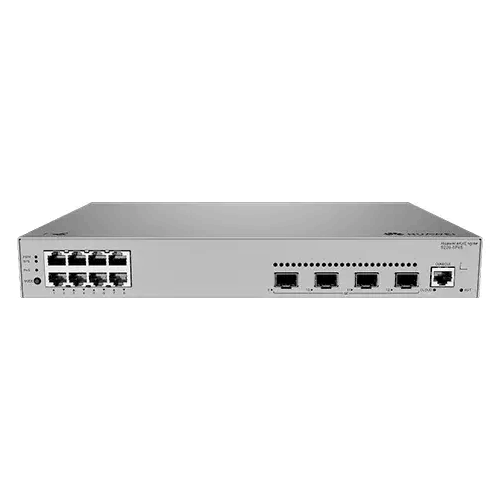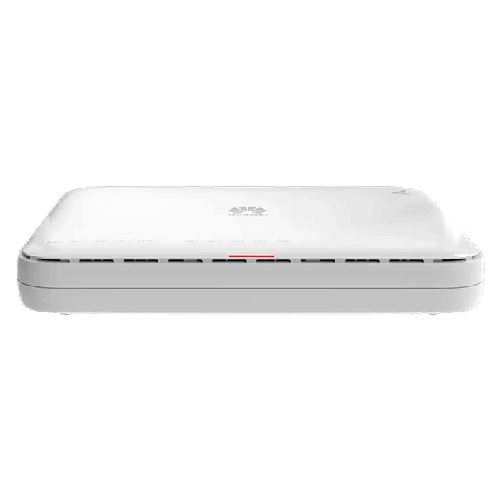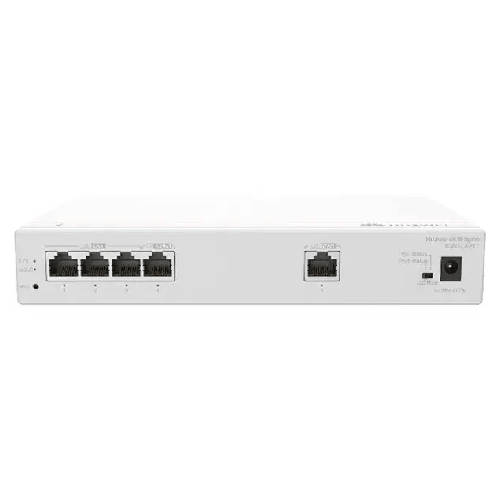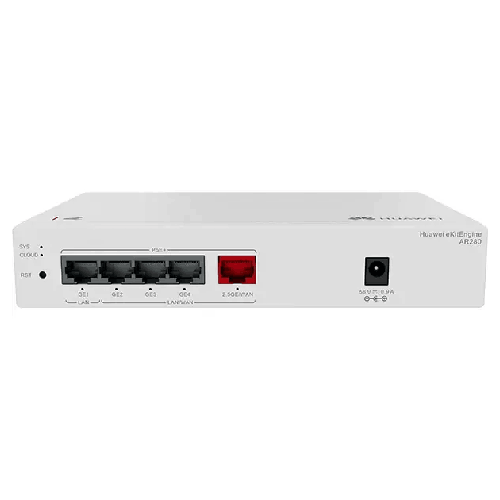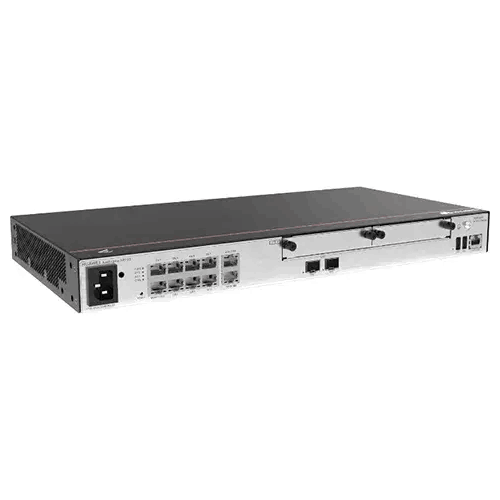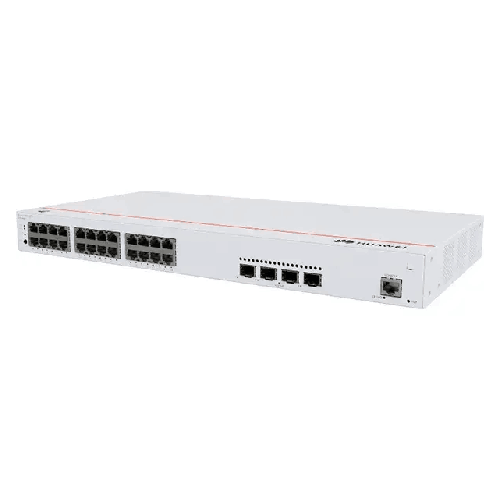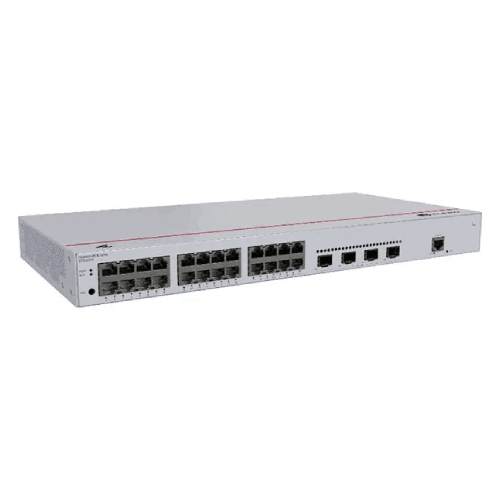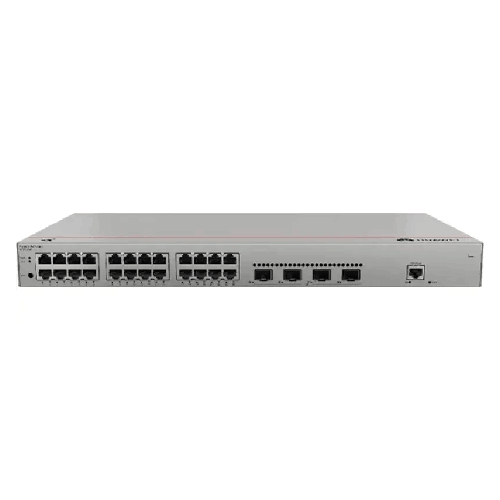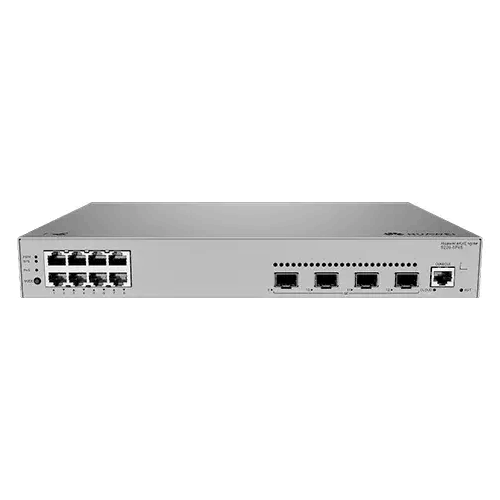
Huawei eKitEngine S220-8P4S Layer 2 Managed 8-Port PoE Desktop GE Switch
Regular Price:৳0.00Availability: SKU: 6.54.130.9165
Quick Overview
-
Support
Saturday – Thursday: 09 AM - 06 PM. -
Payment
Cash on Delivery | Card | Online Payment -
Shipping Cost
Inside Dhaka 100tk | Outside Dhaka 150tk -
Warranty Policy
Read More
Description
Huawei eKitEngine S220-8P4S Layer 2 Managed 8-Port PoE Desktop GE Switch Price in Bangladesh
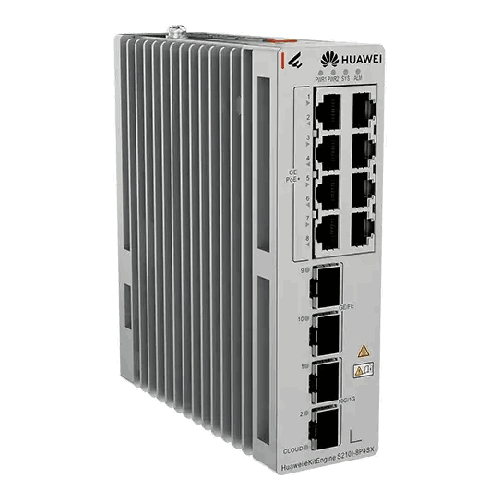
The Huawei eKitEngine S220-8P4S Layer 2 Managed 8-Port PoE Desktop GE Switch is designed for organizations that need reliable Gigabit Ethernet connectivity, integrated PoE+ power delivery, and flexible fiber uplink options in a compact network platform. As part of Huawei’s eKitEngine S220 series, the S220-8P4S is positioned as a Layer 2 managed switch for SOHO and SMB environments, while Huawei also identifies applications such as enterprise offices, hotels, factories, education, hospitals, and building security.
The switch combines 8 × 10/100/1000BASE-T PoE+ ports with 4 × Gigabit Ethernet SFP ports. This combination allows copper-connected endpoints to use Gigabit Ethernet while compatible fiber-based network connections can be established through the four SFP interfaces. Huawei specifies a 24 Gbps switching capacity and an 18 Mpps packet forwarding rate, providing the switching performance documented for the S220-8P4S.
A major advantage of this model is its integrated 125W PoE+ power budget. Instead of deploying separate power adapters for every compatible powered device, the switch can deliver network connectivity and electrical power through Ethernet cabling to supported endpoints. This makes the S220-8P4S particularly relevant for installations involving IP cameras, wireless access points, VoIP equipment, and other compatible PoE-powered network devices.
Gigabit Ethernet Connectivity for Small and Medium Networks
The S220-8P4S provides eight copper Ethernet interfaces supporting 10Mbps, 100Mbps, and 1000Mbps operation. Because these are PoE+ ports, compatible powered devices can receive both network connectivity and power from the switch. Huawei’s official specifications identify these ports as 8 × 10/100/1000BASE-T with PoE+.
For a small office, the eight PoE+ interfaces can connect a combination of access points, IP phones, cameras, and other Ethernet endpoints. In a security deployment, for example, the same switching platform can connect several network cameras while providing PoE power without requiring a separate power outlet at every camera location.
The Gigabit capability is also useful for general LAN connectivity. Computers, printers, access points, network storage devices, and other Ethernet equipment can connect through the copper ports according to their supported Ethernet speeds.
125W PoE+ Power Budget
The integrated 125W PoE+ budget is one of the defining characteristics of the Huawei S220-8P4S. Huawei lists the model with 125W PoE+ support, while the official datasheet specifies a maximum full-PoE-load power consumption of 166.65W, including the 125W PoE allocation.
PoE simplifies network deployment because compatible powered devices can receive power through the Ethernet connection. This can reduce the need for individual power adapters and additional electrical cabling at endpoint locations.
However, the 125W figure should be treated as the overall PoE power budget rather than assuming that every port can simultaneously deliver the maximum possible PoE power. When planning an installation, the combined power requirements of the connected powered devices should be checked against the available budget.
This is particularly important in CCTV and wireless-network deployments, where the number and power requirements of cameras or access points can vary significantly.
Four Gigabit SFP Ports for Fiber Connectivity
Alongside its eight copper PoE+ ports, the Huawei S220-8P4S provides 4 × GE SFP ports. Huawei identifies these as Gigabit SFP interfaces.
SFP connectivity provides flexibility when a network requires fiber-based connections rather than copper Ethernet. Depending on the appropriate compatible optical module and network design, these interfaces can be used for fiber links between network equipment or other compatible network segments.
The presence of four SFP ports is especially useful when a small network needs more than basic copper connectivity. For example, an organization may use copper PoE ports for local devices while using SFP interfaces to connect the switch to other network equipment over fiber.
This mixed copper-and-fiber architecture can be useful in office buildings, educational facilities, hotels, surveillance installations, and other structured network environments.
24Gbps Switching Capacity and 18Mpps Forwarding
The S220-8P4S has a documented 24 Gbps switching capacity and 18 Mpps packet forwarding rate.
Switching capacity represents the aggregate switching capability specified for the device, while packet forwarding rate describes its ability to process packets. Together, these specifications provide useful indicators when assessing the switch for a small or medium-sized network.
For typical SMB and SOHO deployments, the combination of eight Gigabit copper ports and four Gigabit SFP ports provides a practical platform for connecting network endpoints and uplink connections without moving into a much larger switch chassis.
The important point is that these figures should be considered within the context of the S220-8P4S architecture and its 8-port Gigabit PoE+ access design rather than interpreted as a guarantee of any particular real-world application throughput.
Layer 2 Managed Networking
The Huawei eKitEngine S220 series is a Layer 2 managed switch family, and Huawei documents a broad set of Layer 2 networking, security, quality-of-service, and management functions for the series.
The datasheet lists support for automatic MAC address learning and aging, static, dynamic and blackhole MAC entries, source MAC filtering, and limitations on the number of MAC addresses learned by an interface. Huawei also specifies support for up to 16K MAC address entries for the series.
VLAN functionality includes up to 4094 VLANs, Voice VLAN, VLAN assignment based on MAC addresses, protocols, IP subnets, policies, and ports, as well as VLAN stacking.
These capabilities allow administrators to create more structured Layer 2 network environments instead of operating the switch simply as an unmanaged collection of Ethernet ports.
Spanning Tree and Ring Protection
For networks where redundancy and loop prevention are important, Huawei documents support for STP, RSTP, and MSTP, along with BPDU protection, root protection, and loop protection. The S220 series also supports Ethernet Ring Protection Switching (ERPS) according to ITU-T G.8032.
ERPS is designed for Ethernet ring protection and Huawei describes it as providing millisecond-level protection switching based on Ethernet MAC and bridging functions.
These features can be valuable when designing a network with redundant paths. Instead of relying solely on a single physical connection, an appropriately designed network can use Layer 2 protection mechanisms to help manage topology changes and prevent network loops.
Security and Access Control
The S220 series provides multiple security mechanisms intended for managed network environments. Huawei documents MAC address authentication and IEEE 802.1X authentication, with dynamic delivery of user policies involving VLAN, QoS, and ACL functions.
The series also supports DHCP snooping, including trusted and untrusted port configuration, allowing administrators to control which interfaces are trusted for DHCP-related traffic.
Other documented security functions include protection against certain DoS attacks, ARP and ICMP attacks, IP/MAC/port/VLAN binding, port isolation, port security, sticky MAC, MAC address learning limitations, SSH v2.0, HTTPS, CPU protection, blacklists and whitelists.
These capabilities provide administrators with more control over endpoint access and network behavior than a basic unmanaged switch.
Quality of Service and Traffic Management
Network traffic does not always have equal priority. Voice, video, management traffic, and ordinary data may have different requirements. Huawei documents QoS and ACL capabilities for the S220 series, including traffic rate limiting in both inbound and outbound directions, IPv4/IPv6 ACLs, packet redirection, traffic policing, and multiple queue scheduling methods.
The datasheet specifies eight queues on each port and support for DRR, SP, and DRR+SP queue scheduling algorithms. It also lists 802.1p and DSCP priority remarking, Layer 2 to Layer 4 packet filtering, queue-based rate limiting, and traffic shaping.
For an SMB network, these capabilities can help administrators create more controlled traffic policies when the network carries multiple types of applications.
Fast PoE and Perpetual PoE
Huawei documents two useful PoE functions for the S220 series: Fast PoE and Perpetual PoE. Fast PoE is intended to provide power to powered devices quickly after switch startup, while Perpetual PoE is designed to maintain power to downstream powered devices during a switch restart, such as during a software upgrade.
These functions can be particularly relevant in networks where cameras, wireless access points, or other PoE-powered devices should minimize power interruptions.
Actual behavior depends on the connected powered device and the network configuration, so these features should be considered as documented switch capabilities rather than a guarantee that every connected device will behave identically.
Management Flexibility
The S220 series supports multiple management methods. Huawei documents management through SNMPv1/v2c/v3, CLI, web-based management, SSHv2.0, and app/cloud-based management.
Huawei also states that its eKit App can be used to configure, monitor, and inspect S220 series switches through cloud management. The series supports both cloud and on-premise management modes.
This gives network administrators flexibility in how they operate the switch. A smaller business may prefer web-based or app-based management, while an IT administrator managing a more structured environment may use CLI, SSH, SNMP, or other supported management mechanisms.
Smart Upgrade Capability
Huawei documents smart upgrade functionality based on its Huawei Online Upgrade Platform, or HOUP. The S220 series can obtain upgrade paths and download system software, with a one-click upgrade process and software pre-loading designed to reduce upgrade time and service interruption.
For businesses without a large dedicated networking team, simplified maintenance can be useful. It can reduce the complexity involved in keeping network equipment software updated.
Built-In AC Power Supply
The Huawei S220-8P4S uses a built-in AC power module. Huawei’s datasheet lists a rated voltage of 100V AC to 240V AC at 50/60Hz, while the current product specification lists an input range of 90V AC to 300V AC at 47Hz to 63Hz.
For Bangladesh deployments, buyers should still ensure that the installation follows appropriate electrical and grounding practices and that the local power environment is suitable for the equipment.
The built-in power architecture also avoids the need to purchase a separate external power adapter for the switch itself.
Compact 1U-Class Chassis
The S220-8P4S has basic dimensions of 43.6 × 320 × 210 mm and is listed as a 1U chassis in Huawei’s S220 series datasheet. Huawei’s current product page specifies rack, desk, and wall mounting options.
This gives installers several placement possibilities. It can be positioned on a desk in a small office, mounted on a wall where appropriate, or installed in a rack-based network environment.
The metal chassis provides a conventional equipment enclosure suitable for professional network installations.
Power Consumption and Thermal Design
Huawei specifies static power consumption of 17.19W and typical power consumption of 19.99W for the S220-8P4S. The current product page lists maximum consumption of 25.09W without PoE and 166.65W at full PoE load, where the PoE portion is 125W.
The switch uses built-in fan-based air cooling with intelligent fan-speed adjustment. Huawei specifies a long-term operating temperature of -5°C to +50°C at altitudes from 0 to 1800 meters, and relative humidity of 5% to 95% non-condensing.
These environmental specifications should be considered during installation, particularly in equipment rooms or areas where temperature and ventilation vary.
Surge Protection
The S220-8P4S includes documented surge-protection specifications. Huawei lists ±6 kV differential-mode and common-mode power-port surge protection and ±7 kV common-mode service-port surge protection for this model in the S220 series datasheet.
Surge protection is one component of a broader network installation strategy. Proper grounding, electrical protection, structured cabling, and appropriate environmental conditions remain important for long-term equipment operation.
Practical Bangladesh Networking Applications
For businesses in Bangladesh, the S220-8P4S can be considered for small office networks where Gigabit Ethernet, PoE, fiber connectivity, and managed Layer 2 features are required in the same switch.
In an office environment, the eight PoE+ ports can be used for compatible IP phones, wireless access points, cameras, and other Ethernet endpoints. The four GE SFP ports can provide fiber connectivity where the network design calls for it.
For CCTV installations, PoE can simplify endpoint deployment by carrying power and data over Ethernet to compatible cameras. The 125W overall PoE budget should be checked against the combined requirements of the selected cameras.
In hotels and guest facilities, the switch can support network infrastructure involving access points, security equipment, and other Ethernet devices. Huawei specifically identifies hotels as one of the S220 series application scenarios.
Educational institutions and healthcare facilities can also use the series where managed Layer 2 connectivity and PoE deployment are appropriate. Huawei lists primary and secondary education and hospitals among the S220 series scenarios.
A Practical Choice for Managed PoE Networking
The Huawei eKitEngine S220-8P4S combines the functions that many small and medium networks need in one managed platform: eight Gigabit PoE+ access ports, four Gigabit SFP ports, 125W PoE capacity, Layer 2 management, VLAN support, redundancy-related protocols, security controls, QoS functions, and multiple management methods.
For organizations planning a structured Ethernet network rather than a basic plug-and-play installation, these capabilities provide more administrative control and configuration flexibility.
The S220-8P4S is therefore suited to deployments where the network requires both copper PoE access and fiber uplink capability without moving to a larger 24- or 48-port switch.
✅ Key Features
- 8 × Gigabit PoE+ Ports: Provides eight 10/100/1000BASE-T PoE+ interfaces for network connectivity and power delivery to compatible powered devices.
- 125W PoE+ Budget: Provides a total documented PoE power budget of 125W for supported PoE deployments.
- 4 × GE SFP Ports: Adds four Gigabit SFP interfaces for compatible fiber or optical network connections.
- 24Gbps Switching Capacity: Provides the switching capacity specified by Huawei for the S220-8P4S.
- 18Mpps Packet Forwarding: Supports the documented packet-forwarding performance of 18 million packets per second.
- Layer 2 Managed Networking: Provides VLAN, MAC, STP/RSTP/MSTP, ERPS, QoS, ACL, and other documented Layer 2 capabilities.
- Fast PoE and Perpetual PoE: Huawei documents features designed to reduce PoE interruption during startup and switch restart events.
- Multiple Management Methods: Supports web, CLI, SSH, SNMP, and Huawei eKit cloud/app management options.
- Built-In AC Power: Uses an integrated AC power module rather than requiring a separate external switch power adapter.
- Flexible Installation: Supports rack, desktop, and wall mounting according to Huawei’s current product specifications.
- Metal Chassis: Uses a metal chassis for a professional network-equipment enclosure.
- Intelligent Fan Cooling: Uses air cooling with intelligent fan-speed adjustment.
✅ Usage / Applications
- Office Networks: Connect computers, IP phones, wireless access points, printers, and other Ethernet devices.
- CCTV Networks: Provide PoE connectivity for compatible IP cameras while centralizing network connectivity.
- Wireless Access Networks: Supply Ethernet connectivity and PoE power to compatible access points.
- Small Business Networks: Build a managed Layer 2 network with VLAN, QoS, security, and traffic-control functions.
- Hotel Networks: Support suitable guest, administrative, wireless, and security infrastructure.
- Educational Networks: Connect compatible classroom, administrative, wireless, and security devices.
- Hospital Networks: Provide managed Ethernet access for suitable network endpoints.
- Factory Networks: Support appropriate industrial-office or facility network deployments within the documented operating environment.
- Building Security: Connect PoE security endpoints and network infrastructure.
- Fiber-Linked Networks: Use the four GE SFP ports for compatible optical uplinks and network segmentation.
- SMB Infrastructure: Provide a centralized managed switching platform for smaller structured networks.
- SOHO Networks: Add managed networking capabilities to advanced small-office installations.
✅ Benefits of This Product
- Centralized PoE Deployment: Compatible powered devices can receive power and data through Ethernet infrastructure.
- Fiber Connectivity: Four GE SFP ports provide additional flexibility for optical network connections.
- Managed Network Control: VLAN, MAC, STP, security, QoS, and ACL capabilities allow more structured network administration.
- Simplified PoE Installation: PoE can reduce the requirement for separate endpoint power adapters in compatible deployments.
- Flexible Management: Web, CLI, SSH, SNMP, and cloud/app management provide different administration approaches.
- Layer 2 Reliability Features: STP, RSTP, MSTP, and ERPS provide documented tools for network topology and redundancy planning.
- Compact Installation: The 43.6 × 320 × 210 mm chassis supports desktop, wall, and rack-oriented deployment options.
- Professional Network Architecture: The combination of copper PoE access and GE SFP connectivity is practical for structured SMB networks.
✅ Ideal For
The Huawei eKitEngine S220-8P4S Layer 2 Managed 8-Port PoE Desktop GE Switch is ideal for organizations that need more than a basic unmanaged Ethernet switch but do not require a large 24- or 48-port access platform.
It is particularly relevant for small and medium businesses, offices, hotels, educational environments, healthcare facilities, building-security deployments, and other structured network installations identified within Huawei’s S220 series application scope.
The eight Gigabit PoE+ ports make it suitable for networks containing compatible IP cameras, wireless access points, IP phones, and other PoE-powered endpoints. Meanwhile, four GE SFP ports provide additional flexibility for fiber-based network connections.
It is also appropriate for network administrators who need Layer 2 features such as VLANs, STP/RSTP/MSTP, ERPS, MAC controls, QoS, ACLs, authentication, and DHCP snooping.
For Bangladesh deployments, the model can be considered where a compact managed PoE switch with integrated AC power and both copper and SFP connectivity matches the network design.
✅ Why Choose the Huawei eKitEngine S220-8P4S?
The Huawei eKitEngine S220-8P4S brings together several networking requirements in one compact Layer 2 managed platform. Its combination of 8 × Gigabit PoE+ ports and 4 × GE SFP ports means an installation can use copper PoE connections for local endpoints while retaining dedicated Gigabit SFP connectivity for compatible fiber links.
The 125W PoE budget is useful when multiple compatible devices need power from the network. Rather than installing an independent power adapter at every endpoint, compatible PoE devices can be connected through the switch.
Management is another important advantage. Huawei documents VLAN, MAC management, STP, RSTP, MSTP, ERPS, ACL, QoS, authentication, DHCP snooping, port security, and other Layer 2 functions for the S220 series.
The switch also supports multiple administration methods, including web management, CLI, SSH, SNMP, and Huawei eKit cloud/app management. This gives network administrators flexibility when choosing how the infrastructure should be monitored and configured.
Its built-in AC power design, metal chassis, flexible mounting options, and intelligent fan-based cooling further support professional network installation.
For a small or medium network that specifically requires Gigabit PoE access, GE SFP connectivity, and managed Layer 2 functionality, the S220-8P4S provides a specification set built around those requirements.
✅ Why Buy This Product from BME?
When purchasing professional networking equipment such as the Huawei eKitEngine S220-8P4S, selecting the correct model and port configuration is important because PoE capacity, uplink type, installation requirements, and management capabilities can directly affect the final network design.
BME can be considered as a Bangladesh-focused source for customers researching Huawei networking equipment and comparing suitable network infrastructure for office, business, surveillance, wireless, and structured Ethernet deployments.
Before purchasing, customers should confirm the required number of PoE endpoints, their combined power requirements, the desired fiber connection type, available rack or wall space, and the overall network topology. This is particularly important with the S220-8P4S because its total documented PoE budget is 125W.
For business and institutional procurement, the model number should be clearly specified as S220-8P4S to avoid confusion with related S220 models such as non-PoE versions or switches with different uplink configurations.
BME can also help customers evaluate whether this 8-port platform fits their intended application or whether a higher-port-count Huawei switch would be more appropriate based on the number of endpoints and expected network expansion.
✅ Buying Guide
1. Confirm the Required Port Count:
The S220-8P4S provides eight Gigabit PoE+ copper ports. Confirm that eight access ports are sufficient for the current deployment.
2. Calculate the PoE Requirement:
Check the power requirement of every connected PoE device and compare the combined requirement with the documented 125W PoE budget.
3. Identify Your Uplink Requirement:
The switch has four GE SFP ports. Confirm that your intended optical modules, fiber infrastructure, and connected equipment are compatible with the required Gigabit SFP configuration.
4. Check Network Speed Requirements:
The copper ports support 10/100/1000BASE-T operation, while the SFP interfaces are Gigabit Ethernet. If your network requires 10GbE uplinks, a different S220 model with 10GE SFP+ interfaces may be more appropriate.
5. Plan VLAN Requirements:
If you intend to separate CCTV, voice, staff, guest, or management traffic, establish the VLAN design before deployment.
6. Plan Redundancy:
If the network requires Layer 2 redundancy, review the documented STP, RSTP, MSTP, and ERPS capabilities and design the topology accordingly.
7. Check Installation Space:
The basic chassis dimensions are 43.6 × 320 × 210 mm. Make sure the selected installation location provides adequate physical space and ventilation.
8. Check Power Availability:
The switch uses a built-in AC power module. Huawei specifies a rated input of 100–240V AC at 50/60Hz and a broader maximum input range in the current specifications.
9. Consider Temperature and Humidity:
The documented long-term operating range is -5°C to +50°C, with 5%–95% relative humidity without condensation.
10. Decide on Management Method:
Determine whether your administrators will use web management, CLI, SSH, SNMP, or Huawei eKit cloud/app management.
11. Check Endpoint Compatibility:
Confirm that cameras, access points, phones, or other PoE devices support the relevant PoE standard and power requirements before connecting them.
12. Plan for Future Expansion:
If the network is expected to exceed eight copper access devices, evaluate whether a larger Huawei switch should be selected from the beginning.
✅ Customers Ask About / Frequently Asked Questions
1. What is the Huawei eKitEngine S220-8P4S?
It is a Layer 2 managed Gigabit Ethernet switch with eight 10/100/1000BASE-T PoE+ ports and four GE SFP ports.
2. How many PoE ports does the S220-8P4S have?
It has 8 Gigabit PoE+ RJ45 ports.
3. What is the PoE budget of the S220-8P4S?
Huawei specifies a 125W PoE budget for the S220-8P4S.
4. How many SFP ports are available?
The switch provides 4 × GE SFP ports.
5. What is the switching capacity?
The documented switching capacity is 24 Gbps.
6. What is the packet forwarding rate?
Huawei specifies 18 Mpps for the S220-8P4S.
7. Is the S220-8P4S a managed switch?
Yes. It is part of Huawei’s Layer 2 managed S220 switch series.
8. Does it support VLANs?
Yes. Huawei documents up to 4094 VLANs along with multiple VLAN assignment mechanisms.
9. Does it support STP and RSTP?
Yes. The S220 series supports STP, RSTP, MSTP, and ERPS.
10. Can it be used for IP cameras?
It can be considered for compatible PoE IP-camera deployments, provided the combined camera power requirements remain within the available PoE budget.
11. Does it support cloud management?
Huawei states that the S220 series supports cloud management through the Huawei eKit App as well as on-premise management.
12. Does it have a built-in power supply?
Yes. The S220-8P4S uses a built-in AC power module.
✅ Why Buy This Product
The Huawei eKitEngine S220-8P4S Layer 2 Managed 8-Port PoE Desktop GE Switch is designed for customers who need a compact but feature-rich managed network platform. Its eight Gigabit PoE+ ports provide connectivity and PoE power for compatible endpoints, while four GE SFP ports provide flexibility for fiber-based network connections.
With 24 Gbps switching capacity, 18 Mpps forwarding performance, 125W PoE capacity, VLAN support, Layer 2 redundancy protocols, QoS, ACL, authentication, DHCP snooping, and multiple management options, the switch offers a broad feature set for structured small and medium network deployments.
For businesses, offices, CCTV installations, hotels, educational facilities, and other professional environments, the S220-8P4S can provide a centralized way to connect and manage compatible Ethernet and PoE devices.
If you are looking for a Huawei 8-port PoE managed switch in Bangladesh, review your PoE power requirements, SFP requirements, network topology, and installation environment before purchasing the S220-8P4S.
What is the price of Huawei eKitEngine S220-8P4S Layer 2 Managed 8-Port PoE Desktop GE Switch in Bangladesh?
Write a review
Question Answer
Have question about this product? Get specific details about this product from expert.