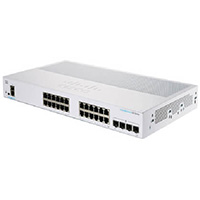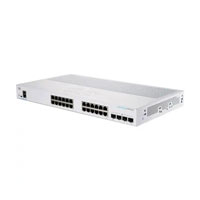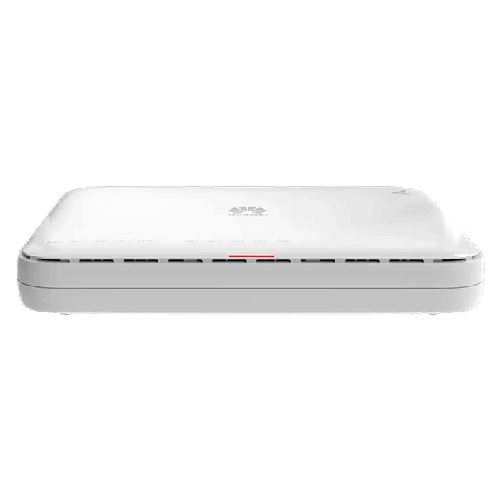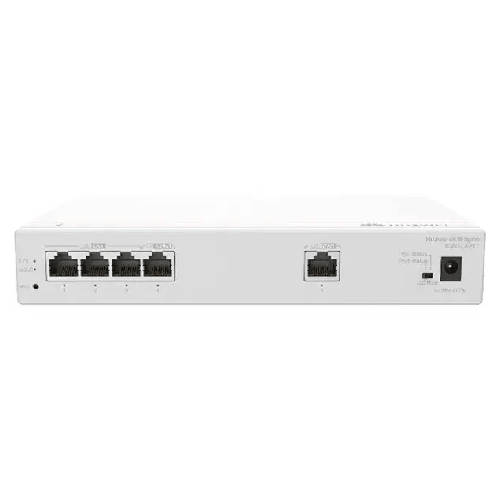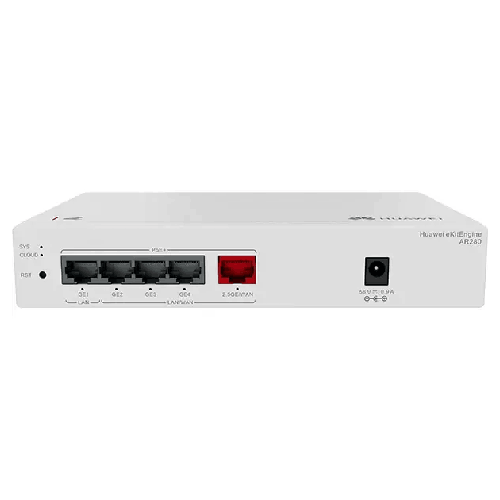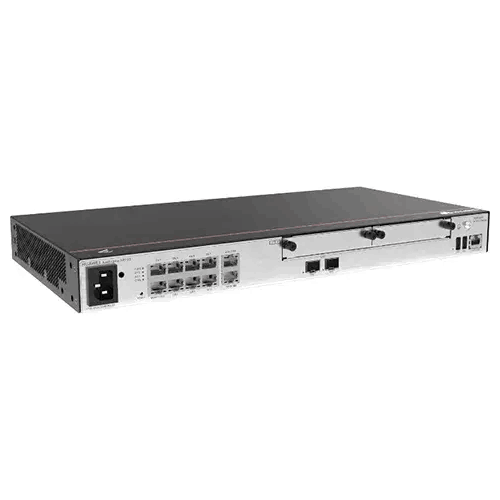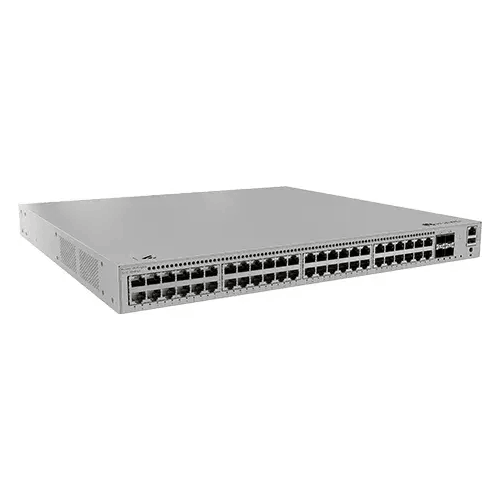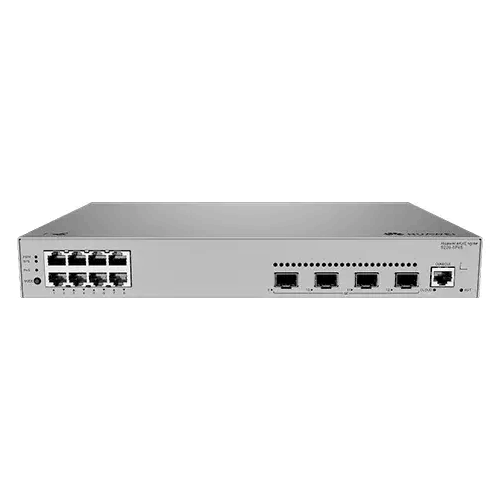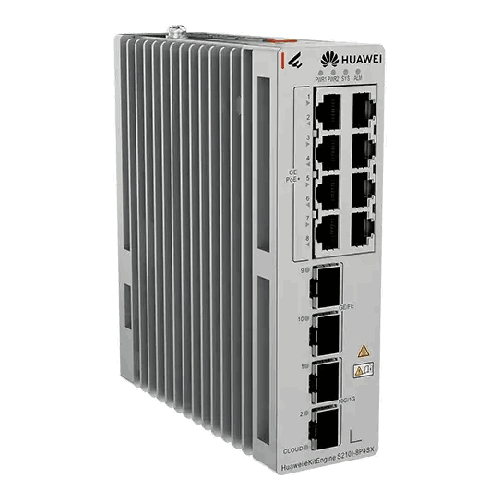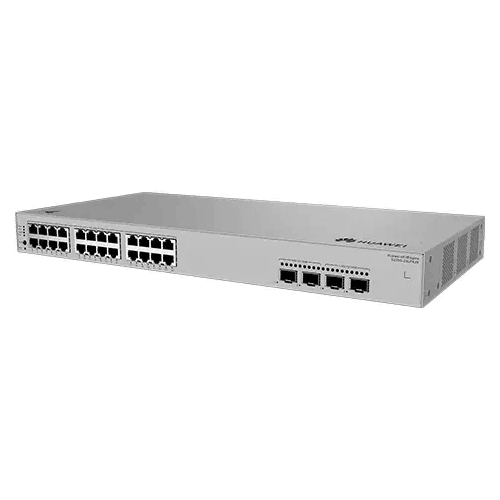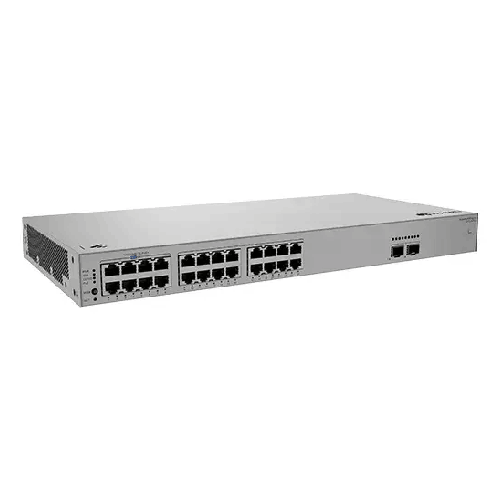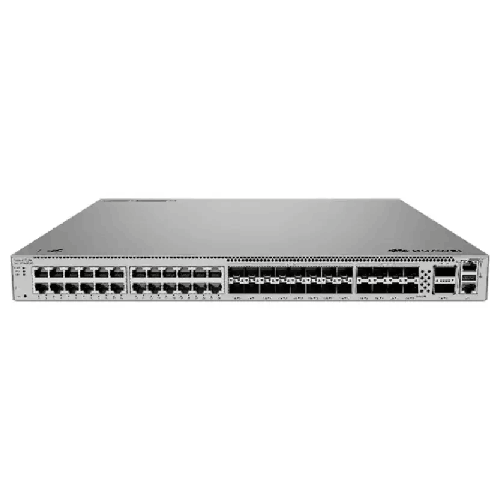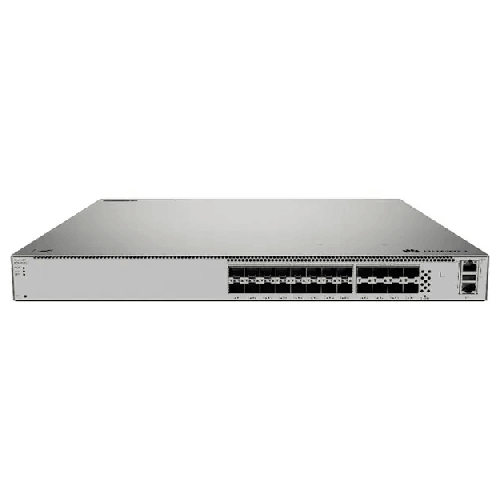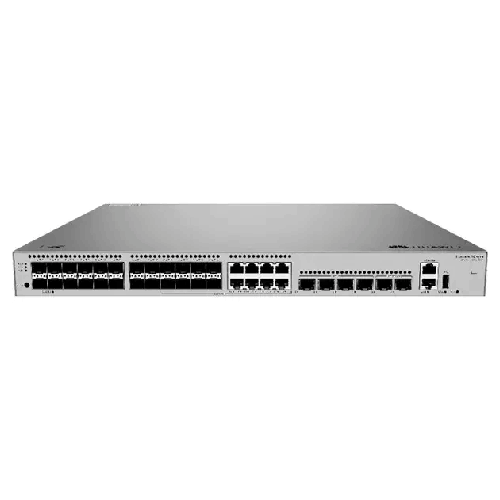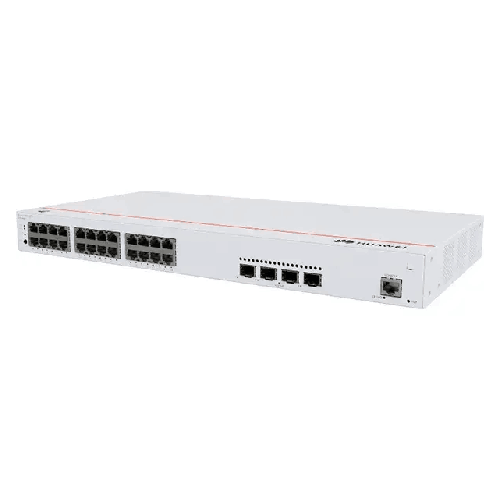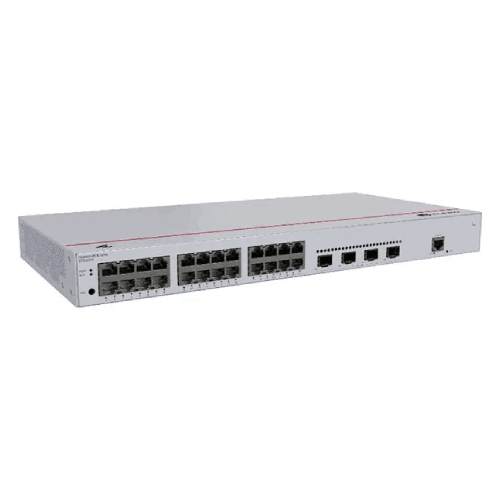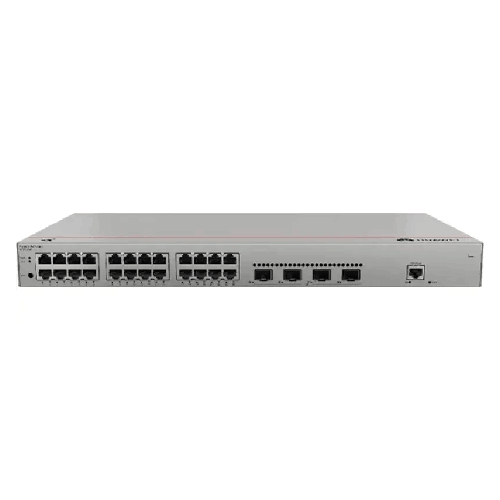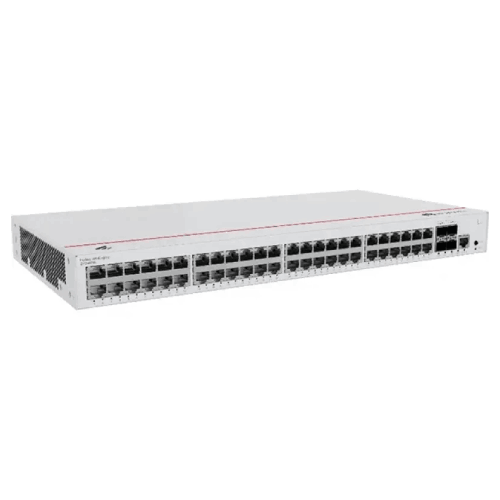
Huawei eKitEngine S310-48P4S 48 Port Gigabit PoE Managed Switch
Regular Price:৳0.00Availability: SKU: 6.54.130.9155
Quick Overview
-
Support
Saturday – Thursday: 09 AM - 06 PM. -
Payment
Cash on Delivery | Card | Online Payment -
Shipping Cost
Inside Dhaka 100tk | Outside Dhaka 150tk -
Warranty Policy
Read More
Description
Huawei eKitEngine S310-48P4S 48 Port Gigabit PoE Managed Switch Price in Bangladesh
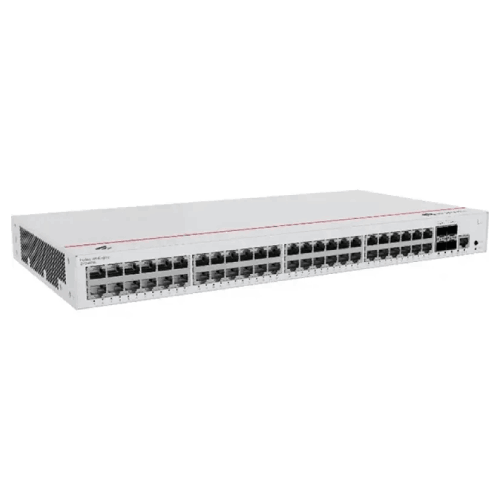
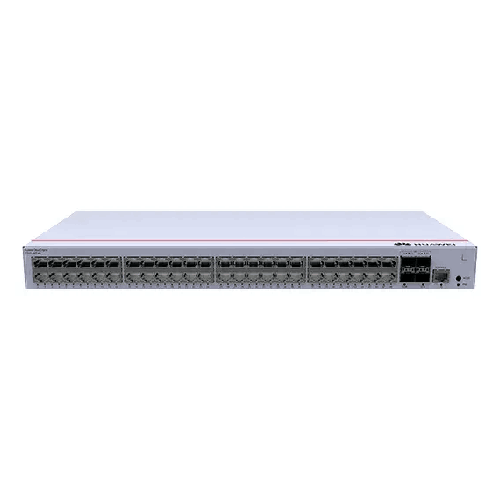
The Huawei eKitEngine S310-48P4S 48 Port Gigabit PoE Managed Switch is designed for this type of structured network environment, combining 48 Gigabit Ethernet PoE+ ports with four Gigabit SFP uplink ports in a rack-mount 1U chassis. Huawei's published documentation specifies 104 Gbps switching capacity, 77 Mpps forwarding performance, and a 380 W PoE power budget for this model.
For businesses in Bangladesh, the practical value of a high-density PoE switch is easy to understand. Instead of running separate electrical and network cabling to every compatible endpoint, PoE allows supported devices to receive power through Ethernet cabling. This can simplify deployment for IP surveillance cameras, wireless access points, and other compatible powered devices. The Huawei eKitEngine S310-48P4S provides 48 PoE-capable Gigabit copper ports, giving network administrators considerable connection capacity from a single 1U device.
The four GE SFP ports are equally important when designing a larger network. They can be used for compatible fiber-optic uplink connections, allowing the access switch to connect with another network device or an aggregation layer over optical infrastructure. Because the S310-48P4S combines many copper access ports with four SFP uplinks, it can fit naturally into structured office, campus, education, hospitality, and surveillance network architectures.
Key Technology and Primary Networking Features
The central strength of the Huawei eKitEngine S310-48P4S is its high-density Gigabit Ethernet configuration. It provides 48 × 10/100/1000BASE-T PoE+ ports, so compatible endpoints can connect at Fast Ethernet or Gigabit Ethernet speeds depending on the connected equipment and network conditions. Huawei documentation identifies the four additional uplink interfaces as GE SFP ports.
For a business with many network endpoints, having 48 copper ports in one chassis can make network planning considerably cleaner. Instead of immediately deploying multiple smaller switches simply to reach the required number of connections, an organization can consolidate a large group of endpoints into one managed access switch.
The Huawei S310-48P4S also provides a 380 W PoE power budget. That does not mean every connected device automatically receives 380 W; rather, the total available PoE power must be allocated across compatible powered devices according to their requirements. This distinction is important when planning a large deployment. Huawei's published specification lists maximum power consumption of 462.8 W when PoE is fully loaded, including the 380 W PoE budget.
The switching capacity is specified at 104 Gbps, while packet forwarding performance is rated at 77 Mpps. These figures describe the switch's internal forwarding capability and are particularly relevant when the device is handling traffic from many active Gigabit ports.
Performance and Network Processing
A managed switch becomes increasingly important as a network grows. In a small installation, basic connectivity may be enough. In a larger environment, administrators often need to separate traffic, control access, prioritize applications, monitor endpoints, and build resilient connections.
The Huawei eKitEngine S310-48P4S belongs to Huawei's S310 family of managed switches. Huawei documentation for the S310 series describes features including VLAN functionality, MAC-address management, QoS-related capabilities, security authentication, STP/RSTP/MSTP, ERPS, Smart Link, and iStack.
Huawei's S310 portfolio documentation identifies support for up to 16K MAC address entries and up to 4,094 VLANs across the series, along with Layer 3 capabilities such as IPv4 static routing, PBR, and IPv6 support.
For an IT administrator, these capabilities are more meaningful than simply looking at a port count. VLANs can help logically separate different categories of network traffic. For example, a business could design separate network segments for office computers, guest Wi-Fi, surveillance infrastructure, voice devices, or other operational requirements, subject to the final network design and configuration.
PoE for Network Devices
One of the most practical reasons to choose the Huawei eKitEngine S310-48P4S is its PoE capability. Power over Ethernet can reduce the need for separate local power arrangements for compatible network endpoints.
Consider a commercial office using ceiling-mounted wireless access points. With compatible PoE equipment and suitable Ethernet cabling, the network cable can provide both network connectivity and power to the access point. The same principle can simplify installations involving compatible IP cameras and VoIP devices.
Huawei describes fast PoE behavior for PoE models in the S310 series, including rapid power delivery to powered devices after the switch starts and quicker restoration of power to powered devices after a power interruption.
For Bangladesh deployments, this can be useful in network environments where minimizing endpoint downtime is important. However, PoE planning should always consider the total power demand of the connected devices, cable infrastructure, switch configuration, and the site's electrical environment.
Four Gigabit SFP Uplink Ports
The Huawei S310-48P4S provides four GE SFP ports in addition to its 48 copper Ethernet ports. Huawei identifies these as Gigabit SFP interfaces rather than 10GE SFP+ interfaces, so buyers should carefully distinguish this model from S310 variants that use 10GE SFP+ uplinks.
This distinction matters when planning an enterprise network. If a project specifically requires 10 Gigabit optical uplinks, another S310 model with 10GE SFP+ interfaces may be more appropriate. The S310-48P4S is instead configured around 48 Gigabit copper access ports and four Gigabit SFP uplinks.
For buildings already using compatible Gigabit fiber infrastructure, these SFP interfaces can provide a practical way to connect the access layer with another switch or network aggregation device.
Managed Networking and Traffic Organization
The difference between a basic unmanaged switch and a managed switch becomes increasingly significant as the network grows. A managed platform gives administrators a greater level of control over how network traffic and connected devices are organized.
The S310 family supports VLAN features, MAC-address controls, QoS-related functions, authentication mechanisms, and network protection capabilities. Huawei documentation also confirms that the S310-48P4S is among the models covered by Huawei's NAC documentation, including MAC-address authentication and 802.1X-related functions.
For a professional IT environment, these capabilities can help administrators establish a more structured access policy. The exact configuration depends on the network architecture, authentication infrastructure, VLAN design, and security requirements.
The switch also supports network redundancy technologies within the S310 family. Huawei lists STP, RSTP, MSTP, ERPS, and Smart Link among the supported networking functions. ERPS is designed to provide rapid protection switching in supported ring architectures, while Smart Link can provide uplink backup.
Scalability with iStack
Network expansion is another important consideration for businesses. A network that begins with a single switch can eventually need additional ports as staff numbers, access points, cameras, computers, and other endpoints increase.
Huawei's S310 documentation describes iStack functionality, allowing supported switches to operate as a logical virtual switch. Huawei states that iStack can simplify configuration and management while allowing network capacity to be expanded by adding member switches.
This makes the Huawei eKitEngine S310-48P4S relevant not only for a fixed 48-port deployment but also for organizations considering future network expansion. Actual stacking requirements and supported configurations should be checked against the current Huawei documentation before implementation.
Design and Rack-Mount Installation
The Huawei S310-48P4S uses a 1U chassis. Huawei specifies dimensions of approximately 43.6 mm in height, 442 mm in width, and 220 mm in depth, making it suitable for standard rack-oriented network environments when the installation space and mounting accessories are appropriate. The published full-configuration weight is 4.29 kg including packaging materials.
The rack-oriented design makes sense for professional installations where switches, patch panels, cable management, UPS systems, and other networking equipment are organized inside a communications rack.
Before installation, administrators should account for ventilation, cable routing, power access, rack depth, SFP access, and the manufacturer's environmental requirements. A clean installation is particularly important when dozens of Ethernet cables are connected to the front of a switch.
Power Requirements for Bangladesh
Huawei specifies a rated AC input of 100 V to 240 V at 50/60 Hz for the S310-48P4S. The published maximum AC input range is 90 V to 290 V, with a frequency range of 45 Hz to 65 Hz.
This means the switch's published rated voltage range covers the nominal electrical requirements used in Bangladesh. Nevertheless, installation should still use appropriate electrical protection and grounding practices, particularly in commercial environments with expensive networking equipment.
The switch's maximum power consumption is specified as 63.7 W without PoE and 462.8 W with full PoE load, with 380 W allocated to PoE.
The actual consumption of an installed system will depend on network activity and the power requirements of connected PoE devices. Buyers should therefore calculate the expected endpoint load instead of assuming the maximum figure will always be reached.
Cooling and Environmental Considerations
Huawei specifies air cooling with intelligent fan-speed adjustment for the S310-48P4S. The published long-term operating temperature range is −5°C to +50°C, with storage temperature specified from −40°C to +70°C and relative humidity from 5% to 95%, non-condensing.
For Bangladesh installations, the practical takeaway is that the switch should be installed in a suitable network environment rather than in an enclosed, poorly ventilated space. Network racks should have appropriate airflow, and excessive dust accumulation should be avoided.
A professional installation should also keep the switch away from unnecessary heat sources and should provide sufficient clearance around ventilation areas. Environmental conditions can influence equipment operation, particularly in high-temperature rooms.
Security and Access Control
Business networks often contain sensitive operational data, employee devices, surveillance equipment, and internal applications. Consequently, network segmentation and access control can be just as important as raw throughput.
Huawei's S310 documentation describes MAC-address authentication and 802.1X authentication capabilities, along with mechanisms for delivering network policies involving VLAN, QoS, and ACL configurations in supported authentication scenarios.
These capabilities provide network administrators with tools for controlling access at the network edge. However, a switch alone does not constitute a complete cybersecurity solution. Proper firewalling, endpoint security, authentication infrastructure, network monitoring, software updates, and administrative controls remain important.
Real-Life Bangladesh Usage Scenarios
The Huawei eKitEngine S310-48P4S can be useful in a wide range of Bangladesh network environments.
In a corporate office, 48 Gigabit ports can provide wired connectivity for employee computers, printers, phones, access points, and other Ethernet devices. PoE can simplify deployment for compatible wireless and voice equipment.
In an educational institution, the switch can serve as a high-density access-layer device for classrooms, administrative offices, wireless access points, IP cameras, and other network endpoints. VLAN-based network organization can help separate different categories of users and devices when appropriately configured.
For hotels and commercial properties, the combination of many copper ports and SFP uplinks can support distributed network infrastructure across different areas of a building. Compatible PoE access points can be powered through the network cabling, reducing the need for separate power arrangements at each installation point.
In CCTV deployments, the 48 PoE ports can be useful where a large number of compatible IP cameras need to be connected from a central network location. The available PoE budget must be compared against the combined power requirements of the cameras before deployment.
For growing businesses in Dhaka, Chattogram, and other commercial areas of Bangladesh, a 48-port managed PoE switch can provide a centralized platform for a substantial number of network endpoints without immediately moving to a much larger chassis-based solution.
Compatibility and Ecosystem
The Huawei S310-48P4S is built around standard Ethernet interfaces, including 10/100/1000BASE-T copper ports and GE SFP uplink interfaces. Huawei documentation identifies the copper interfaces as PoE+ ports and the optical uplinks as 1000BASE-X interfaces.
Compatibility should always be checked at the endpoint level. A device intended to receive PoE should be verified for compatible PoE requirements, while SFP modules and fiber connections should be matched according to supported specifications.
Network administrators should also confirm the required VLAN, routing, authentication, management, and redundancy features before selecting the switch for a particular architecture.
Maintenance and Care
Routine maintenance for the Huawei eKitEngine S310-48P4S should focus on the physical and environmental conditions of the installation. Keep ventilation paths clear, avoid excessive dust, make sure cables are properly routed, and inspect the rack environment periodically.
Because the switch may power numerous connected devices through PoE, administrators should also monitor the network's power requirements and investigate unexpected endpoint behavior rather than repeatedly restarting equipment.
Configuration backups are also valuable in managed network environments. A documented configuration can reduce recovery time if equipment needs to be replaced or restored.
For firmware, security, and configuration procedures, administrators should use the appropriate Huawei documentation for the exact software version and hardware model rather than applying instructions intended for another S310 variant.
Key Features
- 48 Gigabit PoE+ Ports: Provides 48 × 10/100/1000BASE-T PoE+ interfaces for high-density wired connectivity and compatible powered network devices.
- 380 W PoE Budget: Offers a substantial centralized power budget for compatible PoE endpoints across the network.
- Four GE SFP Uplinks: Provides four Gigabit SFP interfaces for compatible optical uplink connectivity.
- 104 Gbps Switching Capacity: Provides the internal switching capacity specified by Huawei for handling network traffic across the switch.
- 77 Mpps Forwarding Performance: Supports high-volume packet forwarding for networks with numerous active endpoints.
- Managed Network Control: Supports professional network management functions for structured business deployments.
- VLAN and Security Functions: Supports VLAN-related networking and authentication capabilities for controlled network segmentation and access.
- Network Resilience: Supports technologies including STP, RSTP, MSTP, ERPS, and Smart Link within the S310 platform.
- iStack Support: Provides a stacking option within the supported S310 ecosystem for scalable network management.
- 1U Rack Design: Fits professional rack-based network infrastructure with a compact 1U chassis.
- Intelligent Fan Speed Adjustment: Uses air cooling with intelligent fan-speed adjustment according to Huawei's published specifications.
- Wide Rated AC Input: Supports 100–240 V AC at 50/60 Hz according to the manufacturer's published specification.
Usage / Applications
- Corporate Offices: Connect employee computers, printers, IP phones, access points, and other Ethernet devices.
- IP Surveillance Networks: Centralize compatible PoE IP cameras while providing data connectivity through the same Ethernet infrastructure.
- Educational Institutions: Support wired endpoints, wireless access points, administrative systems, and network-connected classroom equipment.
- Hotels and Hospitality: Connect guest-network infrastructure, access points, IP phones, cameras, and other compatible devices.
- Commercial Buildings: Provide high-density network connectivity from a centralized rack installation.
- Business Wi-Fi Infrastructure: Power compatible PoE wireless access points without requiring a separate local power connection for each endpoint.
- VoIP Deployments: Connect compatible IP phones and related network equipment through a managed Ethernet infrastructure.
- Retail and Branch Networks: Provide centralized connectivity for computers, POS-related equipment, cameras, and network peripherals where appropriate.
- Small and Medium Enterprise Networks: Build a scalable managed access layer with 48 Gigabit copper ports.
- Multi-Device Network Environments: Serve installations where a large number of Ethernet endpoints need centralized management and PoE capability.
Benefits of This Product?
- High Port Density: 48 Gigabit PoE+ ports allow a large number of compatible devices to connect through one switch.
- Simplified PoE Deployment: Compatible powered devices can receive power and network connectivity through Ethernet infrastructure.
- Centralized Management: A managed architecture gives administrators greater control over network organization and policies.
- Flexible Uplink Connectivity: Four GE SFP ports provide additional options for connecting the switch to compatible optical infrastructure.
- Business-Ready Capacity: 104 Gbps switching capacity and 77 Mpps forwarding performance provide a solid platform for high-density Gigabit access networking.
- Network Segmentation: VLAN functionality can help administrators separate traffic according to organizational requirements.
- Scalable Architecture: iStack support can assist supported deployments that need to expand beyond a single switch.
- Rack-Friendly Design: The 1U form factor is suitable for structured network racks.
- Centralized Power Budget: The 380 W PoE budget simplifies planning for multiple compatible PoE endpoints.
Ideal For
The Huawei eKitEngine S310-48P4S is particularly suited to organizations that need many Gigabit Ethernet connections and centralized PoE capability in a professionally managed network. It can fit corporate offices, schools, hotels, commercial buildings, surveillance deployments, branch offices, and other environments where a basic unmanaged switch would provide insufficient control.
For IT teams in Bangladesh, the 48-port configuration can be useful when a network contains a large number of wired endpoints and compatible PoE devices. The four GE SFP uplinks also make the switch relevant to installations that use fiber-based connectivity between network locations.
It can be a practical option for businesses planning structured network infrastructure rather than simply adding connectivity on an ad-hoc basis. Administrators who need VLANs, authentication, traffic-management capabilities, redundancy technologies, or scalable switch architecture can consider the S310 platform as part of a broader network design.
For buyers in Dhaka and elsewhere in Bangladesh, the key consideration is not simply the number of ports. The switch should be selected after reviewing PoE demand, uplink requirements, rack space, endpoint compatibility, network architecture, and future expansion plans.
Why Choose the Huawei eKitEngine S310-48P4S 48 Port Gigabit PoE Managed Switch?
The Huawei eKitEngine S310-48P4S brings together several functions that are often required in a professional access-layer network: 48 Gigabit PoE+ copper ports, four GE SFP uplinks, managed networking, and a 380 W PoE budget.
Its high port density is particularly useful for organizations that expect many Ethernet-connected devices. Rather than spreading endpoints across numerous small switches, a 48-port platform can provide a more centralized architecture when the network design permits it.
The model also offers meaningful network-management capabilities. Huawei's S310 documentation identifies VLAN, authentication, QoS, redundancy, security, and iStack-related functions across the series.
Another important distinction is its four GE SFP uplinks. Buyers should understand that the S310-48P4S uses Gigabit SFP uplinks, while other S310 models offer 10GE SFP+ interfaces. Choosing the correct model at the planning stage can prevent an expensive mismatch between the switch and the intended network backbone.
The 1U rack form factor also makes the switch appropriate for structured network rooms where equipment density and organized cable management matter.
For organizations building a network that may expand over time, Huawei's documented iStack capability provides an additional scaling option in supported configurations.
Why Buy This Product from BME?
Business Machine & Equipment (BME) provides a Bangladesh-focused platform for customers looking for business technology, IT infrastructure, and networking equipment. When purchasing a professional network switch such as the Huawei eKitEngine S310-48P4S, the buying decision should include more than the hardware specification alone.
A suitable supplier should make it easier to identify the correct model, understand the relevant specifications, and determine whether the switch matches the planned network architecture. BME can serve as a point of contact for customers seeking product information and purchasing guidance in Bangladesh.
For business and institutional buyers, accurate model identification is particularly important. The S310 family contains multiple variants with different port and uplink configurations, so confirming the exact model before placing an order is essential. The S310-48P4S specifically combines 48 Gigabit PoE+ copper ports with four GE SFP ports.
B2B customers can also evaluate the product based on their network requirements, endpoint count, PoE budget, uplink architecture, rack environment, and future expansion plans.
For current availability, quotation, product sourcing details, delivery arrangements, and applicable after-sales support, customers should confirm the latest information directly with BME before ordering. This is particularly important for professional networking equipment because configuration requirements can vary significantly from one project to another.
Buying Guide
1. Confirm the Exact Model
Before purchasing, confirm that the required model is specifically Huawei eKitEngine S310-48P4S. Huawei offers several S310 variants, and their uplink interfaces and performance specifications can differ. The S310-48P4S has 48 × 10/100/1000BASE-T PoE+ ports and four GE SFP ports.
2. Calculate the Required Port Count
Count every device that needs a wired connection. Include computers, access points, cameras, phones, printers, and other Ethernet endpoints. A 48-port configuration provides substantial access capacity, but the number of ports should still be checked against both current and expected future requirements.
3. Calculate PoE Demand
Do not select the switch based solely on the number of PoE ports. Calculate the expected power requirement of the connected PoE endpoints. The S310-48P4S has a 380 W PoE budget according to Huawei's published documentation.
4. Check the Uplink Requirement
Confirm whether the network requires Gigabit SFP or 10 Gigabit SFP+ uplinks. The S310-48P4S provides four GE SFP ports. If a project specifically requires 10GE optical uplinks, another model should be evaluated instead.
5. Review Network Management Requirements
Determine whether your organization needs VLANs, authentication, QoS, redundancy, access control, or other managed-switch capabilities. The S310 platform supports a broad set of managed networking functions.
6. Check Rack Space
The switch has a 1U chassis and measures approximately 43.6 × 442 × 220 mm according to Huawei's datasheet. Confirm available rack space and ventilation before installation.
7. Check Electrical Requirements
The rated AC input is 100–240 V, 50/60 Hz. Even though this range covers Bangladesh's nominal supply characteristics, professional electrical protection and grounding should still be considered for the installation.
8. Verify Endpoint Compatibility
Confirm that cameras, access points, phones, and other PoE devices are compatible with the switch's supported PoE configuration. Also verify SFP module and fiber compatibility before ordering optical accessories.
9. Avoid Confusing S310 Variants
Do not assume every S310 switch has the same uplink configuration. For example, the S310-48P4X uses 10GE SFP+ uplinks, whereas the S310-48P4S uses GE SFP uplinks.
10. Plan for Future Expansion
If the organization expects more endpoints later, consider port capacity, uplink bandwidth, PoE growth, VLAN architecture, and possible stacking requirements before finalizing the network design.
Customers Ask About / Frequently Asked Questions
Q1: What is the Huawei eKitEngine S310-48P4S?
The Huawei eKitEngine S310-48P4S is a managed Gigabit PoE+ switch with 48 × 10/100/1000BASE-T PoE+ ports and four GE SFP ports. Huawei specifies 104 Gbps switching capacity and 77 Mpps forwarding performance.
Q2: How many PoE ports does the S310-48P4S have?
It has 48 Gigabit Ethernet copper ports supporting PoE+. Huawei specifies a total PoE power budget of 380 W.
Q3: Does the Huawei S310-48P4S have SFP uplink ports?
Yes. The model provides four GE SFP uplink ports. These are Gigabit SFP interfaces, not 10GE SFP+ ports.
Q4: Is the S310-48P4S suitable for IP cameras?
It can be suitable for compatible PoE IP-camera deployments because its 48 copper ports support PoE+. The total camera power requirements should be calculated against the 380 W PoE budget before installation.
Q5: Can it power wireless access points?
Compatible PoE wireless access points can be connected to its PoE+ ports. The exact power requirement and PoE compatibility of each access point should be checked before deployment.
Q6: What is the switching capacity?
Huawei specifies 104 Gbps switching capacity and 77 Mpps packet-forwarding performance for the S310-48P4S.
Q7: Is it suitable for a Bangladesh office network?
Its published rated input is 100–240 V AC at 50/60 Hz, so the rated voltage range covers Bangladesh's nominal electrical supply. Installation should still use appropriate electrical protection, grounding, and environmental controls.
Q8: Is the S310-48P4S rack mountable?
Huawei specifies a 1U chassis measuring approximately 43.6 mm × 442 mm × 220 mm. It is designed for professional rack-oriented network installations.
Q9: Does the S310 series support VLANs?
Yes. Huawei's S310 documentation identifies VLAN functionality, including support for up to 4,094 VLANs across the relevant S310 portfolio documentation.
Q10: Does it support network security and authentication features?
Huawei documents MAC-address authentication and 802.1X-related functionality for the S310-48P4S among supported S310 models.
Q11: Does the S310-48P4S have a 10 Gigabit uplink?
No. The S310-48P4S uses four GE SFP uplink ports. Buyers requiring 10GE SFP+ uplinks should examine the appropriate S310 variant instead.
Q12: What warranty is included with the product?
A specific warranty period has not been confirmed here from Huawei's official documentation. Buyers should confirm the applicable warranty terms with BME before purchase.
Why Buy This Product
The Huawei eKitEngine S310-48P4S 48 Port Gigabit PoE Managed Switch is designed for organizations that need substantial Ethernet port density, centralized PoE capability, optical uplink options, and professional network management in a rack-friendly platform.
Its combination of 48 Gigabit PoE+ ports and four GE SFP interfaces provides a practical foundation for business networks containing many wired endpoints. The 380 W PoE budget can simplify deployment planning for compatible cameras, access points, phones, and other powered devices, while the managed S310 architecture provides the controls needed for more structured network environments.
For Bangladesh businesses, educational institutions, commercial properties, surveillance installations, and growing organizations, the key advantage is the ability to centralize a large number of network connections in a single 1U switch.
If your network plan calls for 48 Gigabit PoE+ access ports and four Gigabit SFP uplinks, order the Huawei eKitEngine S310-48P4S from BME after confirming the required configuration, compatibility, and current availability. It can provide a strong foundation for a structured and scalable enterprise network.
What is the price of Huawei eKitEngine S310-48P4S 48 Port Gigabit PoE Managed Switch in Bangladesh?
Write a review
Question Answer
Have question about this product? Get specific details about this product from expert.